Selecting a high quality wooden cutlery set is a critical decision for any brand looking to align with global sustainability trends while maintaining a premium consumer experience. This process begins with understanding your specific brand positioning and the practical needs of your application, whether it is for high end hospitality or high volume catering. Choosing the right material determines the durability and aesthetic appeal of the product. Beyond materials, rigorous manufacturing standards must be met, focusing on smooth surface finishing and structural integrity to ensure safety and comfort. Compliance with international food safety certifications like FDA and FSC is non negotiable for protecting brand reputation. By partnering with a reliable disposable tableware supplier, brands can access customized branding options and secure a transparent, eco friendly supply chain that meets modern environmental standards and consumer expectations.
A wooden cutlery set is a pre-packaged combination of disposable wooden utensils designed for food service applications.
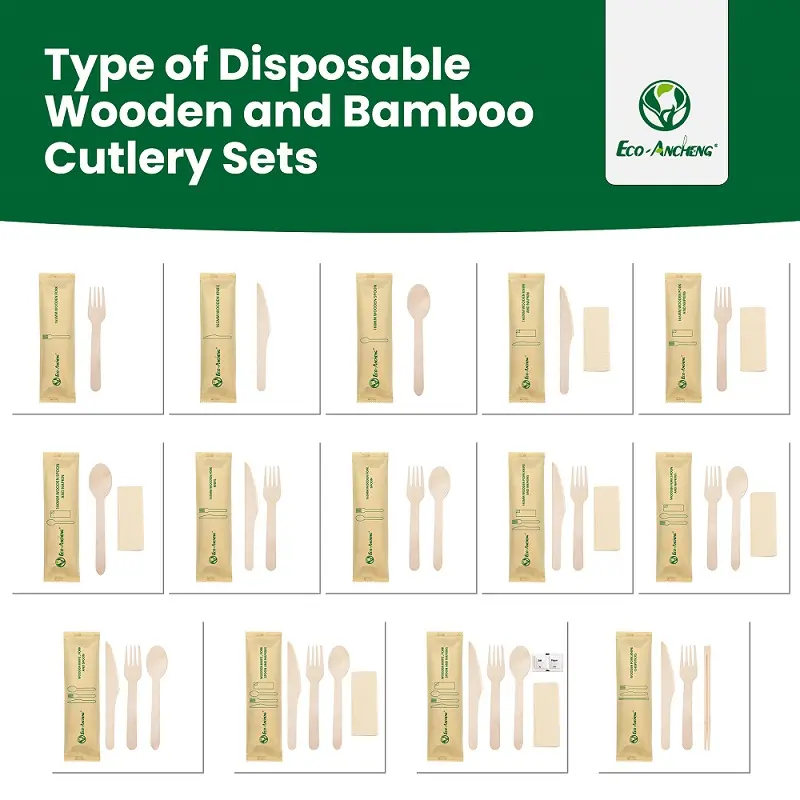
Depending on the business type and meal format, a set may include:
Wooden fork
Wooden knife
Wooden spoon
Napkin
Straw
Toothpick
Salt and pepper sachets
Before sourcing products, it is essential to map out the specific requirements of your brand. A clear strategy ensures that the wood silverware you choose enhances your market presence rather than just serving as a functional tool.
Your choice of wooden cutlery should reflect your brand identity. High-end brands often opt for wood flatware that feels substantial and features a refined finish, signaling luxury and attention to detail. Mid-market brands may focus on a balance of aesthetics and price, while mass market brands prioritize cost efficiency and bulk availability. If your brand is built on a foundation of sustainability, selecting a compostable cutlery set becomes a central part of your brand story.
The physical demands on the cutlery vary by use case.
Dining and Takeaway: To help customers receive their meals more quickly, takeout restaurants typically need pre-packaged cutlery sets to make it easier for staff to prepare orders. The contents of these disposable cutlery sets must be suitable for enjoying the restaurant’s food.
Hospitality and Events: For hotel or airline catering, consider customizing your brand on flatware or packaging; it is important to establish long-term partnerships with reliable suppliers to ensure consistent product quality.
Retail and Private Label Packaging: These industries typically focus on brand-centric packaging design, including printed paper sleeves, barcode labels, and holiday decorations.
Promotional Goods: Items used for gifts should focus on high quality customization to leave a lasting impression on the recipient.
Different meal types require different disposable cutlery set structures.
Choosing the right tableware set configuration based on business needs not only enhances convenience but also provides a cost-effective opportunity for brand promotion.
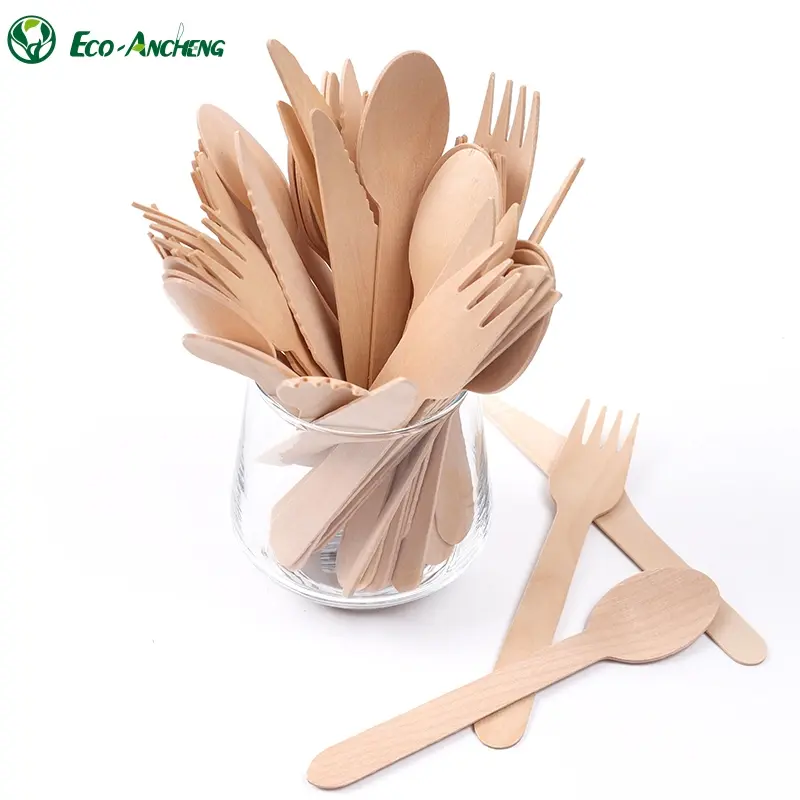
The material is the most significant factor in the performance and feel of your wooden utensils set. While many woods are available, only a few meet the strict requirements for food contact and bulk production.
1) Birch Wood: This is the industry standard for high-quality disposable utensils. Birch wood is naturally light in color with a very fine and uniform grain. It has a high fiber density, which makes it incredibly strong and resistant to snapping. Crucially, it is tasteless and odorless, ensuring it never interferes with the sensory experience of the food.
2) Bamboo: Known for its rapid regeneration, bamboo is a favorite for brands wanting to emphasize a strong eco-friendly message. It is naturally antibacterial and has a distinct aesthetic. However, bamboo can sometimes have a coarser texture than wood and requires careful processing to ensure smoothness.
3) Poplar Wood: Often used for lighter-weight applications, poplar is softer and more flexible. It is a cost-effective alternative but may not offer the same premium feel as birch wood for heavy or hot meals.
If consistency is your priority, birch wood is the superior choice because it offers a clean, white appearance that looks professional in any setting. If your brand narrative is centered on rapid renewability, bamboo is the winner. For brands operating on tight margins, poplar might provide the necessary savings without sacrificing the transition away from plastic.
Professional Grade Wooden Cutlery Sets
Tailored packaging and branding for global food brands.
A high quality wooden cutlery set is the result of precision engineering and meticulous quality control. Poor craftsmanship can lead to a negative user experience and potential safety hazards.
The most common complaint regarding wood silverware is the presence of splinters. High-quality manufacturing involves an extensive tumbling and polishing process. Premium products are often polished for several hours to ensure every edge is perfectly smooth. The goal is a silk-like texture that feels comfortable in the mouth.
The thickness of the wood must be uniform. A common failure point in a wooden fork is the neck, which can snap if the wood is too thin or the grain is misaligned. A professional manufacturer ensures that the wood is cut along the grain to maximize strength. The knife should have a tapered edge sharp enough to cut through soft meats and vegetables without splintering.
To prevent warping and the growth of mold, the wood must be dried to a specific moisture level, usually between 8% and 20%. This kiln drying process is essential for maintaining the shape of the cutlery during long periods of storage or shipping across different climates.
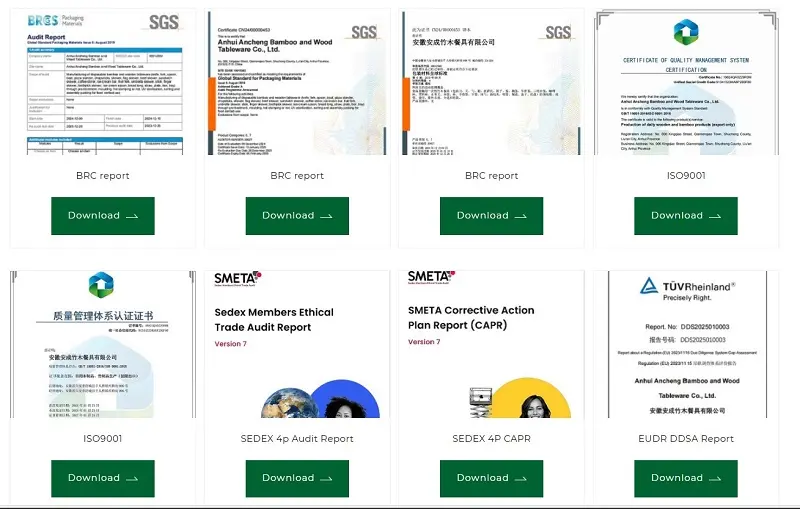
Safety is the foundation of consumer trust. When dealing with food contact materials, you must ensure your supplier adheres to international regulations.
High quality wood cutlery must be free from any chemical treatments, bleaches, or toxic glues. It should be a pure, natural product. Testing should confirm that no harmful substances migrate from the wood into the food, especially when exposed to high heat or acidic liquids.
When wholesaling eco-friendly tableware sets, regulatory requirements vary by region, but the following international certifications are primarily checked:
1) FSC Certification: The Forest Stewardship Council certification proves that the wood comes from responsibly managed forests that provide environmental, social, and economic benefits.
2) FDA and LFGB: These are the primary food safety standards for the United States and Europe, respectively. Passing these tests ensures the product is safe for human contact.
3) BSCI or Sedex: These audits focus on the social responsibility of the factory, ensuring fair labor practices and safe working conditions.
Always ask your disposable tableware supplier for the latest test reports. Check the validity dates and ensure the certificates are issued by reputable third party agencies like SGS or Intertek. Verifying these documents protects your brand from legal liabilities and consumer backlash.
The shift toward wooden cutlery is largely driven by the global movement to reduce plastic waste. Understanding the environmental lifecycle of your product is key to an authentic brand message.
Wood is a naturally renewable resource. Unlike plastic, which can take centuries to break down, high quality wooden cutlery is fully biodegradable. In a composting environment, these items will typically break down within a few months, returning nutrients to the soil without leaving behind microplastics.
Consumers today are more informed and more likely to support brands that take a stand on environmental issues. Using a compostable cutlery set allows you to integrate your sustainability efforts into your marketing. This transparency builds a deeper connection with your audience and can justify a slightly higher price point compared to plastic alternatives.
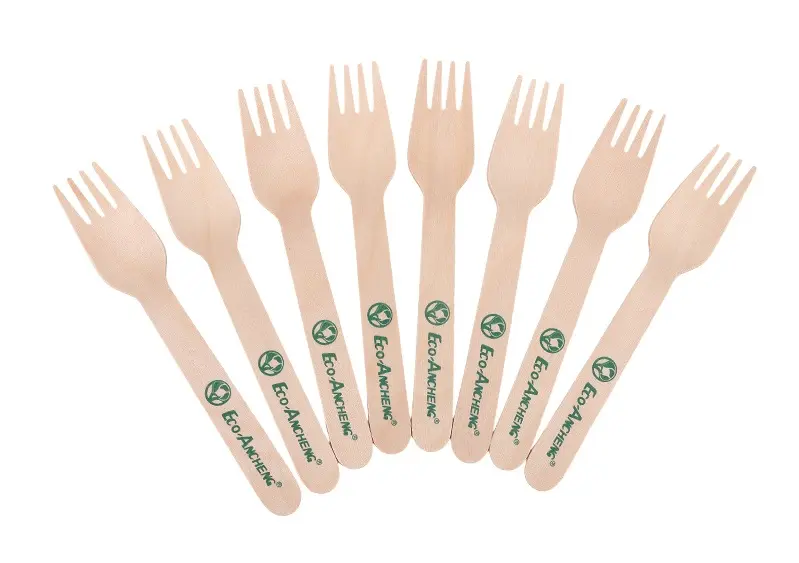
Customization allows you to transform a standard wooden utensils set into a powerful marketing tool.
1. Laser Engraving: This is the most popular and eco friendly method for adding a logo. It uses heat to etch the design into the wood, meaning no inks or chemicals are added to the product. It provides a clean, permanent, and high end look.
2. Sizing and Shape: Depending on your menu, you may need a longer handle for deep bowls or a wider spoon for soups. Custom molds allow for unique shapes that set your brand apart.
3. Packaging: Branding the packaging is just as important as the cutlery. Options include individual paper wraps, kraft paper boxes, or even customized sets that include a napkin and a wood toothpick.
Customization generally requires a higher Minimum Order Quantity and a longer lead time. It is important to plan your inventory cycles to account for the extra time needed for production and branding.
Ready to implement sustainable dining?
Swap plastics for premium wholesale natural tableware
Your supplier is your most important partner in maintaining quality and consistency.
A reliable disposable tableware supplier should have extensive experience in the global market. They should possess a deep understanding of export regulations and have the capacity to scale production as your brand grows. Ask for a factory tour or a video inspection to verify their quality control processes.
Before committing to a large order, request samples for rigorous testing. Perform a soak test to see how the wood reacts to boiling water. Check for consistency in size and finish across multiple sets. This initial evaluation prevents costly mistakes later in the partnership.
Choose a partner who is responsive and transparent about their lead times and pricing. Effective communication is vital for resolving any issues that may arise during the shipping or production phases.
While price is a significant factor, it must be viewed in the context of total value.
The cost of a wooden cutlery set is determined by the grade of the wood, the complexity of the polishing process, and the level of customization. Birch wood sets are typically more expensive than those made from lower grade woods, but they offer a far better user experience.
Choosing the cheapest possible option often leads to hidden costs. This could include high breakage rates, consumer complaints about splinters, or shipments being rejected at customs due to a lack of proper certification. Investing in high quality wood flatware protects your brand reputation and reduces the likelihood of these expensive problems.
When sourcing wooden cutlery, brands often fall into the same traps. Here are the most common mistakes to watch out for:
1. Prioritizing Price Over Polish: Choosing unpolished or poorly sanded cutlery leads to splinters and a poor mouthfeel, which can alienate customers.
2. Ignoring FSC Certification: Purchasing wood from unknown sources can lead to ethical concerns and a lack of transparency in your supply chain.
3. Neglecting Moisture Testing: Buying products with high moisture content can result in moldy stock before the product even reaches the customer.
4. Inconsistent Branding: Using low-quality printing that rubs off or fades can make your brand look unprofessional.
5. Failing to Check Local Regulations: Some regions have specific rules about the types of coatings or treatments allowed on wooden products.
6. Poor Packaging Choices: Using plastic wraps for wooden cutlery defeats the purpose of choosing an eco friendly product. Always opt for paper or compostable alternatives.
Before proceeding with bulk purchases, it is essential to meticulously examine these pitfalls and request certificates and samples from suppliers.
Choosing a high quality wooden cutlery set requires a systematic approach that balances material science, manufacturing excellence, and ethical sourcing. By selecting the right wood type and ensuring rigorous safety compliance, your brand can offer a sustainable and premium experience that resonates with modern consumers. This investment not only supports global environmental goals but also builds long term brand value and customer trust.
At Ancheng, we specialize in manufacturing and supplying high quality disposable wooden cutlery designed for food service, takeaway, and global retail markets. Our wooden cutlery sets are made from responsibly sourced materials and produced under strict quality control to ensure safety, consistency, and reliable performance at scale.
MOQ: 50,000 sets Please discuss this with our experts and tailor a plan that best suits your needs.
Whether you need a bulk disposable cutlery set for a large scale catering operation or a customized wooden fork and spoon set featuring your unique brand logo, Ancheng offers flexible solutions to match your market needs. With strong production capacity, export experience, and a focus on sustainable tableware, we help brands deliver biodegradable cutlery that meets both regulatory standards and consumer expectations.
Contact Ancheng today to discuss your project and receive professional support for your disposable tableware sourcing.
Your One-stop Shop for Sustainable Tableware
Find everything you need for your wholesale business

Hello, I'm Sven Wang, the Manager of Ancheng. With extensive expertise in raw materials and production processes, I'm dedicated to advancing sustainable tableware and constantly improving eco-friendly options for the modern catering industry. You can trust that Ancheng is committed to providing the highest quality. Welcome!

Factory: Qian Renqiao Industrial Park, Shucheng County, Luan City, Anhui Province, China
Office: Building 11, Max Science Park, Shushan Dist, Hefei, Anhui, China
Copyright ©2026 Anhui Ancheng Bamboo and Wood Tableware Co., Ltd. Privacy Policy


 Index
Index Product
 Resources
 About
About