In the global food service industry, sourcing disposable tableware and packaging is no longer just about finding the right price and material. As regulations tighten and consumer awareness regarding safety and sustainability reaches an all-time high, certifications have become the most critical component of the procurement process.
For a buyer, a lack of understanding regarding these certifications is not just a technical oversight—it is a significant business risk. Importing non-compliant products can lead to costly customs seizures, expensive product recalls, hefty legal fines, and irreparable damage to your brand’s reputation.
This guide is designed to help professional buyers navigate the complex landscape of food-contact material certifications. We will explore which certifications truly matter, why they are required in specific regions, and how you can verify supplier claims to avoid the "greenwashing" trap.
In food service procurement, a certification is more than a piece of paper; it is a legal insurance policy.
Different markets have strict legal "gatekeepers." If you are importing paper plates into the European Union without a Declaration of Compliance (DoC) or importing plastic containers into the U.S. that don't meet FDA 21 CFR standards, your shipment can be denied entry at the port. This leads to storage fees, shipping delays, and potential destruction of the goods at your expense.
If a product contains harmful levels of heavy metals or banned chemicals (like PFAS), the liability often falls on the importer of record. For retailers and wholesalers, a product safety scandal can lead to lawsuits and loss of consumer trust. Certifications provide documented proof that you performed due diligence.
With the rise of "eco-friendly" alternatives like bagasse, bamboo, and molded pulp, many suppliers claim their products are "100% compostable." Without certifications like BPI or TÜV OK Compost, these are just marketing claims. Purchasing such disposable products may lead to falling into the trap of greenwashing. Buyers must distinguish between a product that can break down and one that is certified to do so safely in specific environments.
A common mistake is assuming that more certificates automatically mean better products. In reality:
1) Some certifications apply to materials, not finished products.
2) Some are market-specific and useless elsewhere.
3) Others relate to factory systems, not food-contact safety.
Buyers should focus on relevant certifications for the target market and product type, not on collecting logos.

This guide focuses on disposable and general food-contact products typically sourced for the catering, hospitality, and retail sectors.
Included in this guide:
1) Disposable Tableware: Plates, bowls, cups, and cutlery (wooden, bamboo, plastic, or pulp).
2) Food Packaging: Takeaway containers, boxes, and wraps.
3) Paper & Molded Pulp Products: Coffee sleeves, paper straws, bagasse trays.
4) Plastic & Biodegradable Items: PLA-lined cups, compostable cutlery, and traditional PET/PP containers.
Excluded from this guide:
1) Food ingredients or consumables.
2) Specialized cookware (metal pots, glass baking dishes, or ceramic fine dining sets).
3) Electrical kitchen appliances.
If you source disposable or semi-disposable food service products, this guide is designed for you.
The primary concern for any food service buyer is whether the material will migrate harmful substances into food. The standards vary significantly by region.
For the U.S. market, the Food and Drug Administration (FDA) regulates food-contact substances.
1) All food-contact materials (paper, plastic, coatings, inks)
2) What Buyers Should Check: Ensure the product complies with the FDA 21 CFR (Code of Federal Regulations). For example, Section 176.170 covers paper and paperboard components.
3) A Common Mistake: Buyers often assume an "FDA Facility Registration" means the product is approved. It does not. Facility registration is for the factory; the product itself must have a test report showing it passes specific extraction tests for its material type.
This is the foundational law for all food-contact materials in the European Union.
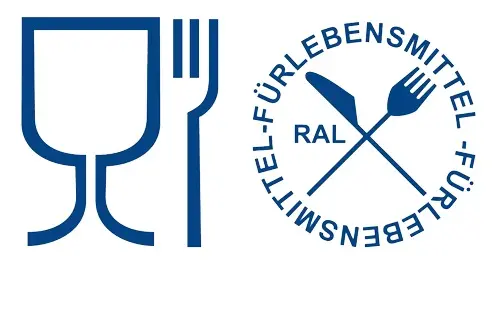
1) The "Glass and Fork" Symbol: Products meeting this standard can display the glass and fork icon, indicating they are safe for food contact.
2) EU 10/2011: If you are sourcing plastic or plastic-lined products (like PE-lined paper cups), this specific regulation for plastics is mandatory. It involves "Overall Migration" and "Specific Migration" testing.
EU Regulation 1935/2004 is the umbrella law covering all food-contact materials. It requires the materials:
Do not transfer harmful substances to food
Do not change the food composition or taste
The Lebensmittel-, Bedarfsgegenstände- und Futtermittelgesetzbuch (LFGB) is the German equivalent of the FDA but is often considered more stringent.
This Certification is Required When: You are targeting the German market or high-end European retailers. Many buyers choose LFGB testing even if they aren't selling in Germany because it represents a higher safety benchmark, particularly for sensory tests (ensuring the product doesn't change the taste or smell of food).
When it matters: Plastic food-contact products sold in the EU
This regulation sets specific migration limits for plastics. Buyers sourcing plastic containers, lids, or cutlery for Europe should confirm compliance specifically with EU 10/2011, not just general EU food-contact rules.
Product safety is only as good as the factory's last batch. Management certifications tell you if the supplier has the systems in place to produce the same quality every time.
This isn't about food safety specifically, but about process control. A supplier with ISO 9001 is more likely to have a system for handling defects, tracking raw materials, and maintaining equipment.
Buyers Should Check: Is the certificate current? Does the scope of the ISO certification actually cover the production of the products you are buying?
While usually associated with food production, many high-end packaging manufacturers adopt HACCP (Hazard Analysis and Critical Control Points) principles to ensure that the packaging environment is as clean as a food kitchen.
In the modern market, "safe" is the baseline. "Sustainable" is the competitive edge. Sustainability claims increasingly influence buying decisions—but they also carry reputational risk.
If you are buying paper plates, wooden cutlery, or paper bags, FSC certification is essential.
FSC 100%, FSC Mix, and FSC Recycled: Buyers should check which label the supplier is using. FSC Mix is the most common for food packaging.
The Chain of Custody (CoC): A common mistake is buying from a supplier who says they "use FSC paper" but doesn't have their own FSC CoC certificate. To claim the product is FSC-certified on your packaging, every link in the supply chain (from the forest to the final manufacturer) must be certified.
Large retailers (like Walmart, Target, or Carrefour) will not buy from suppliers who cannot prove ethical labor practices.
What to Look For: Ask for a BSCI Audit Report (Amfori) or a Sedex (SMETA) Report. These documents prove the factory provides fair wages, safe working conditions, and does not use child labor.
Buyer Tip: Don't just look for a "Pass." Look at the grade (A, B, or C) and read the "Non-Conformities" section to see what the factory needs to improve.
With global bans on single-use plastics, buyers are flocking to "compostable" materials. However, this is the area where the most legal mistakes occur.
These are the technical standards that define what a "compostable" product actually is.
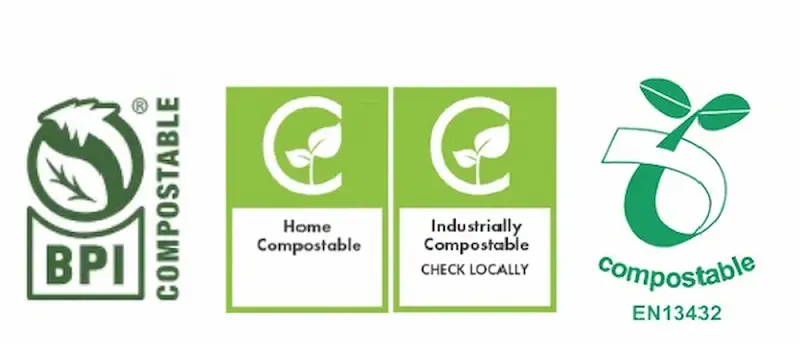
1) TÜV OK Compost (Industrial vs. Home):
OK Compost INDUSTRIAL: The product will only break down in a high-heat industrial composting facility.
OK Compost HOME: The product will break down in a backyard compost pile.
2) BPI (Biodegradable Products Institute): This is the leading certification for the North American market. If you are selling in the U.S., a BPI logo on your product is often a requirement for listing in major eco-friendly catalogs.
A Common Mistake: Biodegradable vs. Compostable
Many buyers accept a "biodegradable" claim without a certificate. Legally, in many regions (like California), you cannot even use the word "biodegradable" on plastic packaging because it is too vague. You must use "compostable" and back it up with a specific certification (ASTM D6400).
Certification requirements are not uniform; they are dictated by the destination market’s legal framework. Buyers should check the specific compliance landscape of their target region to ensure smooth customs clearance and market entry.
Even experienced procurement officers can be misled by confusing documentation. Here are the most frequent pitfalls:
While the FDA is prestigious, it does not satisfy EU Law. The EU requires a Declaration of Compliance (DoC), which is a specific legal document the supplier must sign. An FDA test report alone will not satisfy a European customs officer or a French retailer.
A supplier might show you a certificate for the raw material (e.g., the PLA resin pellets) and claim the final product (the cup) is certified. This is insufficient. The manufacturing process (adding heat, pressure, or inks) can change the chemical properties of the material. Buyers should check that the testing was performed on the finished article.
Always look at the photos inside a test report. If the report shows a white paper plate, but you are ordering a plate with a full-color floral print, that report is invalid. The inks and coatings must be tested, as they are the most common source of heavy metal contamination.
Certificates usually have a validity period or require annual audits. Check the date. Furthermore, always verify the certificate number on the issuing body's website (e.g., the FSC public database or the SGS verification portal).
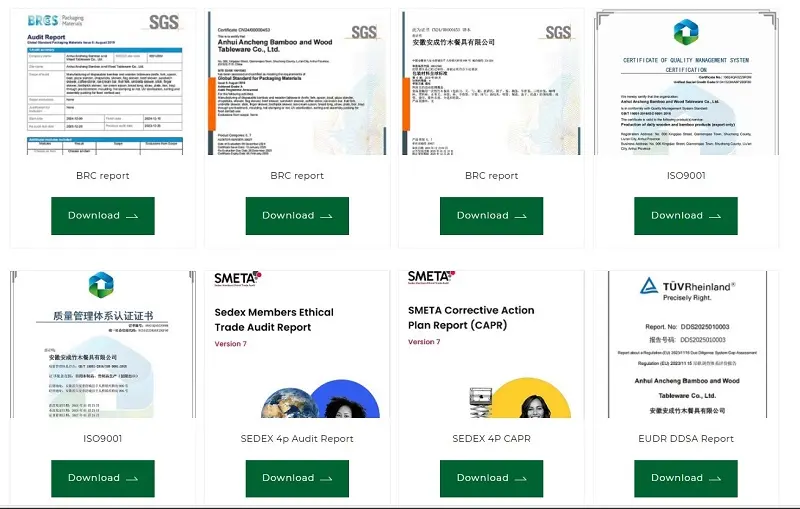
Ancheng's certifications
To protect your business, you must move beyond simply collecting PDFs. Follow this verification checklist:
1. Request the Full Test Report, Not Just the Certificate: A certificate is a summary; the test report (usually 10-20 pages) shows exactly what was tested, the limits, and the results for each chemical.
2. Verify the Issuing Laboratory: Is the report from a reputable, third-party lab? Look for names like SGS, Intertek, TÜV Rheinland, Bureau Veritas, or Eurofins. Reports from unknown, local labs may not be accepted by your local authorities.
3. Check the "Declaration of Compliance" (DoC): For the EU market, specifically ask for the DoC. This document must state which regulations the product meets, the types of food it is safe for (e.g., fatty foods, acidic foods), and the temperature limits.
4. Batch Consistency: Ask the supplier how they ensure that the mass-produced goods match the "golden sample" sent to the lab. A professional supplier will have an internal Quality Control (QC) plan that involves periodic re-testing.
Q: Is it okay if my supplier doesn't have an FSC certificate but their paper provider does?
A: No. If you want to sell the product as "FSC Certified," the manufacturer must have their own Chain of Custody (CoC) certificate. Without it, the "chain" is broken, and the claim is legally invalid.
Q: Do I need new tests for every order?
A: Generally, no. Most buyers require test reports to be updated every 12 to 24 months, provided the material and the manufacturing process have not changed. However, for high-volume or high-risk items, some buyers perform "random batch testing."
Q: Are "compostable" products always better?
A: Not necessarily. If your region doesn't have industrial composting infrastructure, a compostable cup might end up in a landfill where it won't break down properly. Buyers should choose the certification that matches the end-of-life reality of their specific market.
Q: What is the most important certification for the UK market?
A: Post-Brexit, the UK follows the UKCA marking for some goods, but for food-contact materials, they currently maintain standards very similar to the EU (Regulation 1935/2004). However, the UK has specific "Plastic Packaging Tax" requirements that buyers should investigate.
Certifications play a critical role in food service product sourcing—but only when they are relevant, valid, and properly understood. Buyers should focus on the certifications that directly affect market access, safety, and brand credibility, rather than collecting unnecessary paperwork.
By understanding which certifications matter, verifying supplier claims, and avoiding common mistakes, buyers can reduce risk, control costs, and build more reliable supply chains. In food service procurement, the right certification is not just compliance—it’s protection.
Navigating the complexities of global food service certifications shouldn't be a hurdle to your business growth. At Ancheng, we specialize in providing high-quality, eco-friendly disposable tableware that meets the most stringent international standards, including FDA, LFGB, and FSC requirements. We understand that your reputation depends on the safety and integrity of the products you source.
Whether you are looking for compostable bagasse plates, sustainable bamboo cutlery, or premium paper packaging, our team is ready to provide the transparent documentation and third-party test reports you need for total peace of vigilance.
Ready to secure your supply chain with certified excellence? Contact Ancheng Today to request our latest compliance portfolio or a customized quote for your next project. Let’s build a safer, more sustainable future together.

Hello, I'm Sven Wang, the Manager of Ancheng. With extensive expertise in raw materials and production processes, I'm dedicated to advancing sustainable tableware and constantly improving eco-friendly options for the modern catering industry. You can trust that Ancheng is committed to providing the highest quality. Welcome!

Factory: Qian Renqiao Industrial Park, Shucheng County, Luan City, Anhui Province, China
Office: Building 11, Max Science Park, Shushan Dist, Hefei, Anhui, China
Copyright ©2026 Anhui Ancheng Bamboo and Wood Tableware Co., Ltd. Privacy Policy


 Index
Index Product
 Resources
 About
About