In the modern food service industry, controlling operational costs is just as important as maintaining food quality and service standards. Restaurants, catering companies, hotels, and institutional food providers all rely on a wide range of Food Service Products to support daily operations. These products include food service supplies such as disposable tableware, food service packaging, food service containers, and various kitchen and service consumables.
As competition within the food service sector continues to intensify, businesses are under constant pressure to optimize expenses while ensuring consistent supply and quality. One of the most effective ways to achieve this balance is through wholesale procurement. Food Service Products Wholesale plays a critical role in reducing unit costs, stabilizing supply chains, and improving overall operational efficiency.
This article provides a comprehensive cost analysis of food service products wholesale. By examining cost structures, influencing factors, and the advantages of wholesale purchasing, this article aims to help food service businesses make informed procurement decisions.
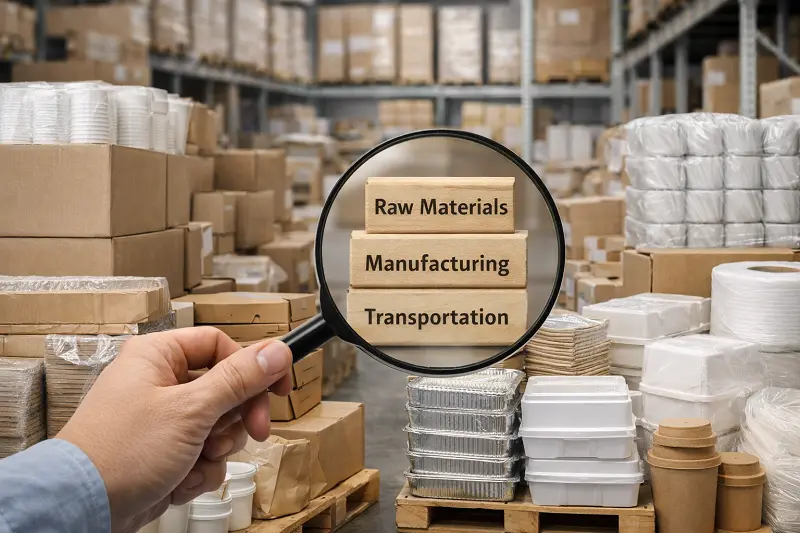
To understand the true cost advantages of wholesale procurement, it is essential to examine the primary cost components involved in producing and distributing food service products.
Raw materials form the foundation of food service supplies. Common materials include paper pulp, cardboard, wood, plastic resins, aluminum foil, and increasingly, eco friendly and compostable materials. The cost of these raw materials directly influences the final price of food service packaging products.
Market fluctuations, energy prices, and environmental regulations all affect raw material costs. For example, demand for sustainable food service packaging has increased the use of biodegradable materials, which may have higher base costs than traditional plastics. Wholesale suppliers are better positioned to manage these fluctuations by securing long term material contracts and purchasing in bulk.
Manufacturing costs include labor, machinery, energy consumption, equipment maintenance, and quality control. Large scale production significantly reduces the per unit manufacturing cost of food service products. In wholesale operations, production lines are optimized for high volume output. This efficiency allows manufacturers to spread fixed costs across large quantities, resulting in lower unit prices for bulk food service products. Automation also plays a growing role in controlling labor costs while maintaining product consistency.
Standardization is the friend of low cost production. However, many brands now require customized food service packaging products to differentiate themselves. Laser engraving a logo on a bamboo stirrer or heat stamping a brand on a wooden spoon adds a layer of manufacturing complexity.
This customization involves setup fees for molds or plates and slower production speeds. When performing a cost analysis, purchasers and wholesalers must weigh the marketing value of branded supplies against the increased unit cost. However, once your purchase volume reaches a certain threshold, manufacturers typically waive customization fees such as mold costs.
Warehousing is another significant cost component. Food service supplies require storage space, inventory management systems, and handling labor. Holding large inventories ties up capital and incurs storage expenses.
Wholesale food service supplies providers typically operate centralized warehouses that serve multiple clients. This shared infrastructure reduces individual storage costs and improves inventory turnover. Efficient inventory management minimizes waste, damage, and stock obsolescence, further lowering overall costs.
Transportation costs vary based on product size, weight, shipping distance, and delivery frequency. Food service packaging products often have high volume relative to weight, making logistics planning critical.
Wholesale shipments consolidate large quantities into fewer deliveries, reducing transportation cost per unit. Long term partnerships with logistics providers allow wholesale suppliers to negotiate favorable shipping rates, which are then reflected in competitive pricing for customers.
In the modern market, a product without a paper trail is a liability. For food service products, certifications such as FSC for sustainable forestry or FDA and LFGB for food safety are mandatory for high end markets. While products from uncertified factories might be cheaper, the risk of shipment seizures or legal fines is a hidden cost that can bankrupt a distributor. Investing in certified food service supplies wholesale ensures a smooth supply chain and protects the buyer from the catastrophic costs of non compliance.

Wholesale procurement offers multiple cost advantages that extend beyond simple unit price reductions.
One of the most significant benefits of Food Service Products Wholesale is economies of scale. By purchasing large volumes, wholesale buyers gain access to lower unit prices that are not available through retail channels.
Manufacturers prioritize high volume orders because they ensure stable production schedules and predictable revenue. As a result, they offer favorable pricing to wholesale customers who commit to bulk food service products purchases.
Sourcing directly from a manufacturer like Ancheng eliminates the "middleman markup." Every entity in a supply chain—from agents to regional distributors—adds a margin. By establishing a direct relationship with the factory, wholesalers can access lower prices and have more control over the production timeline. This also facilitates better communication regarding quality standards and custom requirements.
Reliable wholesale supply reduces the hidden costs associated with last minute purchasing, emergency sourcing, and inconsistent product availability. Stable supply chains help businesses plan operations more effectively and avoid disruptions that can impact service quality and profitability.

The regulatory environment is rapidly becoming a "cost center" for those who stick with traditional plastics.
Many regions are implementing "Plastic Taxes." These are direct levies on single use plastic items. By switching to food service paper products or wooden alternatives, businesses can bypass these taxes entirely. In this light, a wooden spoon is not just a utensil; it is a tax avoidance strategy.
For large scale venues like stadiums or festivals, the cost of waste disposal is massive. Traditional food service packaging products must be sorted and sent to landfills. However, compostable wooden and bamboo products can often be processed alongside organic food waste. This simplifies the waste stream and can significantly lower disposal fees for the end user. Wholesalers who provide these solutions are offering a service that saves their customers money in the long run.
Retail purchasing is convenient for small or infrequent needs, but it carries significantly higher per unit costs. Retail prices include additional margins for packaging, storefront operations, and distribution layers.
Wholesale food service supplies offer lower costs, consistent quality, and predictable availability, making them more suitable for ongoing business operations.
Spot purchasing involves buying supplies as needed, often from multiple vendors. While this approach may appear flexible, it leads to inconsistent pricing, higher administrative costs, and a greater risk of supply shortages.
Wholesale procurement simplifies purchasing processes and reduces management overhead. Long term wholesale relationships also provide pricing stability that spot purchasing cannot offer.
The most significant lever in wholesale cost control is the choice of supply channel. For high-volume buyers, the decision between buying from a local distributor and importing directly from a specialized factory like Ancheng is a clear financial choice.
By eliminating the middleman, the buyer assumes more logistical responsibility but unlocks massive long-term savings and strategic control.
1) Price Deflation: Direct wholesale pricing is the foundational benefit, typically saving 30% or more on a full container load compared to distributor pricing.
2) Logistical Efficiency: The largest logistical cost component is often the Freight Cost Per Unit. As a factory, Ancheng specializes in optimizing container loading to maximize the number of units shipped, thereby driving down the per-unit freight cost.
3) Cost of Lead Time: Direct sourcing necessitates a longer lead time (e.g., 60-90 days total). The buyer must manage larger inventory levels, introducing the Cost of Capital (cash tied up in inventory).
Mitigation: This risk is managed by forecasting accuracy and scheduled blanket orders—a predictable supply chain practice that provides the greatest overall cost stability.
4) Compliance Assurance: Direct engagement with the source allows the buyer to perform rigorous audits and secure copies of all critical certifications (FSC, FDA, Compostability). This is the only way to genuinely confirm product quality and mitigate legal risk, which is a priceless cost avoidance.
The final variable in your cost analysis is the reliability of the supplier. A "low quote" from an unverified source often leads to:
1) Inconsistent quality leading to high defect rates.
2) Delayed shipments that force expensive emergency local sourcing.
3) Lack of transparency in the supply chain.
A. A reliable supplier should offer a comprehensive range of food service supplies, including food service packaging supplies, food service paper products, and food service containers. A broad product portfolio reduces the need to manage multiple vendors. This one-stop solution saves time and money on procurement.
B. Customization capabilities are important for businesses seeking branded packaging solutions. Suppliers with strong manufacturing and design capabilities can offer cost effective customization at scale.
C. Logistics and delivery performance are equally critical. Timely delivery and flexible shipping options reduce the need for excess inventory and emergency orders.
D. Quality assurance and compliance with food safety standards protect businesses from costly issues related to product defects or regulatory non compliance.
Food Service Products Wholesale plays a vital role in helping food service businesses manage costs, ensure consistent supply, and maintain operational efficiency. By understanding the cost components behind food service supplies and packaging products, businesses can make informed purchasing decisions that support long term growth.
Wholesale procurement offers clear advantages in pricing, supply stability, and scalability. As the food service industry continues to evolve, partnering with a professional and reliable wholesale supplier remains one of the most effective strategies for controlling costs and supporting sustainable operations.
Through careful supplier selection and strategic purchasing, businesses can leverage wholesale food service supplies to build a resilient and cost efficient foundation for success.
A partner like Ancheng, with integrated manufacturing capabilities and a focus on the international B2B market, provides stability. For wholesalers and large organizations, this stability is a form of "cost avoidance." Knowing that your bulk food service products will arrive on time and to specification allows for leaner inventory management and better cash flow.
By focusing on consistent quality, scalable production, and reliable supply, Ancheng helps clients simplify procurement, control long term costs, and respond efficiently to changing demand. Whether you are sourcing for restaurants, hotels, distributors, airlines, or institutional food service operations, our team works closely with you to provide practical, cost effective wholesale solutions tailored to your needs.
If you are looking for a trusted partner to support your bulk food service products procurement, Ancheng is ready to help you move forward with confidence.

Hello, I'm Sven Wang, the Manager of Ancheng. With extensive expertise in raw materials and production processes, I'm dedicated to advancing sustainable tableware and constantly improving eco-friendly options for the modern catering industry. You can trust that Ancheng is committed to providing the highest quality. Welcome!

Factory: Qian Renqiao Industrial Park, Shucheng County, Luan City, Anhui Province, China
Office: Building 11, Max Science Park, Shushan Dist, Hefei, Anhui, China
Copyright ©2026 Anhui Ancheng Bamboo and Wood Tableware Co., Ltd. Privacy Policy


 Index
Index Product
 Resources
 About
About