In recent years, the packaging industry has seen a significant shift toward sustainable alternatives to conventional petroleum-based plastics. One of the major success stories in this transition is Polylactic Acid (PLA) — a bioplastic derived from renewable resources. But PLA has its limitations. To meet the demands of hot foods, higher rigidity and broader end-use environments, two derivatives have gained traction: Crystallized Polylactic Acid (CPLA) and Talc‑Injected Polylactic Acid (TPLA).
This blog explores what these materials are, their advantages, their applications, and whether it’s worth adding a dedicated section on their differences.
PLA, or polylactic acid, is a thermoplastic aliphatic polyester derived from renewable biomass, typically fermented plant sugars like corn starch, cassava, or sugarcane. The process involves fermenting the extracted sugar (glucose) to produce lactic acid, which is then polymerized into the PLA resin. As a bio-based material, PLA significantly reduces reliance on fossil fuels in its production. Crucially, PLA can also be processed in industrial composting facilities, breaking down into natural components like water and carbon dioxide within a few months, unlike conventional plastic, which can persist for hundreds of years. However, its low heat deflection temperature (around 50℃ to 60℃) means that PLA is primarily suitable for PLA products such as cold beverage cups and cold food containers. This limitation is what necessitated the structural enhancements found in CPLA and TPLA.
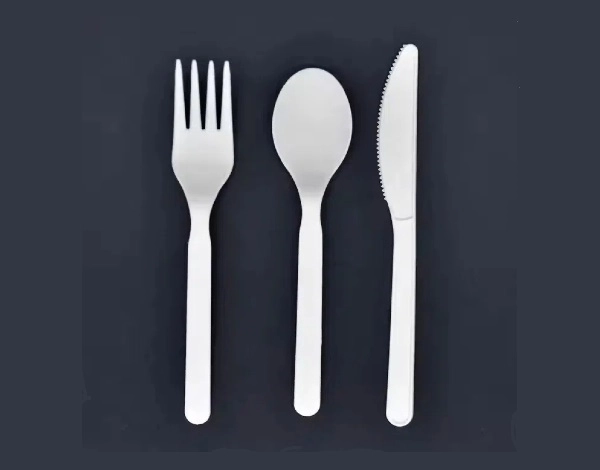
CPLA stands for Crystallized Polylactic Acid. It is a modified form of PLA that undergoes an additional manufacturing process to increase its structural integrity and heat resistance. The process involves applying high heat and pressure to the PLA resin, often with the addition of nucleating agents like chalk and other biodegradable, bio-based additives. This rapid heating and cooling causes the PLA polymer chains to align and form a crystalline structure—hence the name, Crystallized PLA.
This crystallization is key: it makes the resulting material significantly harder, more durable, and less susceptible to heat degradation. Unlike standard PLA, which is typically clear, CPLA plastic is opaque, usually white or black (when a natural pigment like charcoal is added).
TPLA is a different modification of the basic PLA polymer, often referred to as Talc-injected PLA. It is formulated by blending PLA resin with a high-thermal-stability mineral, most commonly talc, an abundant natural resource. The mixture typically contains a ratio of approximately 70% PLA and 30% talc.
The role of talc in TPLA is to act as a reinforcing filler and nucleating agent, significantly enhancing the material's ability to be injection molded into sturdier, more rigid, and more heat-resistant products. This modification makes tpla an excellent choice for items requiring strength and moderate-to-high temperature performance, such as PLA cutlery and utensils.
The most significant difference lies in their composition and production. CPLA achieves its superior properties through a purely structural transformation and remains 100% bio-based. TPLA, on the other hand, utilizes a natural mineral additive to achieve its enhanced performance, making it slightly less bio-based but potentially capable of handling marginally higher temperatures and offering enhanced rigidity for specific injection-molded products like biodegradable cutlery.
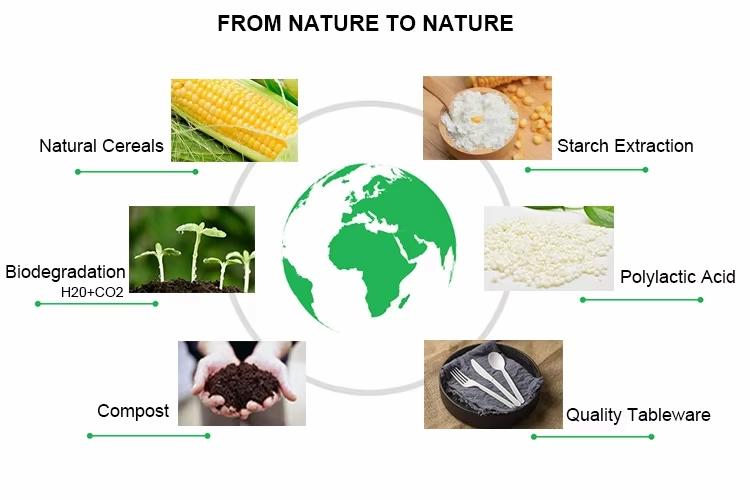
The modifications inherent in CPLA and TPLA amplify the core benefits of PLA while addressing its major weakness, making them highly effective materials for sustainable packaging.
1. Superior Heat Resistance: This is the most critical advantage. By withstanding temperatures of 85℃ to 93℃, both materials are perfectly suited for hot food and hot beverage applications, which was previously impossible with standard PLA. This allows them to effectively replace polystyrene and polypropylene in hot food service items.
2. Reduced Carbon Footprint: Like PLA, both materials are derived from renewable, plant-based sources. The plants (e.g., corn) absorb CO2 as they grow, offsetting some of the greenhouse gas emissions from manufacturing. The production of PLA and its derivatives often requires up to 65% less energy than traditional plastics.
3. 100% Compostability: Both CPLA and TPLA are certified compostable in commercial composting facilities, meaning they are designed to fully break down under specific conditions of heat and microbial activity. This helps divert organic waste and packaging from landfills. The resulting decomposed material is non-toxic and returns to the earth as natural components.
4. Durability and Strength: The crystallization of CPLA and the talc-injection in TPLA significantly improve the mechanical properties of the material, making it much more durable and rigid than standard PLA. This enhanced strength is vital for robust applications like cutlery and food containers.
5. Non-Toxic and Safe: Both materials are non-toxic, making them safe for food contact. Furthermore, unlike some conventional plastics, they do not emit toxic fumes upon incineration (though composting is the preferred end-of-life option).
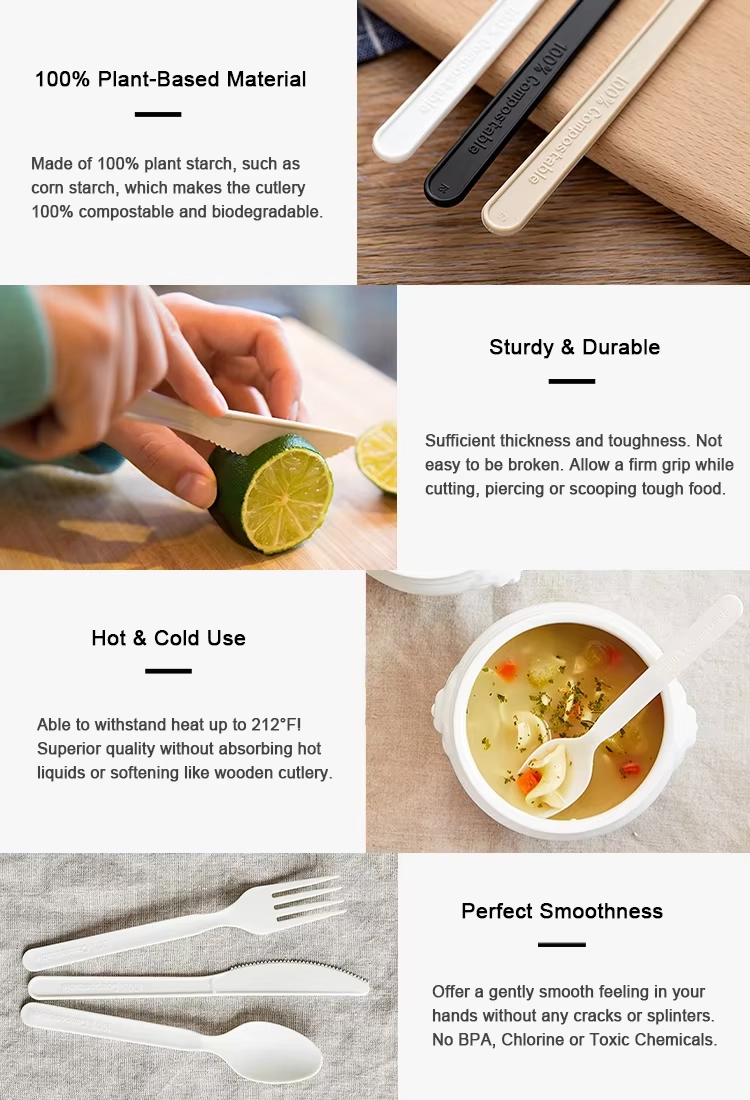
As single-use items, particularly pla cutlery and cpla packaging, face immense scrutiny, CPLA and TPLA offer a viable path to sustainability for the food service industry.
1. Robustness for Hot Foods: For a restaurant serving hot meals, CPLA or TPLA compostable cutlery is essential. The improved heat resistance ensures that a cpla fork or knife will not warp, melt, or become brittle when used with hot dishes, a common failure point of standard PLA utensils.
2. A Complete Sustainable Solution: CPLA enables a full-circle compostable pla solution for hot beverages. PLA can be used for the inner lining of paper cups, and CPLA can be used for the corresponding heat-resistant lids. Similarly, CPLA can be used for soup container lids, ensuring a cohesive and compostable packaging system for a variety of hot items.
3. Superior Biodegradable Cutlery: The added strength and rigidity from the crystallization (CPLA) or the mineral filler (TPLA) make the cpla utensils feel more substantial and perform better than many other biodegradable alternatives, enhancing the user experience.
4. Clear Environmental Message: Using products made from CPLA and TPLA allows businesses to confidently market their packaging as sustainable, compostable pla products, addressing the growing consumer demand for eco-friendly alternatives.
When used for utensils or packaging, CPLA and TPLA enable a combination of functional performance and sustainability, which standard PLA sometimes cannot deliver.
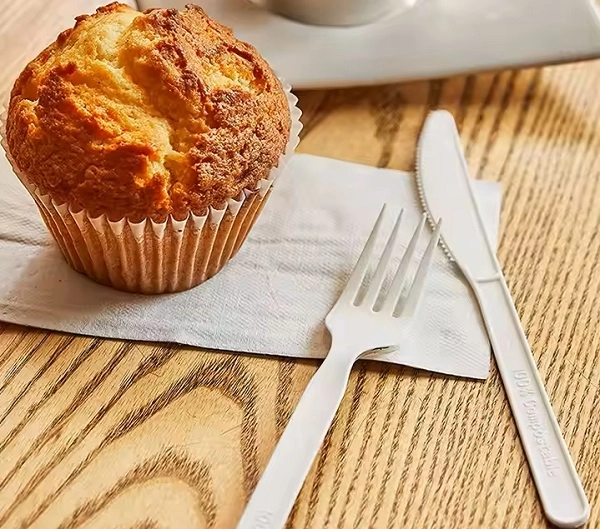
Because of their robustness and sustainable credentials, CPLA and TPLA are used in a variety of packaging and tableware applications. Here are some of the common uses:
1. Hot Beverage Lids: The most prevalent application is CPLA lids for hot coffee cups and to-go beverage containers. Their heat stability ensures they maintain their shape and seal without deforming.
2. Cutlery and Utensils: CPLA cutlery is a dominant force in the market for biodegradable cutlery. Their strength makes them comparable to conventional plastic utensils, ideal for take-out and catering.
3. Hot Food Containers: Lids and containers for hot soups, chilis, and microwavable meals leverage CPLA’s heat tolerance.
4. Durable Tableware: Plates and bowls designed for warmer foods at events and catering, offering a sturdy, disposable, and compostable option.
1. Rigid Cutlery and Utensils: TPLA utensils are highly favored for pla cutlery due to the enhanced rigidity provided by the talc, making them exceptionally durable for eating more solid or tough foods.
2. Sturdy Food Containers: TPLA is used for injection-molded containers and bowls that require a very high degree of structural stability and resistance to moderate heat.
3. Food Packaging Components: Components that require high rigidity during the packaging and distribution process.
While CPLA and TPLA are for hot items, the underlying PLA material remains the choice for a massive range of cold and room-temperature products, often lining paper or board products to make them leakproof:
1. Cold Cups and Lids: Clear cups for smoothies, sodas, and iced drinks.
2. Deli and Salad Containers: Clear containers and bowls for cold salads, fruits, and pre-packaged deli items.
3. Laminations: PLA is used as a moisture-resistant lining in paper cups, paper bowls, and clear windows on sandwich wedges and salad boxes.
4. Straws: PLA straws are a standard alternative to conventional plastic straws.
The journey from standard PLA to the advanced CPLA and TPLA materials marks a significant stride in sustainable packaging. By solving the critical heat-resistance challenge, these bio-based plastics offer a genuinely viable, high-performance alternative to traditional single-use plastics across the entire spectrum of food service, proving that performance and sustainability can, and must, go hand in hand. As the infrastructure for industrial composting continues to expand, CPLA and TPLA will only further cement their position as indispensable components of the future of eco-friendly packaging.
Ready to make the switch to high-performance, eco-friendly food service items? At Ancheng, we specialize in advanced sustainable solutions, including premium CPLA cutlery and compostable packaging. Our CPLA products are designed to withstand high temperatures and offer the durability your customers expect, all while being certified 100% compostable. In addition, bamboo, wood, sugarcane bagasse, and paper tableware can also meet your food service needs. Contact us today for more details and factory pricing.

Hello, I'm Sven Wang, the Manager of Ancheng. With extensive expertise in raw materials and production processes, I'm dedicated to advancing sustainable tableware and constantly improving eco-friendly options for the modern catering industry. You can trust that Ancheng is committed to providing the highest quality. Welcome!

Factory: Qian Renqiao Industrial Park, Shucheng County, Luan City, Anhui Province, China
Office: Building 11, Max Science Park, Shushan Dist, Hefei, Anhui, China
Copyright ©2026 Anhui Ancheng Bamboo and Wood Tableware Co., Ltd. Privacy Policy


 Index
 Product
 Resources
 About