Toothpicks made from bamboo and birch wood may look similar in a product catalogue, but material choice can affect rigidity, appearance, sourcing documentation and how the finished product is positioned in the market. Buyers sourcing for hotels, restaurant chains and retail brands often overlook regulatory and consistency risks when selecting toothpick materials.
There is no universal winner. A well-manufactured bamboo toothpick is not automatically better than a birch wood toothpick, and material alone does not determine whether a toothpick will be smooth, straight or resistant to splitting. For wholesale buyers, the right choice depends on the required user experience, packaging format, brand positioning and destination market.
This guide compares bamboo and birch wood toothpicks from a practical B2B purchasing perspective.
| Buyer Consideration | Bamboo Toothpicks | Birch Wood Toothpicks |
|---|---|---|
| Material feel | Generally firmer and more rigid | Usually feels slightly softer and less rigid |
| Appearance | Warm natural tone with more visible fibre variation | Pale, clean colour with greater visual consistency |
| Surface quality | Depends on fibre selection, drying and polishing | Depends on veneer quality, grain direction and polishing |
| Point options | Single-pointed and double-pointed | Single-pointed and double-pointed |
| Available treatments | Plain or mint-treated options | Plain or mint-treated options |
| Packaging | Bulk bags, paper boxes, bottles and individual wrapping | Bulk bags, paper boxes, bottles and individual wrapping |
| Private label | Custom printing, labels and retail packaging supported | Custom printing, labels and retail packaging supported |
| FSC availability | Available for suitable orders and supply arrangements | Available for suitable orders and supply arrangements |
| EUDR consideration | Pure bamboo products are generally outside its scope | May fall within its scope when the relevant CN classification is covered |
| Typical reason to choose | Firmer feel and a visible bamboo material story | Pale, uniform appearance and familiar wooden-toothpick presentation |
This table summarizes the differences between toothpicks made from two different materials. Specific products must be manufactured and evaluated according to your specifications.
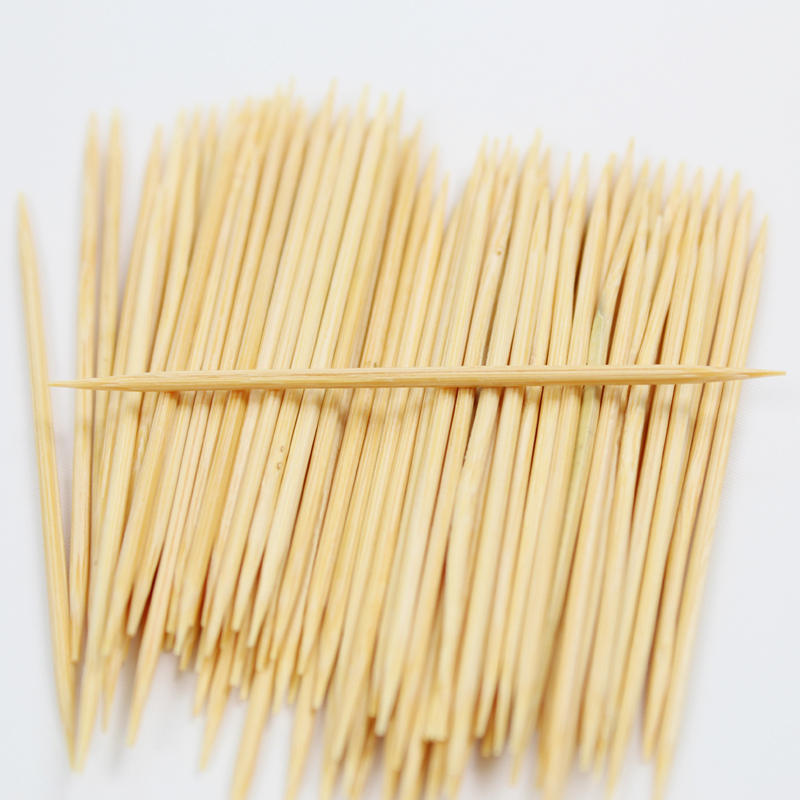
Bamboo is a grass with long, closely aligned fibres. Once the bamboo has been split, shaped, dried and polished correctly, these fibres can produce a firm toothpick with a relatively rigid feel.
Its main commercial characteristics include:
- A harder and firmer feel in the hand
- Good suitability for standard single- and double-pointed toothpicks
- A warm natural colour
- Visible variation between fibres and production batches
- A distinct bamboo material story for retail marketing
Natural variation should not automatically be treated as a defect. However, buyers should distinguish acceptable colour variation from scorching, mildew, staining or inadequate drying.
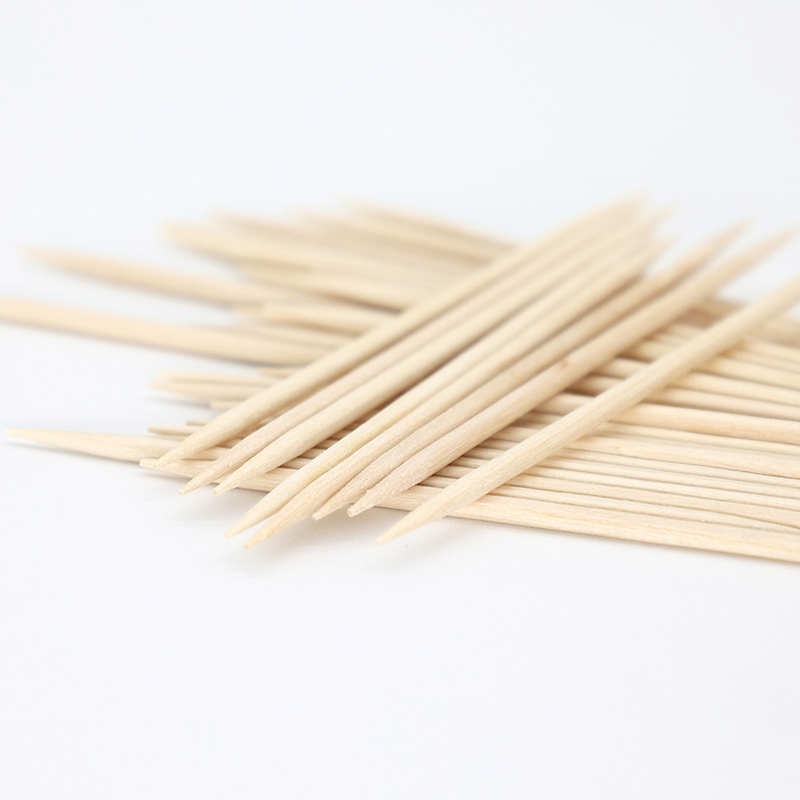
Birch is a widely established material for wooden toothpicks. In production, birch logs can be rotary-peeled into veneer before being cut, shaped and finished into individual toothpicks.
Birch is commonly selected because it offers:
- A pale and relatively uniform colour
- Fine grain suitable for shaping and polishing
- A clean, familiar wooden-toothpick appearance
- Good consistency for branded paper boxes and individual wrappers
- Reliable performance for everyday foodservice use when properly processed
Birch toothpicks may feel slightly less rigid than bamboo products of the same dimensions, but this does not render them unsuitable for regular foodservice use. Toothpick diameter, moisture control and fibre direction can be just as important as the wood species.
You can learn more about the differences in the manufacturing processes of the two types of toothpicks: How Are Toothpicks Made? Bamboo and Birch Wood Manufacturing Process
Source Bamboo or Birch Toothpicks in Bulk
Choose your material, diameter, point style and private-label packaging.
Bamboo generally has greater material rigidity than birch wood. In finished toothpicks, this can produce a firmer feel and greater resistance to ordinary bending.
However, buyers should avoid relying on statements such as “bamboo never breaks” or “birch always bends.” Finished performance also depends on:
- Toothpick diameter
- Fibre or grain direction
- Moisture content
- Drying conditions
- Point geometry
- Surface polishing
- Defect removal during inspection
A thicker 2.2 mm birch toothpick may feel more substantial than a thinner 1.8 mm bamboo toothpick. This is why buyers should compare products with the same length, diameter and point style.
For a meaningful sample test, gently bend multiple toothpicks from different parts of the carton rather than testing only one piece. Look for repeated splitting along the shaft, brittle snapping and unusually large differences between samples.
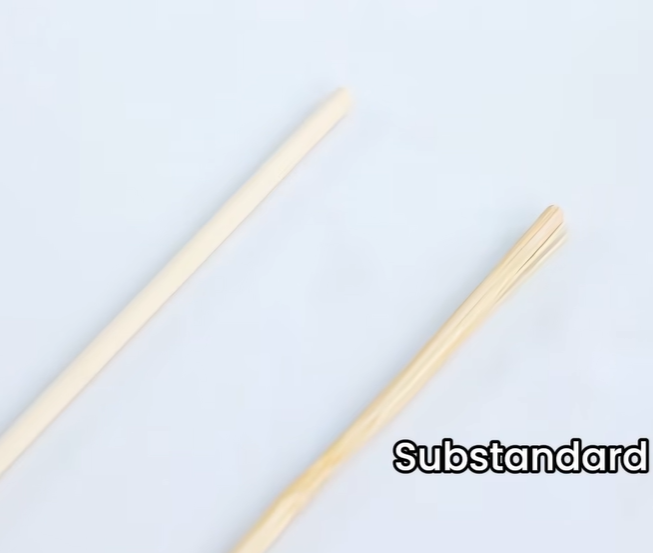
Splinter risk is primarily a manufacturing and quality-control issue, not simply a difference between bamboo and birch wood.
Both materials require:
- Proper raw-material selection
- Controlled cutting or splitting
- Correct fibre alignment
- Drying and moisture control
- Fine polishing
- Removal of cracked, rough or deformed pieces
Poorly processed bamboo may retain raised fibres or small burrs. Poorly processed birch may contain rough grain, cracks or weak sections. Well-manufactured products made from either material should be clean, smooth and comfortable to handle.
The same checks should be repeated during pre-shipment inspection because one carefully selected sales sample cannot represent an entire production batch.
Appearance may be more important than expected, especially for retail boxes, transparent bottles and individually wrapped toothpicks.
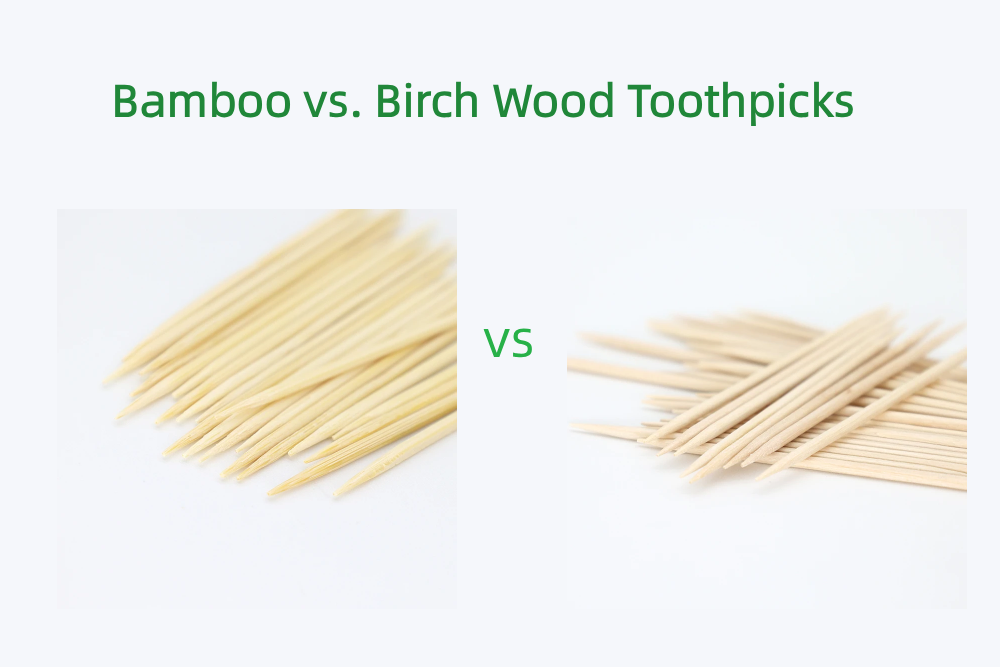
Birch usually provides a lighter, more neutral colour. Grain and tone differences still occur because it is a natural material, but the overall appearance can be relatively consistent across a batch.
This makes birch particularly suitable when buyers want:
- A clean and conventional toothpick appearance
- Consistency in transparent retail packaging
- Neutral presentation for hotels and restaurants
- A uniform background for private-label branding
Bamboo normally has a warmer tone and may show more noticeable fibre lines or colour variation. For brands that want the material itself to look natural and recognisably bamboo-based, this can be an advantage.
Bamboo may suit projects that emphasize:
- Natural material identity
- Bamboo-based product ranges
- Visible fibre character
- A less uniform, more organic presentation
Neither appearance is inherently more premium. The right choice depends on the intended brand image and the acceptable colour range approved before mass production.
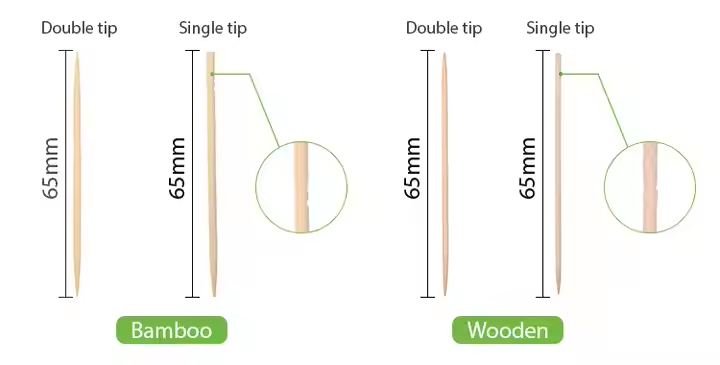
Both bamboo and birch wood can be manufactured in common toothpick configurations.
Eco-Ancheng supports a standard 65 mm length with diameter options including:
- 1.8 mm
- 2.0 mm
- 2.2 mm
Available styles include:
- Double-pointed toothpicks
- Single-pointed toothpicks
- Single-end mint toothpicks
- Double-end mint toothpicks
When choosing a diameter, buyers should consider more than unit cost. A small diameter reduces material use but may produce a lighter feel. A larger diameter can feel more substantial, but it also affects the quantity that fits inside a box, bottle or shipping carton.
Point consistency is especially important for individually wrapped products. Irregular lengths or off-centre points can interfere with wrapping equipment and make the final pack look uneven.
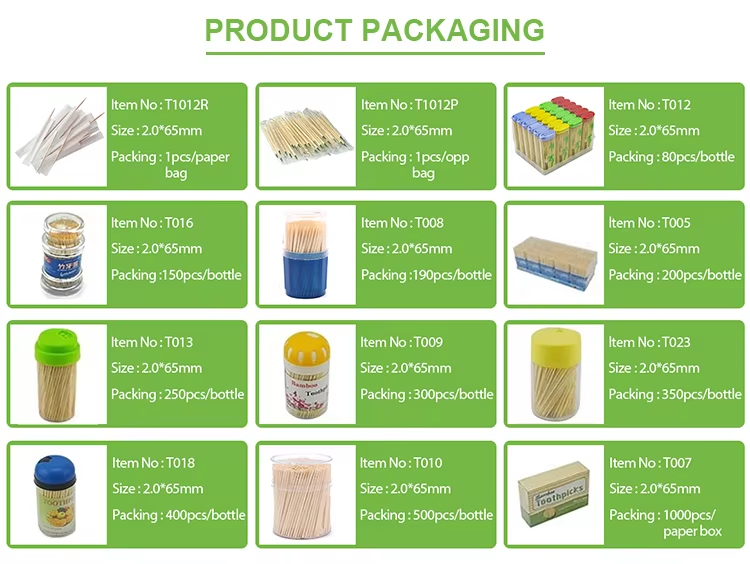
Both materials can be supplied in the same main packaging formats:
- Bulk plastic bags
- Printed paper boxes
- Plastic bottles
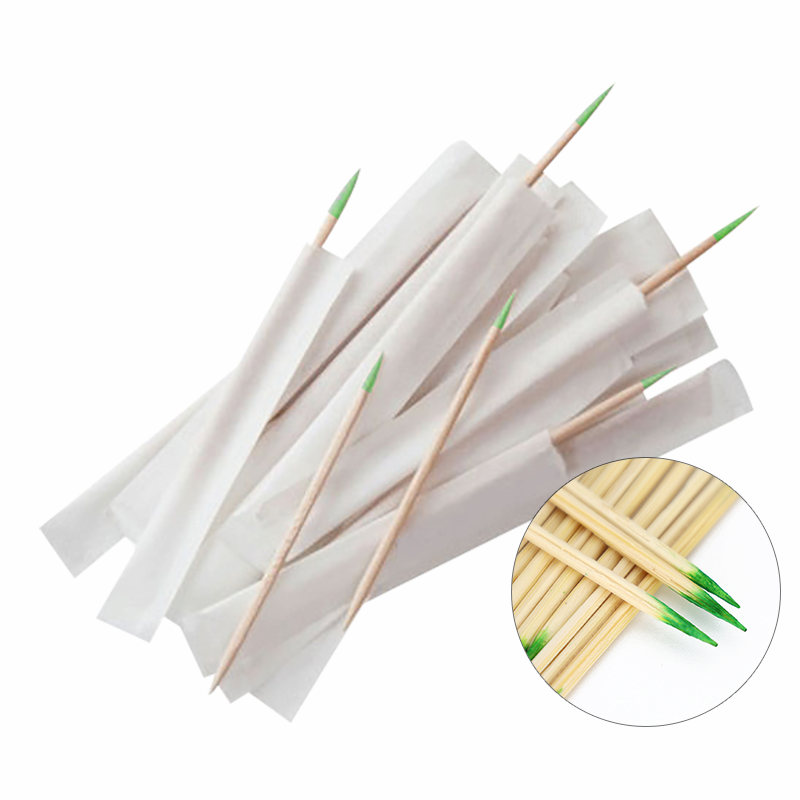
- Individually paper-wrapped packs
- Individually film-wrapped packs
Therefore, packaging does not normally require buyers to choose one material over the other. The more relevant questions are how the toothpick looks through the packaging and how the packaging will be positioned.
For example:
- A clear bottle makes colour variation more visible.
- A printed paper box places greater emphasis on branding than on the colour of each toothpick.
- Individual paper wrapping is suitable when hygiene, portion control and printed branding are priorities.
- Film wrapping keeps the toothpick visible and may make batch appearance more noticeable.
Eco-Ancheng supports custom printing, labels, barcodes, pack counts and shipping marks for both bamboo and birch wood toothpicks. MOQ is usually determined by packaging type rather than raw material: boxed SKUs start at 5,000 boxes and bottled SKUs at 20,000 bottles.
It is not reliable to state that one material is always cheaper.
The final wholesale price can be affected by:
- Length and diameter
- Single- or double-pointed design
- Plain or mint-treated finish
- Number of toothpicks per pack
- Paper, bottle or wrapping specifications
- Number of printing colours
- Carton configuration
- Order quantity
- FSC requirements
- Current raw-material and packaging costs
Buyers should compare bamboo and birch quotations using exactly the same product specification. Otherwise, a price difference caused by bottle design, pack count or printing may be mistaken for a raw material cost difference.
The lowest unit price is also not necessarily the lowest total purchasing cost. Breakage, rejected packaging, inconsistent quantities and delayed deliveries can cost more than a small difference in toothpick price.
Bamboo is widely marketed for its fast growth and ability to regrow after harvest without replanting. This gives brands a clear and easily understood renewable-material story.
Birch grows more slowly, but this does not mean birch toothpicks are automatically unsustainable. Responsibly managed forest sources and documented supply chains can support legitimate wooden-product procurement.
For both materials, buyers should verify the basis of environmental claims rather than accepting general terms such as “green” or “eco-friendly.” Relevant information may include:
- Material species
- Country of origin
- Supplier and batch records
- FSC certification where required
- Scope and validity of certification claims
- Packaging material and disposal route
FSC may support responsible sourcing claims for suitable bamboo and birch orders. However, buyers should confirm that the supplier, material, product group and transaction documents are within the applicable certification scope.
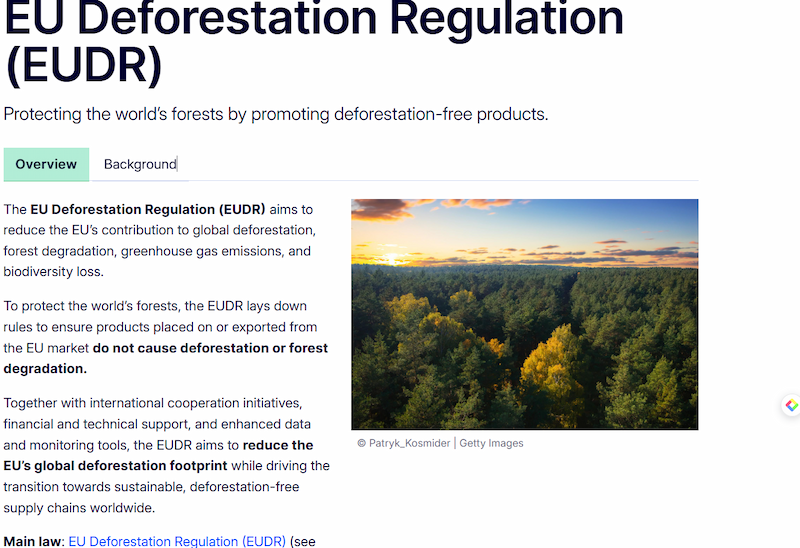
For buyers supplying the European Union, EUDR may create a meaningful distinction between the two materials.
EUDR covers wood and specified derived products listed in Annex I. Because “other articles of wood” under CN 4421 is included, birch wood toothpicks may fall within the regulation depending on their confirmed customs classification.
Where EUDR applies, the EU operator may need supply-chain information showing that the wood was:
- Legally produced
- Deforestation-free
- Not linked to prohibited forest degradation
- Traceable to the relevant place of harvest
Required information can include the wood species and scientific name, country of production, quantity, supplier details and geolocation of the plots where the wood was harvested.
The current application dates are 30 December 2026 for large and medium-sized operators and 30 June 2027 for most micro and small operators. Buyers should confirm which date and obligations apply to their own business.
EU guidance clarifies that products made from bamboo, rattan and other non‑wood woody species fall outside EUDR scope, even when a similar product code appears under the wood category. Pure bamboo toothpicks therefore generally have a simpler position under EUDR than birch wood toothpicks.
This does not exempt bamboo toothpicks from normal food-contact, customs, labelling or packaging requirements. It only means that pure bamboo is not treated as the relevant commodity “wood” under EUDR.
Because classification can depend on product composition and customs treatment, importers should confirm the applicable CN code rather than making a decision from the product name alone.
No.
FSC documentation may support sourcing verification, but it does not automatically replace EUDR due diligence, required information or declarations. For birch wood toothpicks entering the EU, buyers should treat FSC and EUDR as related but separate considerations.
Bamboo and birch wood toothpicks intended for foodservice should be evaluated as food-contact products, not merely as small wooden articles.
Depending on the destination market and order, buyers may need:
- Material identification
- Food-contact test reports
- Supplier declarations
- Product specifications
- Batch and traceability records
- Packaging and labelling information
Eco-Ancheng can support relevant food-contact documentation for both bamboo and birch wood toothpicks, including FDA-, LFGB- and DGCCRF-related testing where applicable. The precise report scope should be confirmed against the ordered material, product and destination market rather than assumed from a general certificate list.
Choose Bamboo Toothpicks When:
- You prefer a firmer, more rigid feel.
- Your product range emphasizes bamboo as a material.
- Natural fibre and colour variation fit the brand presentation.
- You are evaluating a pure bamboo option outside the EUDR wood scope.
- Your packaging communicates renewable-material sourcing.
Choose Birch Wood Toothpicks When:
- You want a pale and relatively uniform appearance.
- Visual consistency is important in bottles or retail packs.
- Your market expects a traditional wooden toothpick.
- You want a neutral material appearance for private-label packaging.
- You can support the necessary wood traceability for applicable EU orders.
Either Material Can Work When:
- Smoothness and point quality are the main requirements.
- Products will be individually wrapped.
- You require single-pointed, double-pointed or mint-treated options.
- Your decision is mainly based on packaging, price and approved samples.
In these cases, production quality should carry more weight than the material name.
Bamboo generally provides a firmer and more rigid feel, but finished strength depends on diameter, fibre alignment, moisture control and processing. It should not be treated as a guarantee that every bamboo toothpick will outperform every birch product.
Neither material is automatically splinter-free. Raw-material selection, cutting, drying, polishing and inspection determine surface quality. Buyers should inspect finished samples and confirm batch quality standards.
Yes. Bamboo and birch wood toothpicks can be supplied in individual paper or film wrappers, including private-label printing where required.
FSC options can be supported for both materials under suitable sourcing and order arrangements. Buyers should verify the precise certificate scope and claim shown on transaction documents.
Pure bamboo products are generally outside EUDR scope. Birch wood toothpicks may be covered when their product classification falls within Annex I. Importers should confirm the CN classification and their own obligations.
Bamboo and birch wood toothpicks can both perform well in foodservice, retail and hospitality applications. Bamboo generally offers greater rigidity, a warmer natural appearance and a simpler EUDR position for pure bamboo products. Birch provides a pale, consistent appearance and a familiar wooden-toothpick presentation.
However, wholesale buyers should not select material in isolation. Diameter, fibre direction, moisture control, polishing, point consistency, packaging and quality inspection have a direct influence on the finished product.
Eco-Ancheng manufactures bamboo and birch wood toothpicks in multiple diameters, point styles and packaging formats. Contact our team with your preferred material, dimensions, pack configuration and target market to review matching specs and request product samples.
Build a Custom Toothpick Product Line
Available in bamboo or birch wood with boxes, bottles and individual wrapping.

Hello, I'm Sven Wang, the Manager of Ancheng. With extensive expertise in raw materials and production processes, I'm dedicated to advancing sustainable tableware and constantly improving eco-friendly options for the modern catering industry. You can trust that Ancheng is committed to providing the highest quality. Welcome!

Factory: Qian Renqiao Industrial Park, Shucheng County, Luan City, Anhui Province, China
Office: Building 11, Max Science Park, Shushan Dist, Hefei, Anhui, China
Copyright ©2026 Anhui Ancheng Bamboo and Wood Tableware Co., Ltd. Privacy Policy




 Index
 Product
 Resources
 About