While silicone utensils are easier to maintain, wooden utensils are safer and more sustainable.
Do you think wooden utensils are obsolete? Think again- we’ll explore the dynamics of wooden vs silicone utensils in this article, and show you how they outperform their silicone counterparts in ways you’d never expect!
These utensils are purely made from wood. People love wooden utensils in their kitchen because they’re long-lasting, can handle any food, don’t damage cookware surfaces, are safe for use, and, most importantly, are environmentally friendly.
What types of wood are popularly used to make wooden utensils? Let's find out.
Two types of wood exist- softwood and hardwood, and no, you can’t determine which is softwood or hardwood by simply touching it. Softwood is derived from gymnosperm trees with evergreen needle-like leaves, like pine, cedar, and redwood.
Such trees produce cones with enclosed seeds. They are super easy to find and cultivate but aren’t long-lasting and less dense than their hardwood counterparts.
Hardwood, on the other hand, is derived from angiosperm trees. Such trees produce fruits with enclosed seeds.
They are not as easy to find, take a longer time to cultivate, and are more expensive than softwood. However, they are perfect for making disposable wooden utensils because they’re stronger, have high density, and can easily resist scratches. The best examples are birchwood, bloodwood, and jatoba.
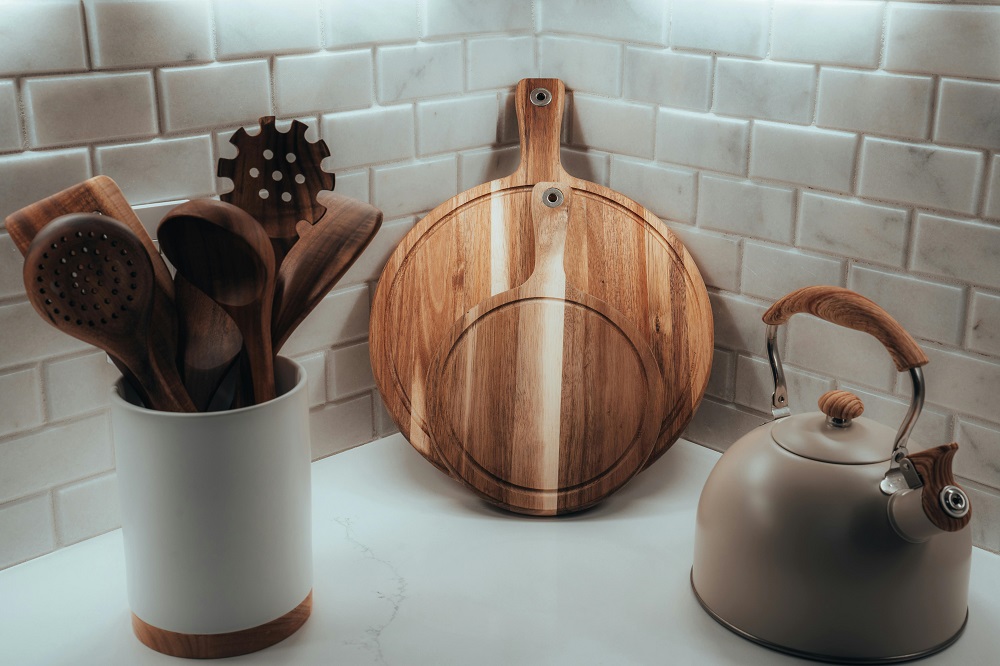
Here are the pros of wooden utensils.
Such utensils are fantastic because wood poorly conducts heat, so you don’t have to worry about extreme temperatures or burn risk.
You will never regret investing in wooden utensils because they can serve you for a long time with no defects.
Wooden utensils don’t necessarily react with acidic foods like their metal counterparts, so you don’t have to worry about the food’s taste or color changing.
Wooden utensils have this natural beauty that complements any space. Even if you have a contemporary design in your kitchen, these utensils can provide a nice blend.
Yes, wooden utensils are very beneficial, but they also have downsides. Let’s find out.
You shouldn’t clean wooden utensils with a dishwasher because it can warp or crack them due to high heat. If you must wash them, handwash and dry them quickly.
Unless treated, most wooden utensils can’t withstand high-heat cooking methods like frying. They will scorch or chip over time.
Wooden utensils can crack when exposed to high temperatures or soaked in water for long periods.
How do you care for your wooden utensils? Let’s find out.
Dishwashers and wooden utensils are incompatible because the dishwasher’s high heat, turbulent motion, and detergent will split or crack the wood. If you must clean it, pour mild soap on a soft sponge and gently clean it. Rinse off immediately.
Always store your wooden utensils in a well-ventilated area after drying. Storing the utensil with moisture in a tight place can destroy its integrity.
Oiling your utensils with food-grade coconut oil (or any mineral oil) can hinder cracking or splitting.
If you buy disposable wooden utensils and want to discard them, always look for a safe space where they can decompose and add nutrients to the soil. It takes between 84 to 180 days for this process to occur.
Popular wooden utensils include wooden spoons, knives, plates, forks, cutlery sets, teaspoons, and coffee stirrers.
A lot of people use silicone utensils in their homes, and it’s not hard to see why. As the name implies, these utensils are produced from silicone. This material is incredibly flexible and can resist high temperatures.
Even though it’s made from synthetic material, it’s not toxic. Plus, it’s sturdy enough to handle food from pots and pans without breaking or scratching the surface.
Popular silicone utensils often include spatulas, brushes, and tongs because of their flexibility. For instance, you can easily use silicone spatulas to scrape burned food from pots or pans without damaging it.
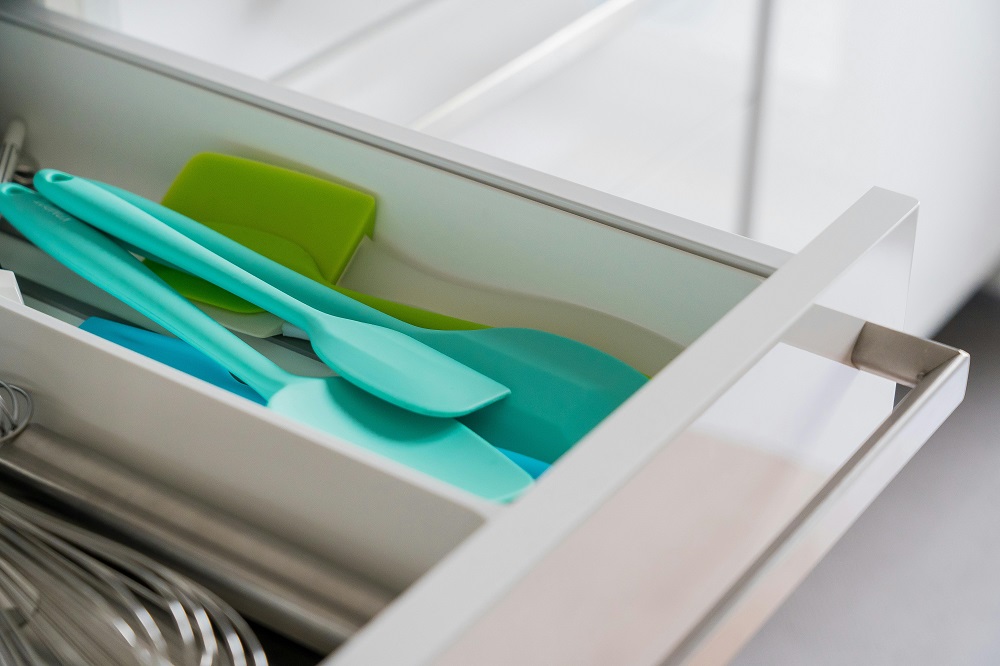
Why are silicone utensils popular? Let’s find out.
Silicone is a fantastic heat-resistant material because of its low thermal conductivity; that’s why people typically buy silicone utensils for high-temperature cooking recipes that involve frying or boiling.
Are you looking for utensils that are dishwasher safe? Silicone utensils are your best bet. They won’t chip or break with prolonged exposure to water or rough handling. It is also microwave safe.
Since silicone utensils are flexible, they can be manufactured and carved into different designs and serve almost any function.
Kitchen uses for food grade silicone also include pans and ice cream molds. However, care needs to be taken to clean it properly.
Good silicone utensils don’t scratch or damage non-stick cookware.
Here are the top reasons why silicone utensils aren’t good in the long term:
Silicone utensils are made from synthetic materials. Such materials take hundreds of years to decompose, so they are not biodegradable. If you throw them away, you will contribute to environmental pollution.
While the flexibility of silicone utensils might be a good thing, it may disqualify them from specific cooking techniques.
As a homemaker who cares about the quality of food, silicone utensils usually have some quality concerns. Most of these utensils don’t meet the needed food-grade safety standards, especially if you consider the manufacturing process it goes through, the material purity, and possible health risks.
When purchasing, choose products with the words “food grade” or “FDA approved” on the label.
Silicone utensils have little to no aesthetic appeal. You might not want them in your kitchen if you want the space to be visually enticing.
Here’s how to make your silicone utensils last for you:
Yes, you can wash your silicone utensils in a dishwasher, but you should stick to handwashing as much as possible as it improves their durability. Don’t use harsh cleaners. Mild dish soap and runny water will do.
After washing, ensure you rinse your utensils properly to eradicate any soapy remains, and leave them to dry. You can also use a clean towel to dry them.
Always check for damages on your silicone utensils, even down to the tiniest cut or deep stain. If you notice anything unusual, replace them immediately.
Keep your silicone utensils in a dry, well-ventilated environment. Ensure you don’t stack them, as you will shorten their lifespan by doing so.
When considering wooden vs silicone utensils, here are some things to consider
Silicone utensils typically last longer than wooden utensils because they’re made from synthetic material, but the issue is that they’re non-biodegradable.
However, our wooden utensils are more sustainable and eco-friendly because they decompose into the environment in no more than 180 days. You can safely dispose of it without worrying about the environmental consequences.
Yes, silicone utensils resist heating better than wooden utensils because they can condone higher temperatures. However, our disposable wooden utensils have been treated to withstand high temperatures, making them perfect for high-temperature cooking techniques like frying.
Wooden utensils are obviously more versatile and comfortable. You can use them for any type of utensil you can think of, unlike silicone utensils that people mostly use for cooking, like tongs, spatulas, and serving spoons. Also, they’re lightweight.
Here’s a summary of the differences between wooden vs. silicone utensils in tabular form:
Wooden Utensils
|
Silicone Utensils
|
Not safe for dishwasher use
|
Safe for dishwasher
|
Rigid
|
Flexible
|
Biodegradable
|
Non-biodegradable
|
Excellent aesthetic appeal
|
Little to no aesthetic appeal
|
Might crack
|
Doesn’t easily crack
|
Possibility of bacterial growth under moisture exposure
|
No possibility
|
Aside from wooden and silicone utensils, what other types exist?
Are Silicone Utensils More Durable than Wooden Utensils? imagine that they’re solid, resist extreme temperatures, and handle heavy-duty cooking.
Some people fear metal utensils because of scratched or damaged cookware, but it largely depends on usage. Of course, it’s non-biodegradable.
If you thought nylon materials were only for clothing, fabric, or food packaging, you’re wrong. Nylon utensils are made of thermoplastics and are often cheaper than their metal or silicone counterparts.
Plus, they’re flexible and easy to clean. But they are not good for use. At their core, they are toxic, synthetic materials that ooze chemicals into your food when used.
Silicone vs. nylon is a concern, especially in utensils applications where several factors need to be considered before deciding.
These types of utensils are designed for a ‘special’ purpose. Everything about them is designed with intention. Such utensils are often metallic, but it usually depends on what they’re made for. Excellent examples are pasta forks, avocado slicers, pizza cutters, oyster knives, and fish spatulas.
If you’ve been hooked on the wooden vs silicone utensils debate for so long, you must realize that both have pros and cons. Wooden utensils are more sustainable and eco-friendly, while silicone ones are more flexible and easy to clean.
As a homeowner concerned with food safety and better life quality, not just for you but for those around you, your top priority should be getting long-lasting, functional, and sustainable products. Wooden utensils fit the bill perfectly. We manufacture wooden utensils that pose no risk to your health or the environment.
Here are some questions people commonly ask:
Several benefits of silicone utensils exist, but here are some of them:
●They are incredibly heat-resistant
●Silicone utensils are durable and efficient
●They are lightweight and flexible
●Super easy to clean or maintain
Wooden utensils have several benefits, which include:
●Super eco-friendly and decomposes in days
●Improves your home’s aesthetic appeal
●They don’t react with acidic foods
●Typically long-lasting, even the disposable ones
●Low purchase and maintenance costs
●They won’t scratch or damage cookware
Silicone utensils are typically more durable than wooden utensils because they are manufactured from synthetic materials, but not to worry! We manufacture high-quality wooden utensil products that are durable and super efficient.
While silicone utensils have incredible benefits, the disadvantages definitely outweigh the advantages. Here are some of them:
●Limited heat-resistant ability, especially with hot oil
●Little to no aesthetic appeal
●Such utensils can easily discolor
●Not as rigid as their wooden or metallic counterparts
●Non-biodegradable
●Negative quality concerns
Wooden utensils might be eco-friendly and sustainable, but they also come with some disadvantages.
●Not safe for dishwasher use
●Possibility of bacterial growth when not properly washed and dried
●Can crack if inappropriately handled
●Might damage under prolonged exposure to water
Silicone utensils might have a hygienic edge over wooden utensils because of their non-porous surface. They don’t easily absorb liquids or bacteria, compared to wooden utensils.
Now that you know the difference between wood and silicone utensils, it's time to enhance your cooking and dining experience with the best tools for your needs. Whether you're looking for durability, heat resistance, or a stylish kitchen upgrade, Ancheng has the perfect solution for you. Our bamboo and wooden tableware is of the highest quality.
Contact us today and make the right choice for your meals!

Hello, I'm Sven Wang, the Manager of Ancheng. With extensive expertise in raw materials and production processes, I'm dedicated to advancing sustainable tableware and constantly improving eco-friendly options for the modern catering industry. You can trust that Ancheng is committed to providing the highest quality. Welcome!

Factory: Qian Renqiao Industrial Park, Shucheng County, Luan City, Anhui Province, China
Office: Building 11, Max Science Park, Shushan Dist, Hefei, Anhui, China
Copyright ©2026 Anhui Ancheng Bamboo and Wood Tableware Co., Ltd. Privacy Policy


 Index
Index Product
 Resources
 About
About