Discover the environmental benefits of composting. Learn how this sustainable practice reduces waste, enriches soil, and supports a healthier planet.
Composting is an environmentally-friendly practice that has been gaining popularity in recent years.
It involves breaking down organic waste such as food scraps and yard trimmings into a nutrient-rich soil amendment.
Composting has numerous benefits for the environment, including reducing waste, conserving water, and improving soil health.
One of the biggest advantages of composting is that it diverts organic waste from landfills.
When organic waste is sent to landfills, it decomposes anaerobically and produces methane, a potent greenhouse gas that contributes to climate change.
Composting instead allows organic waste to decompose aerobically, which produces carbon dioxide but at a much slower rate and without the harmful effects of methane emissions.
Moreover, composting can help conserve water by improving soil structure and water-holding capacity.
When compost is added to soil, it creates a sponge-like structure that can hold up to 10 times its weight in water.
This means that less water is needed for plants to grow, which can be especially beneficial in areas experiencing drought or water shortages.
Composting is the process of breaking down organic materials, such as food scraps and yard waste, into a nutrient-rich soil amendment.
This process is done by microorganisms, such as bacteria and fungi, that break down the organic matter into a substance that can be used to improve soil quality.
Composting can be done in a variety of ways, from backyard composting to large-scale industrial composting.
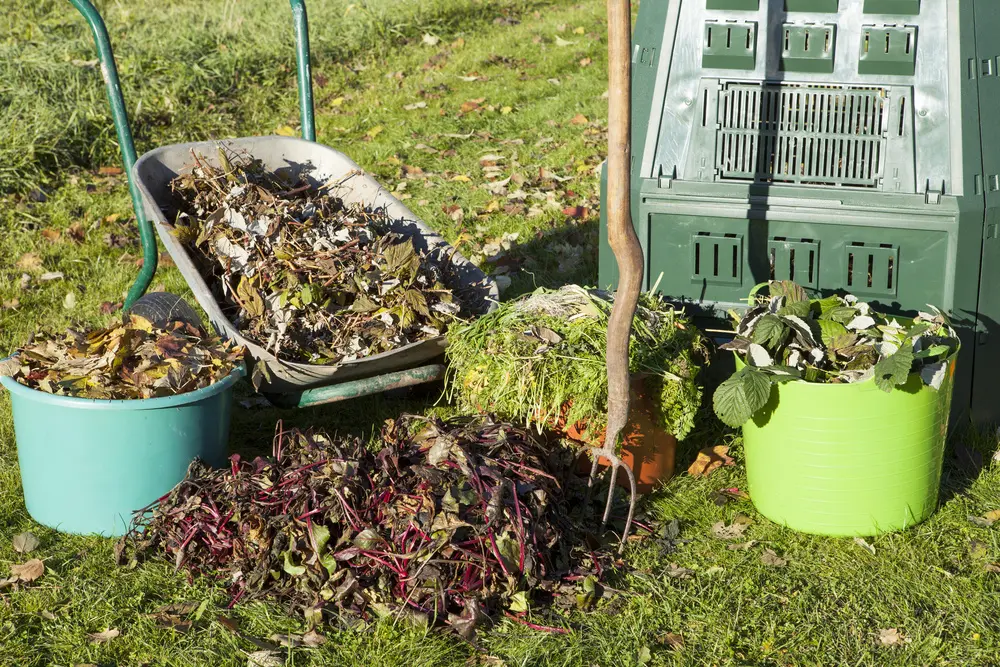
Composting is a natural process that transforms organic waste into a nutrient-rich soil amendment. The resulting compost is beneficial for soil health in several ways.
Composting is an excellent way to enrich soil with essential nutrients.
As organic matter decomposes, it releases nutrients such as nitrogen, phosphorus, and potassium, which are essential for plant growth.
These nutrients are often lacking in soil, especially in urban areas where the soil has been depleted by development and pollution.
Compost is an excellent source of these nutrients because it contains a balanced mix of organic matter.
In addition to the primary macronutrients, compost also contains micronutrients such as calcium, magnesium, and sulfur, which are essential for healthy plant growth.
Composting also improves soil structure, which is essential for healthy plant growth. Soil structure refers to the arrangement of soil particles and the spaces between them.
A healthy soil structure allows air, water, and nutrients to move freely through the soil, promoting healthy root growth and plant development.

Composting is an effective way to reduce carbon emissions and combat climate change.
When organic waste such as food scraps and yard trimmings is sent to landfills, it decomposes and releases methane, a greenhouse gas that is 25 times more potent than carbon dioxide.
However, when organic waste is composted, it is broken down aerobically, which means that it does not produce methane.
Instead, the carbon in the organic waste is converted into stable organic matter that can be used to enrich soil.
Composting helps to sequester carbon by storing it in the soil.
When organic matter is added to soil, it increases the soil's ability to retain water and nutrients, which in turn supports the growth of plants.
Plants absorb carbon dioxide from the atmosphere during photosynthesis and store it in their tissues.
When plants die, the carbon they have stored is released back into the soil, where it can be stored for long periods of time.
Composting also helps to reduce methane emissions from landfills. When organic waste is sent to landfills, it is buried under layers of garbage and other waste.
As the organic waste decomposes anaerobically, it produces methane, which is released into the atmosphere. Methane is a potent greenhouse gas that contributes to climate change.
By composting organic waste instead of sending it to landfills, methane emissions can be significantly reduced.
In fact, according to the journal Nature, composting emissions are 38-84% lower than equivalent landfill flows.
In addition to reducing methane emissions, composting also has other environmental benefits.

Composting is an effective way to divert organic waste from landfills.
When food waste and other organic materials are sent to landfills, they decompose in the absence of oxygen and produce methane, a potent greenhouse gas that contributes to climate change.
By composting these materials, such as disposable wooden and bamboo cutlery, instead, methane emissions are reduced, and valuable organic matter is returned to the soil.
Composting is a form of recycling that turns organic waste into a valuable resource.
Instead of sending organic waste to a landfill, where it decomposes and creates methane, composting allows these materials to break down in a controlled environment, producing a nutrient-rich soil amendment that can be used to improve soil health and plant growth.
Composting also reduces the need for chemical fertilizers, which can be harmful to the environment.
By using compost instead, gardeners and farmers can improve soil structure, increase water retention, and promote healthy microbial activity in the soil.
In addition to reducing waste and improving soil health, composting can also save money.
By diverting organic waste from landfills, municipalities can reduce their waste disposal costs.
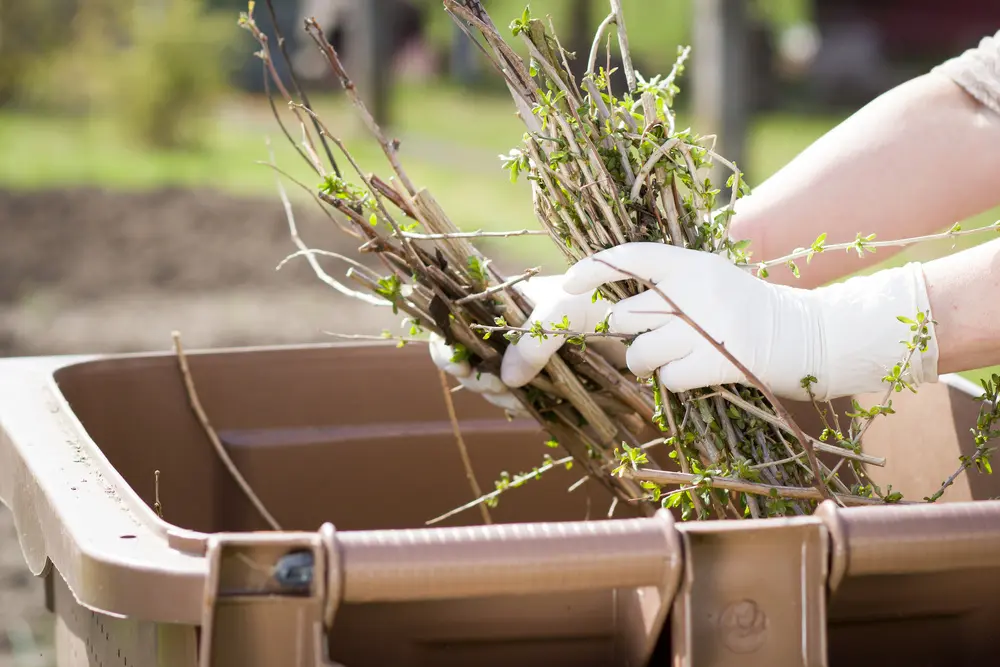
Composting is an easy and effective way to reduce waste, improve soil health, and combat climate change.
By diverting organic matter from landfills, composting reduces methane emissions and helps to slow the progression of global warming.
Compost also enriches soil, making it more fertile and better able to support plant life.
Furthermore, composting can help to reduce the use of harmful chemical fertilizers and pesticides, which can damage ecosystems and contribute to pollution.
Instead, compost provides a natural source of nutrients and helps to maintain a healthy balance of soil microorganisms. Composting is also a great way to support local agriculture and food systems.
By using compost to nourish crops, farmers can reduce their reliance on synthetic fertilizers and improve the overall health of their soil.
This, in turn, can lead to higher crop yields, better food quality, and a more sustainable approach to agriculture.
With the widespread implementation of single-use plastic bans, more compostable products are emerging in business operations and daily life. They reduce the environmental and health hazards caused by plastics.
Plant-based tableware like bamboo plates, sugarcane fiber cups, or wood cutlery sets makes daily dining safer. Ancheng is committed to providing sustainable tableware solutions for businesses, helping your restaurant comply with local regulations. Contact our experts to learn about biodegradable tableware details and factory pricing!

Hello, I'm Sven Wang, the Manager of Ancheng. With extensive expertise in raw materials and production processes, I'm dedicated to advancing sustainable tableware and constantly improving eco-friendly options for the modern catering industry. You can trust that Ancheng is committed to providing the highest quality. Welcome!

Factory: Qian Renqiao Industrial Park, Shucheng County, Luan City, Anhui Province, China
Office: Building 11, Max Science Park, Shushan Dist, Hefei, Anhui, China
Copyright ©2026 Anhui Ancheng Bamboo and Wood Tableware Co., Ltd. Privacy Policy



 Index
Index Product
 Resources
 About
About