Looking for sustainable dinnerware that looks good, too? Such environmentally responsible products have become more popular, and many companies in Germany are at the forefront with biodegradable, recycled and ethically sourced dinnerware. So, whether you are a business owner or a conscious consumer, cross-check your sustainable dinnerware supplier by looking at the list of top 10 sustainable dinnerware suppliers in Germany in 2026. Let’s dive in!
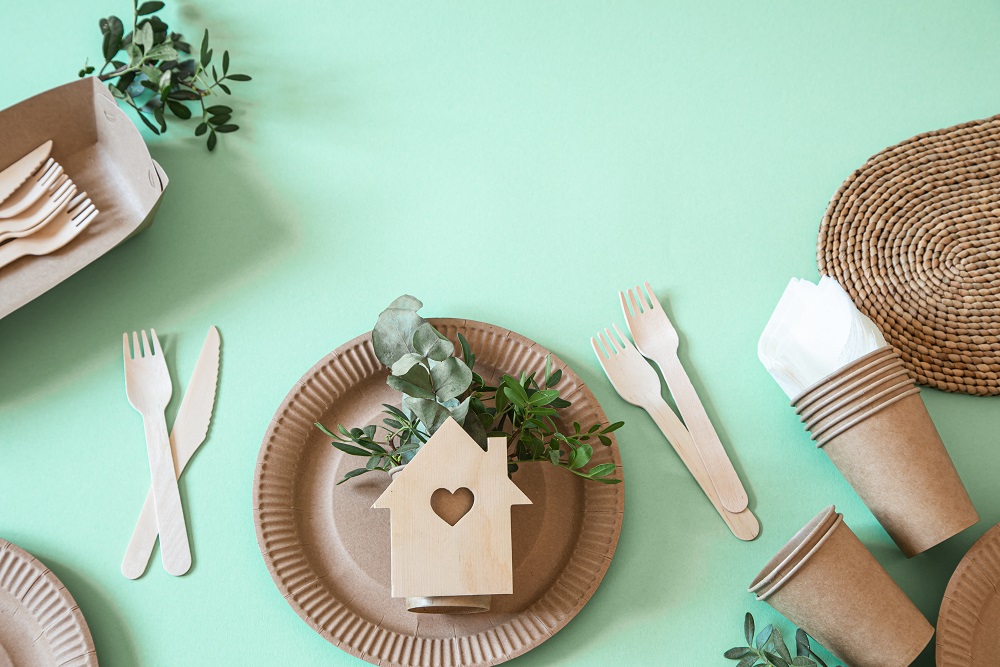
Biodegradable tableware is utensils and dishes for dining made of natural, renewable materials — for example, wood, cornstarch, sugarcane bagasse, bamboo, or palm leaves — that will decompose in nature after use without harmful effects to the environment. These products offer a more sustainable solution to plastic or non-recyclable tableware, commonly used in restaurants, catering, and homes.
1. Sustainability – Eco-Friendly and Decomposable
There is less waste and environmental pollution from using biodegradable tableware, which decomposes naturally. Unlike plastic — which can take hundreds of years to decompose — materials such as bamboo and sugarcane bagasse break down in a matter of months and leave no harmful byproducts. Biodegradable alternatives help safeguard ecosystems and marine wildlife from plastic pollution.
2. Resource Efficiency — Produced from Renewable Materials
In contrast to plastic, which is derived from fossil fuels, biodegradable tableware is made from organically renewable materials — bamboo, cornstarch, and palm leaves. They’re faster to restore and require fewer energy and water resources to create, thus scaling down carbon emissions and helping sustainability.
3. Health & Safety – No Harmful Chemicals
Plastic tableware ( plates, forks and spoons) are often made with toxic chemicals such as BPA and phthalates, which can leach into food. They are far safer for consumers because biodegradable alternatives are made from natural, non-toxic components. They’re heat-resistant, microwave-safe, and compostable, so they come packed for both convenience and well-being.
In Germany and throughout Europe, the popularity of biodegradable tableware has surged amid growing awareness of the environment and stricter regulations against single-use plastics.
1. Germany: In 2023, the revenue of the biodegradable tableware market in Germany was valued at an approximate value of USD 1,068.5 million. This is projected to grow at a compound annual growth rate (CAGR) of 6.4% to arrive at USD 1,649.6 million by 2030. In this market, plates and trays were identified as revenue-generating segments in 2023, while cutlery is expected to grow at the fastest rate over the forecast period.
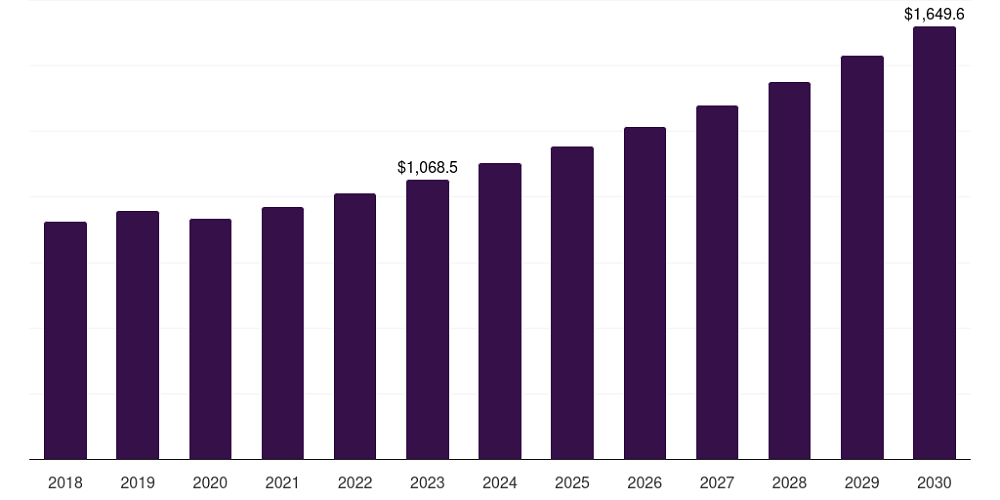
2. Europe: In 2023, the European biodegradable tableware market generated revenue of USD 5,130.4 million. The market is forecasted to grow at a compound annual growth rate (CAGR) of 6.3% from 2024 to 2030. Plates and trays held the largest share of the market in 2023, echoing Germany's performance, with cutlery focused on becoming the most profitable and fastest-growing segment. Spain is anticipated to record the highest CAGR during the forecast period among European countries.
And this significant growth is additionally affirmed by the European market for biodegradable foodservice disposables that stands at USD 1.67 billion as of 2024, and could reach as high as USD 2.59 billion by 2034, rising at a CAGR of 4.5%.
The increasing awareness of environmentally friendly products among consumers, as well as initiatives taken by governments to decrease plastic waste, are further driving growth in the biodegradable tableware market. Thus, the corporate and household levels are adopting sustainable alternatives; this paves the way for biodegradable tableware to become a prevailing and growing market within Europe.
In an era where eco-friendly options are of utmost importance, sustainability in tableware is becoming key in both consumer and commercial use. In this section, we present to you the best 10 sustainable dinnerware suppliers in Germany based on factors such as quality, market presence, sustainability certifications, and customer satisfaction. All companies have various products and inventions in biodegradable and reusable tableware.
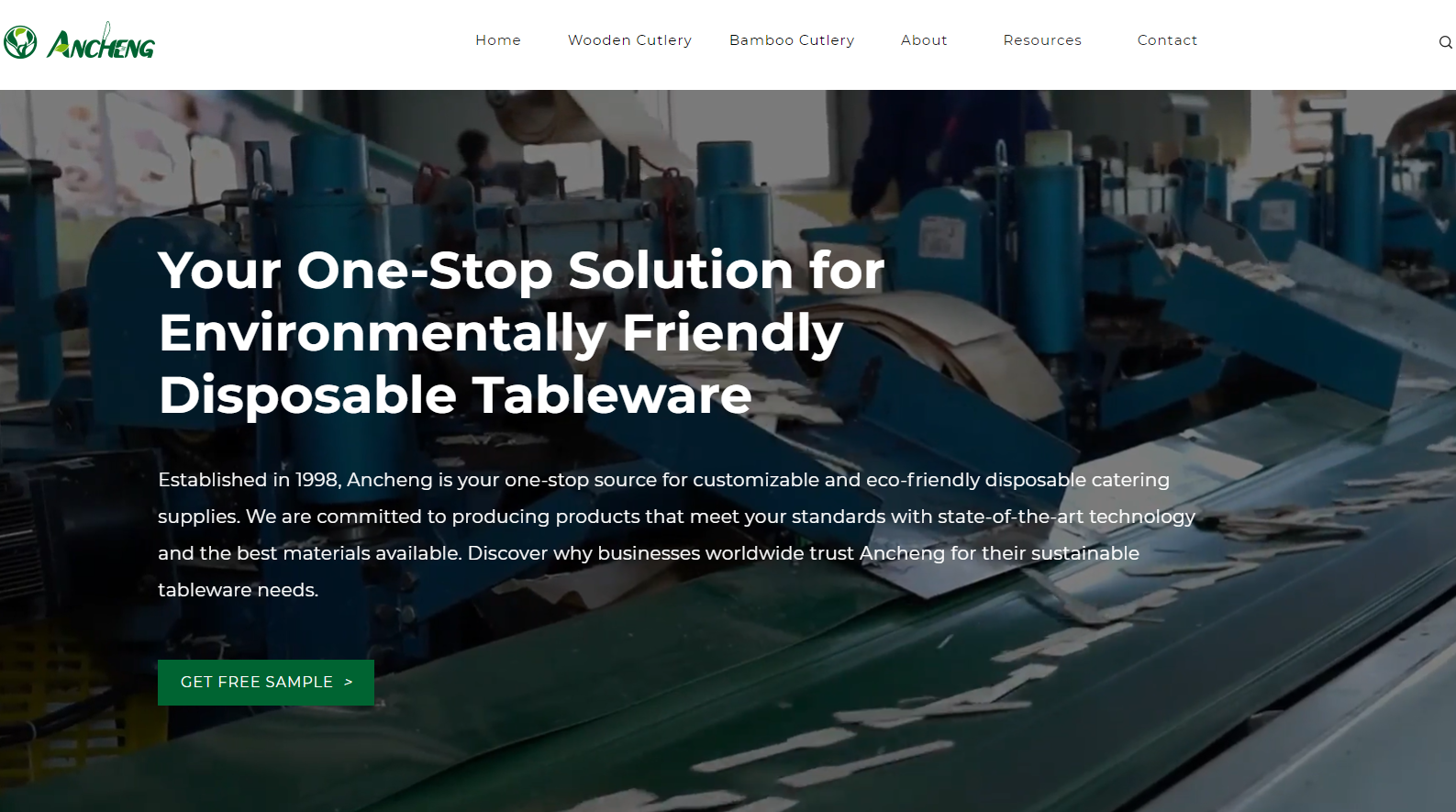
Eco-Ancheng (Anhui Ancheng Bamboo and Wood Tableware CO., LTD) is a leading manufacturer specializing in eco-friendly wooden and bamboo tableware. Backed by 20 years of experience, the company follows sustainable practices, providing products and systems made according to high production quality with strict quality control that is also BRC-certified. They supply sustainable hospitality and retail firms with high-quality products that are disposable and wood cutlery, biodegradable food containers, and bamboo plates.
MOQ: 50,000pcs
Delivery date: 35-45 days
Certification: FSC、SEDEX、LFGB、FDA、DGCCRF、ISO9001、BRC、BSCI
Material: Bamboo, birch, CPLA, kraft paper, sugarcane pulp
OEM/ODM services available
Pros:
Large production capacity (5 billion pieces per year)
Certifications BRC, BSCI, and FDA
A great emphasis on sustainable eco-friendliness
Branding and bulk order customization options
Cons:
Not a local German company; advance ordering is required to avoid miscalculating shipping times.
Your One-stop Shop for Sustainable Dinnerware
Find everything you need for your wholesale business
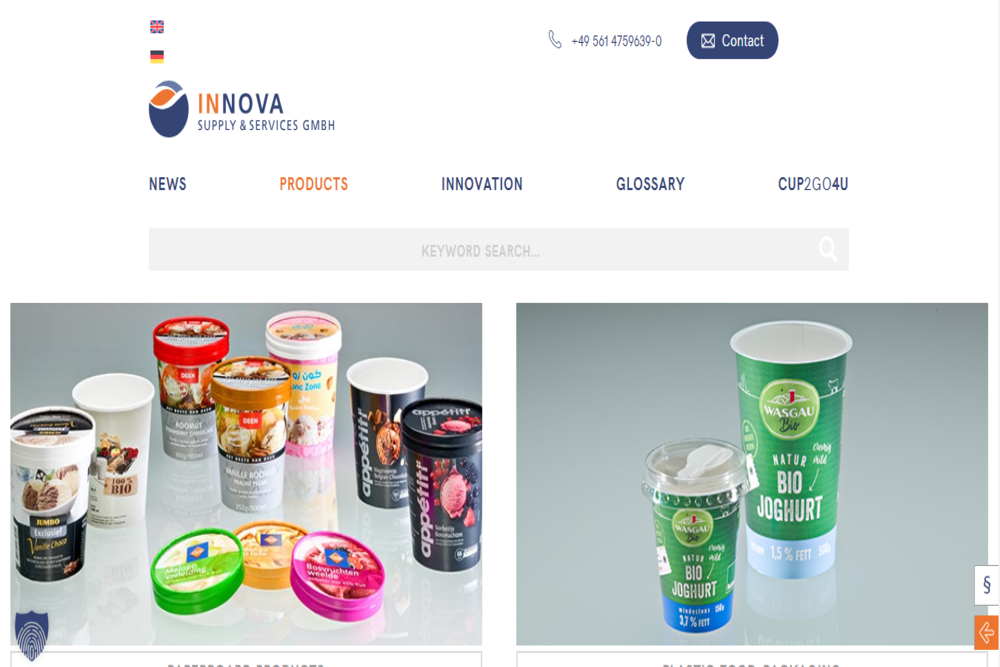
INNOVA specializes in biodegradable disposable tableware and sustainable food packaging. It is a provider of eco-friendly solutions for restaurants, catering and retail. Their products incorporate compostable plates, sugarcane fiber bowls, wooden cutlery, and palm leaf dinnerware to ensure a zero-waste dining and food service experience.
Certification: HACCP、ISO 9000、BRC
Pros:
Reputable in providing both packaging and sustainability solutions
Products are 100% biodegradable and compostable
Business custom packaging solutions
Cons:
Little known about production capability
None that are direct-to-consumer; largely B2B
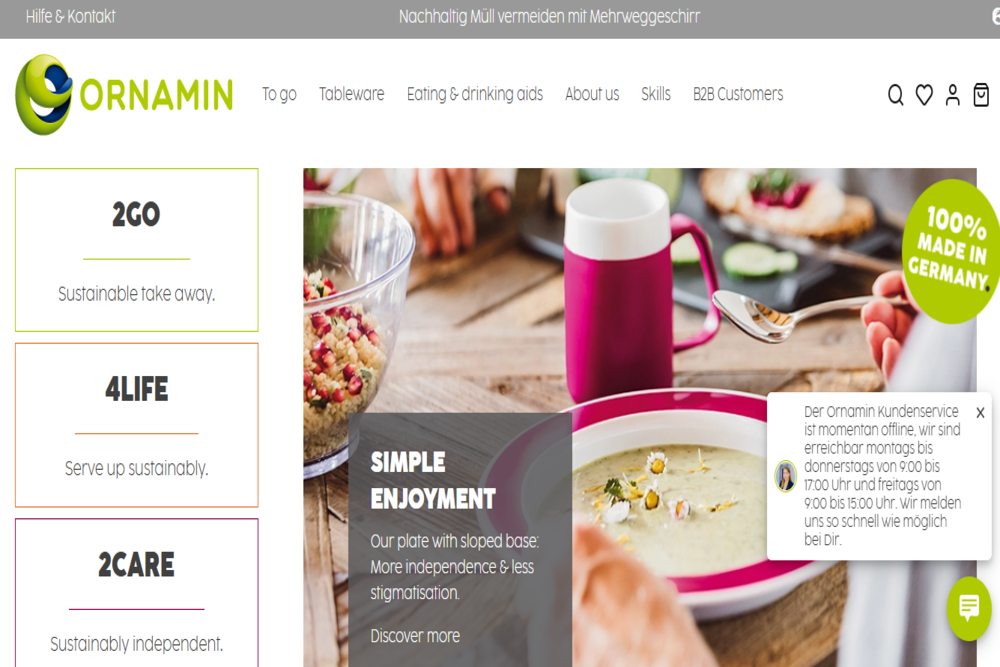
A German company, Ornamin designs and manufactures sustainable, reusable plastic tableware made of durable, high-quality materials best suited for domestic, hospital, and business use. They have developed a range of durable products that are ideal for families and the outdoors, like unbreakable plates, cups, and bowls constructed with BPA-free, high-quality plastic.
Pros:
Durable, reusable plastic alternatives
Focus on ergonomic and functional designs
Made in Germany with high-quality materials
Dishwasher and microwave-safe products
Cons:
Not completely biodegradable, plastic-based
Cost more upfront than disposables
For more than 75 years, Hosti GmbH has been producing disposable tableware with a colorful and festive touch for every occasion. Most of their products are paper plates, cups, and napkins for parties, events, and services. Hosti stands out with the double purpose — both not doing any harm to the earth and looking stylish!
Certification: ISO 9001:2015、FSC、BRC、Nordic Swan Ecolabel、DIN HOME COMPOSTABLE
Pros:
Old company with a large market share
It has a large variety of designs and shapes
Prioritize FSC-certified and recyclable materials
Cons:
Mainly concentrated on single-use goods
Fewer biodegradable choices than its competitors
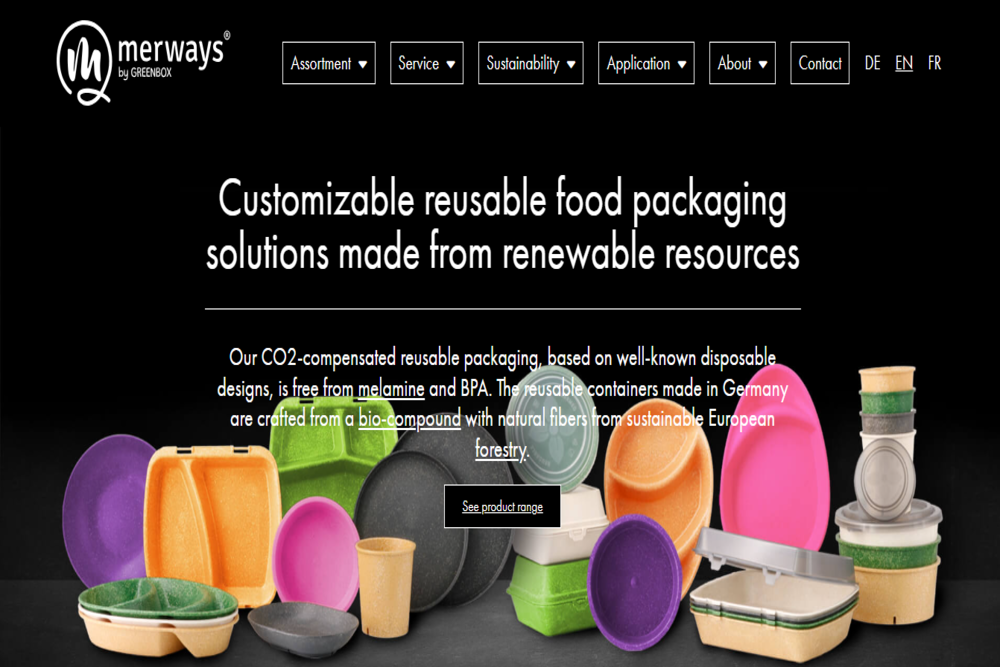
Merways offers CO2-compensated reusable packaging made from a bio-compound with natural fibers from sustainable European forestry. The reusable meal containers and cups help eliminate waste in the food industry, and they are great biodegradable substitutes for plastic products.
Pros:
Fully recyclable and CO2-compensated products
Made from sustainable European forestry
Ideal for food delivery and takeout services
Cons:
Limited product range compared to competitors
Higher price than plastic packaging
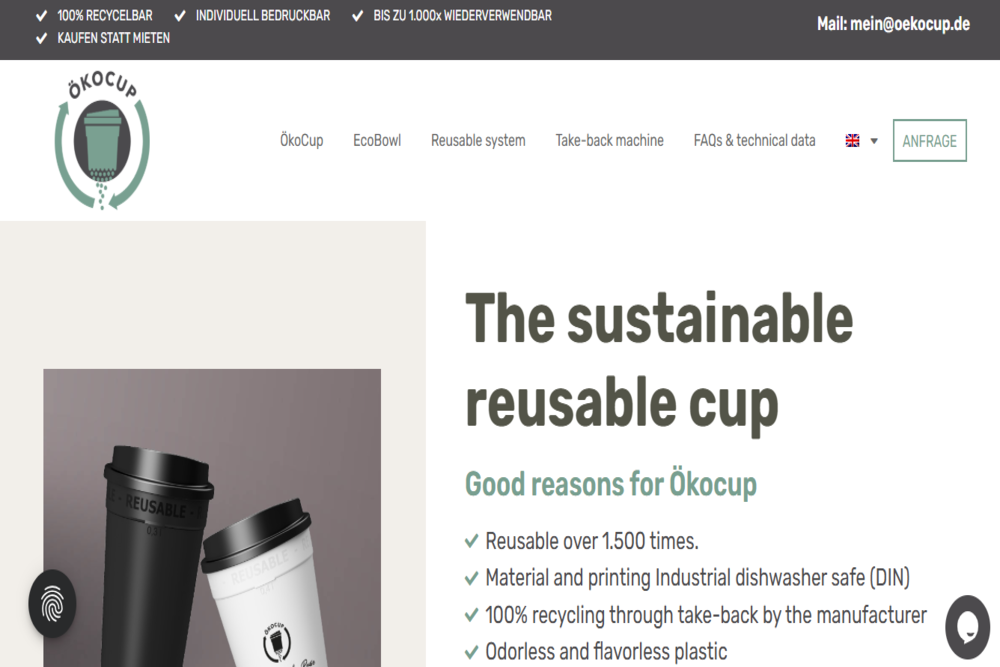
ÖkoCup focuses on producing eco-friendly cups and packaging solutions, ensuring high sustainability standards in Germany. Their compostable coffee cups and lids are made from plant-based materials, making them a great choice for cafes and businesses looking to eliminate plastic waste.
Certification: EU 10/2011
Pros:
Specializes in sustainable beverage packaging
German-made products ensure high quality
Compostable and biodegradable materials
Cons:
Limited emphasis on general dinnerware products
Specifically targets the beverage industry
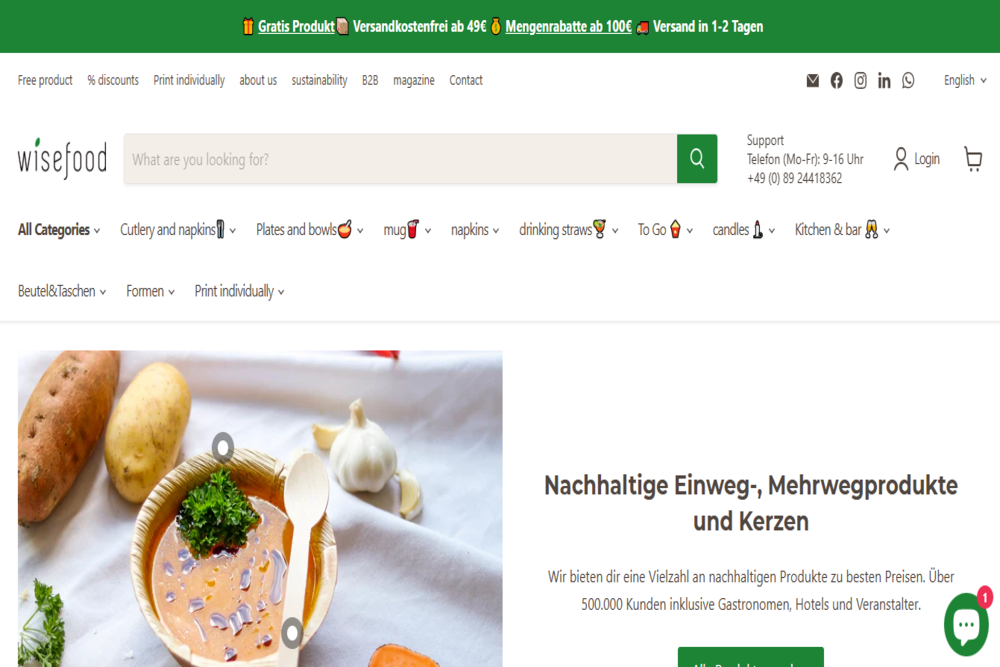
Wisefood GmbH produces environmentally friendly paper tableware by sourcing the fresh wood of conifers in Germany in a sustainable manner. They make everything from biodegradable plates and bowls to drinking straws, all of which are aligned with circular economy principles.
Pros:
Local, certified sustainable forestry materials used
Short transport routes with a low carbon footprint
Innovative designs across a range of products with environmental consciousness
Cons:
Only for paper-based products
Not as durable as reusable options
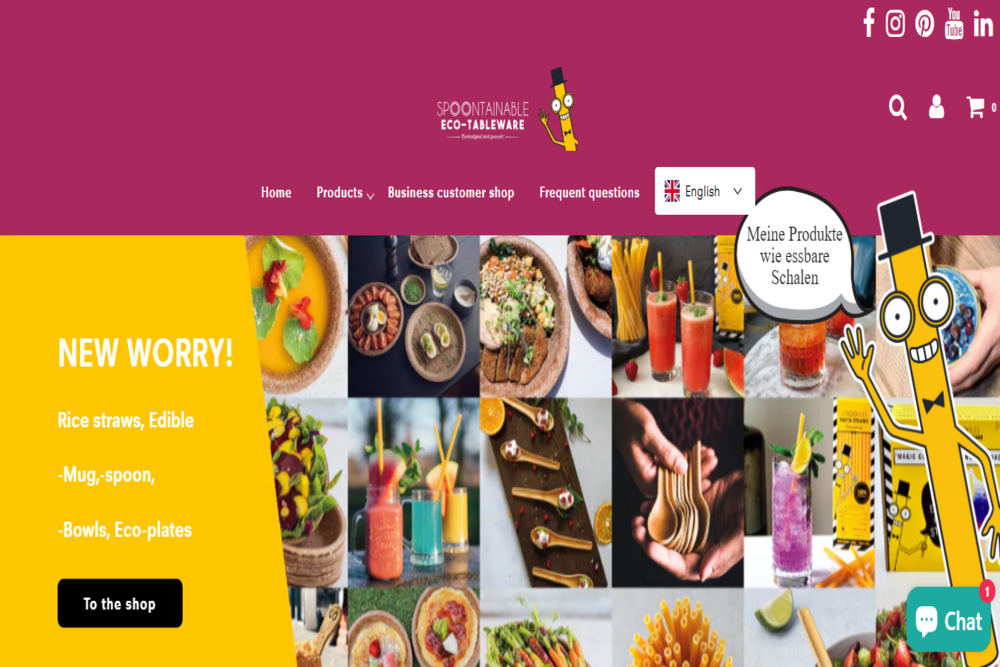
Spoontainable specializes in edible cutlery like spoons made with leftover food fibers, seeking to eradicate single-use plastics. Their spoons and stirrers are robust, delicious and a new way to eat sustainably.
Pros:
Waste-reducing edible cutlery innovations
Biodegradable and food-safe 100%
Adds something different to business in food service
Cons:
Limited choice of items (brands mostly metal utensils)
The cost per unit is similar to conventional cutlery
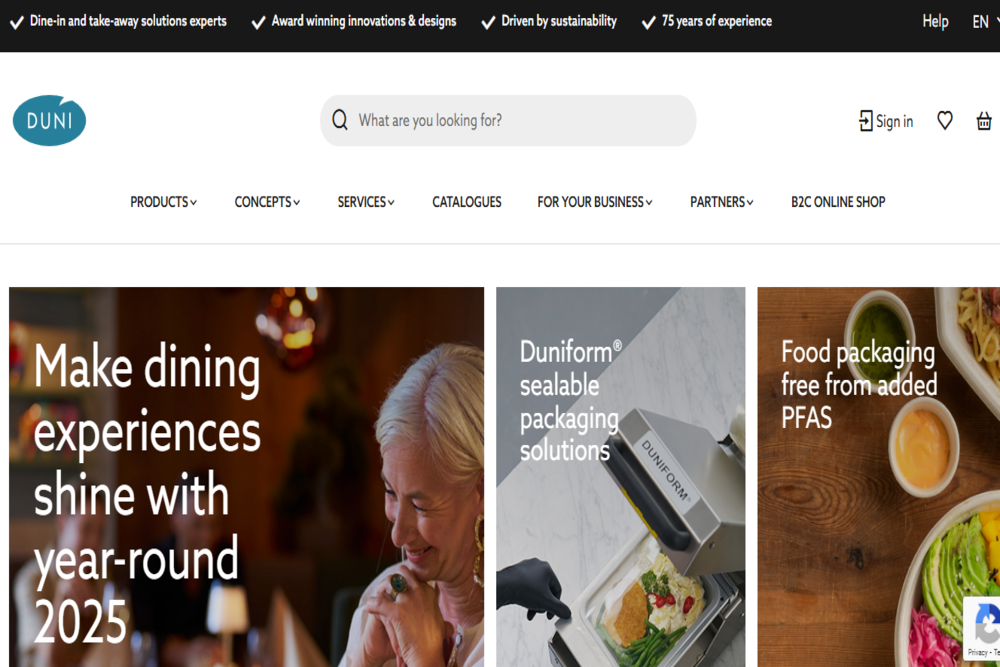
Disposable plates, made from biodegradable or compostable material, are some of the sustainability solutions that Duni is known for, alongside stylish solutions. Their tableware is extensively used in food, hospitality, and catering contexts.
Pros:
Large variety of biodegradable tableware options
Strong presence in hospitality and catering sectors
FSC and PEFC-certified products
Cons:
Disposable nature limits long-term sustainability
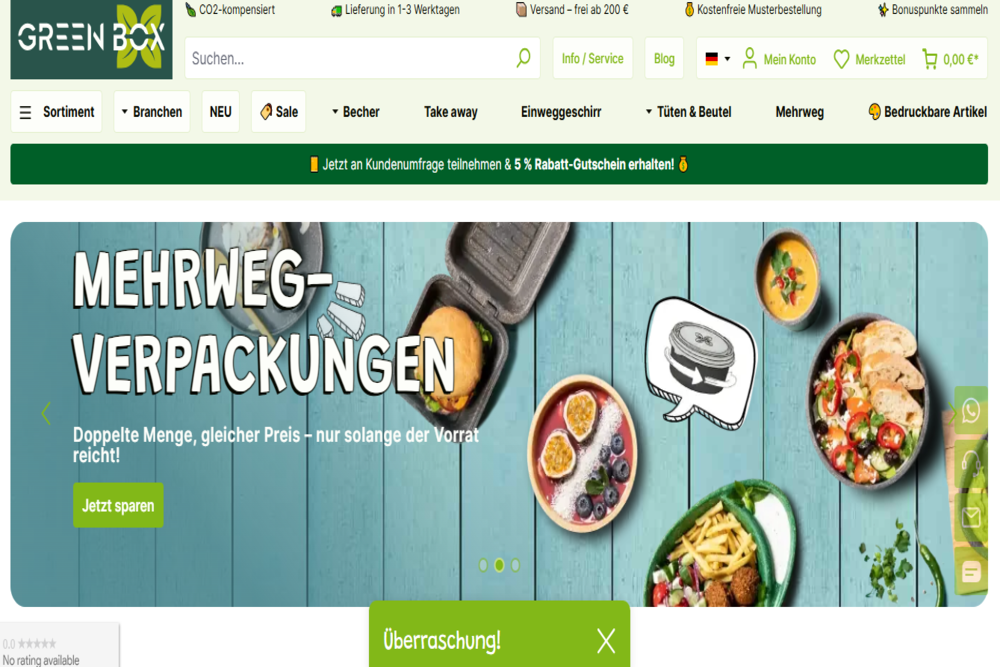
Green Box offers compostable tableware from sugarcane pulp, palm leaves and wood. Their mission is to develop fully sustainable packaging and dinnerware solutions in order to reduce plastic waste.
Pros:
Uses natural, sustainable materials
Expertise in minimizing plastic waste
You have limited experience for the past year.
Cons:
Products may have a higher cost due to sustainable sourcing
There are several key elements they can take note of to ensure a quality kitchenware supplier that is both environmentally responsible and reliable. The following key specifications were utilized to identify the top firms in Germany:
A great test to see if a supplier is truly invested in sustainability is for them to have eco-certifications from recognized organizations. These certifications ensure that the products adhere to stringent environmental standards and are manufactured through sustainable practices. For example, the Forest Stewardship Council (FSC) certifies wooden- or bamboo-based dinnerware that originates from sustainably managed forests. EU Ecolabel is a certification for products that are environmentally friendly during the entire product life cycle, from raw materials to disposal.
Sustainable dinnerware should be eco-friendly and durable. Many eco-friendly consumers fear that biodegradable or compostable products may not be durable enough, but quality suppliers make sure that their dinnerware is sturdy, heat-resistant, and able to withstand normal use.
One of the priorities for a truly sustainable supplier is the responsibly sourced raw materials. Bamboo, sugarcane bagasse, palm leaves, wheat straw, and recycled paper are some of the greenest of these options. Bamboo has become specifically popular because it is fast-growing and has a low ecological impact. Another option is sugarcane bagasse, an industrial byproduct of the sugar industry, which can be used as a biodegradable plastic.
Beyond materials, it is critical to evaluate how a supplier makes its products. Eco-friendly suppliers use energy-efficient production methods, limit water consumption, and lower carbon emissions. Some companies have turned to solar or wind energy to power their production facilities; others have turned to closed-loop manufacturing systems to reduce waste.
Germany and the EU have comprehensive policies forbidding resolutely biodegradable and compostable products. The best manufacturers also comply with regulations such as the EU Single-Use Plastics Directive (SUPD) and other waste avoidance legislation.
Sustainable dinnerware is a popular choice for households looking to reduce their impact on the environment, so finding a suitable supplier is key. The companies you’ll find in this guide provide a range of eco-friendly products, from biodegradable disposables to long-lasting reusable options.
Review the above categories to find out which suppliers suit you best; stand out for compostability, creativity, or reusability. Seek certifications such as EU Ecolabel or DIN CERTCO to ensure the authenticity of the certification body and regional production methods to reduce environmental impact.
Choosing a supplier that matches your sustainability ambitions on the one hand and your operational needs on the other means you are doing your part for a greener future without sacrificing quality or functionality in your tableware offer.
Eco Ancheng is a major supplier in the industry, known for providing premium bamboo and wooden dinnerware, eco-friendly mission, and long-term cooperation with international brands like Starbucks, Tesco, Metro, Bunzl, Woolworths, and Costco. With a complete in-house capability encompassing production, marketing, export trading, and after-sales service, we offer a fully integrated service to our customers and clients.
Our products are a sustainable alternative to plastic disposable products, as they are biodegradable and compostable.
If you’re looking for a trusted, sustainable dinnerware supplier, Eco Ancheng is your ideal partner. Get in touch with us to explore our full range of bamboo and wooden cutlery, plates, chopsticks, stirrers, and more. Make the switch to sustainable tableware today!
Eco-Dinnerware Wholesale: Manufacturer Direct
Reliable supply chain for European catering distributors.

Hello, I'm Sven Wang, the Manager of Ancheng. With extensive expertise in raw materials and production processes, I'm dedicated to advancing sustainable tableware and constantly improving eco-friendly options for the modern catering industry. You can trust that Ancheng is committed to providing the highest quality. Welcome!

Factory: Qian Renqiao Industrial Park, Shucheng County, Luan City, Anhui Province, China
Office: Building 11, Max Science Park, Shushan Dist, Hefei, Anhui, China
Copyright ©2026 Anhui Ancheng Bamboo and Wood Tableware Co., Ltd. Privacy Policy



 Index
Index Product
 Resources
 About
About