Discover the benefits, environmental impact, and different types of biodegradable disposable cutlery. Make sustainable choices for a greener future.
Biodegradable disposable cutlery is tableware (spoons, forks, knives, etc.) that can break down naturally over time, leaving no harmful traces in the environment. Unlike traditional plastic ware, these plant-based materials degrade over time, leaving behind only organic matter and water, and, in some cases, beneficial nutrients for the soil.
The environmental hazards of plastic tableware have caused concern among many consumers. Here are some specifics.
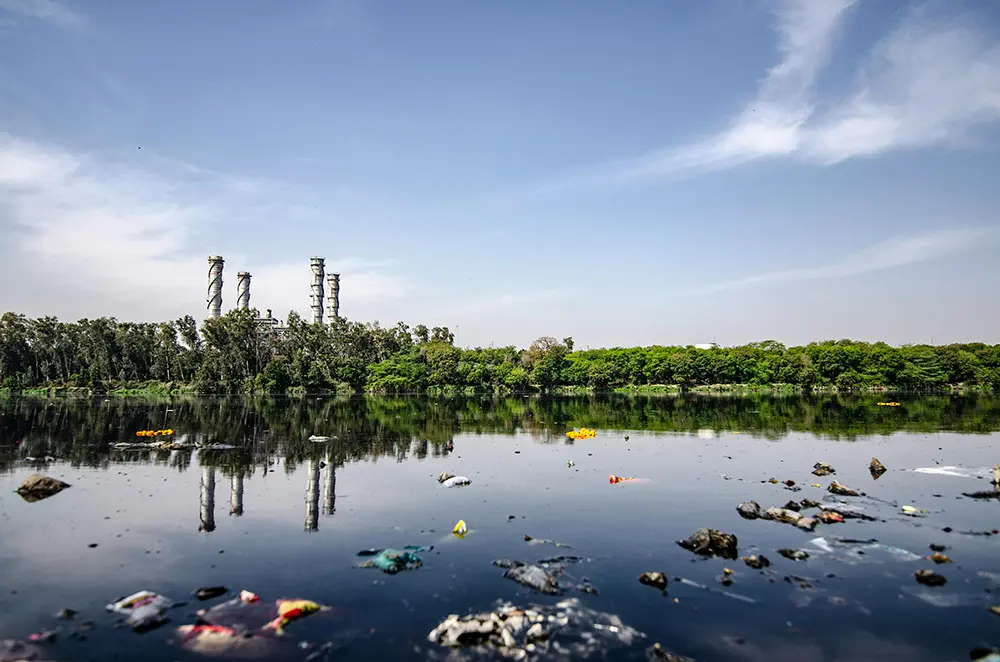
It's a dismal fact that a heap of plastic cutlery often ends up polluting our oceans and waterways. Light, buoyant, and typically used for just a few minutes, these single-use plastics are carelessly discarded, quickly becoming an overpowering menace. These materials can take hundreds of years to degrade, during which time they wreak havoc on ecosystems and wildlife.
Plastic cutlery also poses a direct threat to marine life. Fish, turtles, and birds often mistake these gleaming objects for food. The result? Fatal blockages, malnutrition, and damage to their digestive systems. Moreover, as plastic breaks down, it turns into microplastics, tiny particles that soak up pollutants and can potentially enter our own food chain.
Besides the physical debris, the process of making plastic cutlery also contributes significantly to greenhouse gas emissions. Fossil fuels, often coal or oil, are burned to manufacture, transport, and dispose of plastic products, thus intensifying climate change effects.
Extracting non-renewable resources like oil for the production of plastic cutlery is environmentally detrimental. It results in habitat destruction, air and water pollution, and localized climate effects, rendering the case against plastic cutlery even stronger.
Overall, the impact of plastic cutlery on our environment is far from minor. It's high time we reconsider our choices and switch to greener alternatives. Nothing spells eco-friendly better than biodegradable cutlery!
Each year, millions of tons of single-use plastic utensils are discarded worldwide, contributing huge amounts of non-biodegradable waste. It's critical to find alternatives to these single-use plastic items for a healthier, cleaner, and more sustainable planet.
• Encourage responsible consumption: Using eco-friendly utensils is a small, daily action that contributes to wider conservation efforts.
• Healthier option: Many plastic utensils contain harmful chemicals, making biodegradable varieties a safer choice.
• Market demand: As more people become environmentally conscious, businesses must offer sustainable options to meet new customer preferences.

Our decision to consume and utilize biodegradable and eco-friendly utensils has an array of benefits: from environmental to economic advantages - this guide has got it all.
The use of biodegradable cutlery significantly diminishes plastic waste. Each year, millions of metric tons of plastic utensils end up in our landfills, oceans, and natural landscapes, causing irreparable harm to our environment.
Moving towards biodegradable eco-friendly tableware contributes to decreasing that percentage. The biodegradable cutlery decomposes naturally over time, unlike traditional plastic utensils, becoming part of the soil without leaving harmful residues.
In comparison to plastic cutlery, the production process of biodegradable disposable flatware emits less carbon dioxide, and less energy, thus lowering your carbon footprint. This is a crucial step forward in our fight against climate change.
Unlike plastic utensils, biodegradable cutlery breaks down quickly (as little as 90 days in a commercial composting system) to return to the environment. This process results in valuable compost that can be returned to the earth to support the growth of new plants.
Biodegradable cutlery is made from renewable resources like wood, bamboo, wheat bran, cornstarch, or sugarcane bagasse. These resources are both abundant and sustainable, making their production considerably less harmful to our ecosystems.
Not only are these utensils eco-friendly, but they are safe for food consumption. Biodegradable cutlery doesn't contain any toxic compounds like BPA, which is often found in plastic flatware, which can potentially leach into your food.
Biodegradable cutlery can be a cost-effective choice for businesses. Costing just slightly more than their plastic counterparts initially, the long-term cost-saving benefits come from avoiding potential landfill disposal fees and improving your brand image by showing your commitment to sustainable practices.
Let's dive deep into the eco-friendly realm and take a look at the different types of biodegradable materials that are commonly used in disposable flatware.
First up is PLA, or polylactic acid, a popular bioplastic derived from renewable resources such as corn starch, or tapioca. PLA-based cutlery has a similar look and feel to traditional plastic, but composts beautifully under industrial composting conditions. Some benefits of PLA cutlery include:
• High heat tolerance
• Its durability, which makes it a great choice for catering or events with a high volume of dishes
• It is completely compostable in commercial facilities
Next is CPLA, or crystallized polylactic acid. This is a more heat-resistant form of PLA that is perfect if you're planning on serving foods at high temperatures. Like PLA, it is completely compostable at industrial facilities.
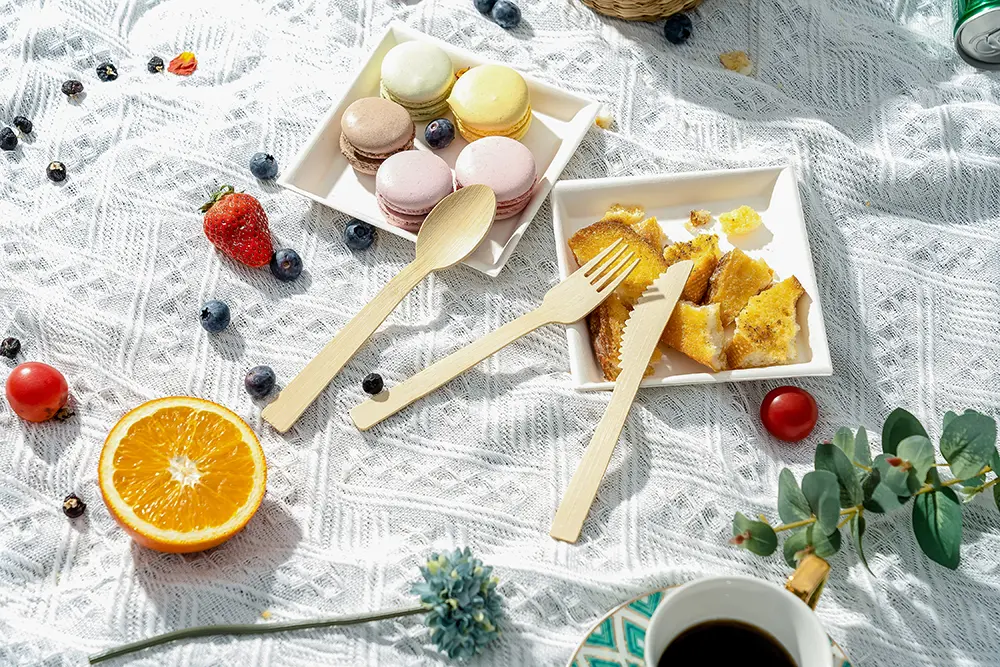
Bamboo disposable cutlery has been gaining traction as an eco-friendly alternative. Bamboo is a highly renewable resource that grows incredibly fast - this makes it a superstar among the other biodegradable materials.
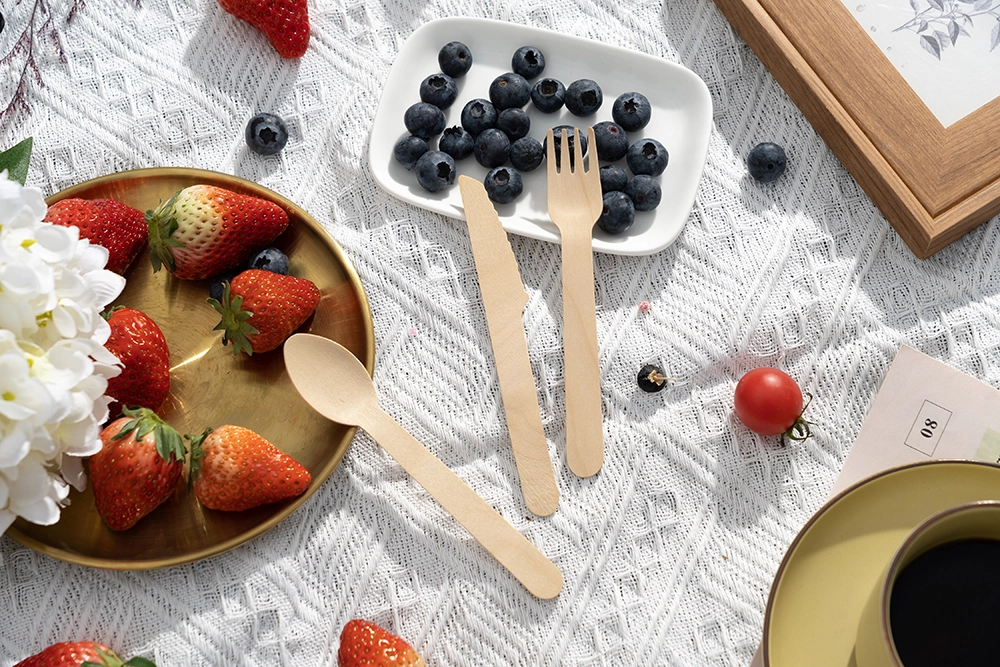
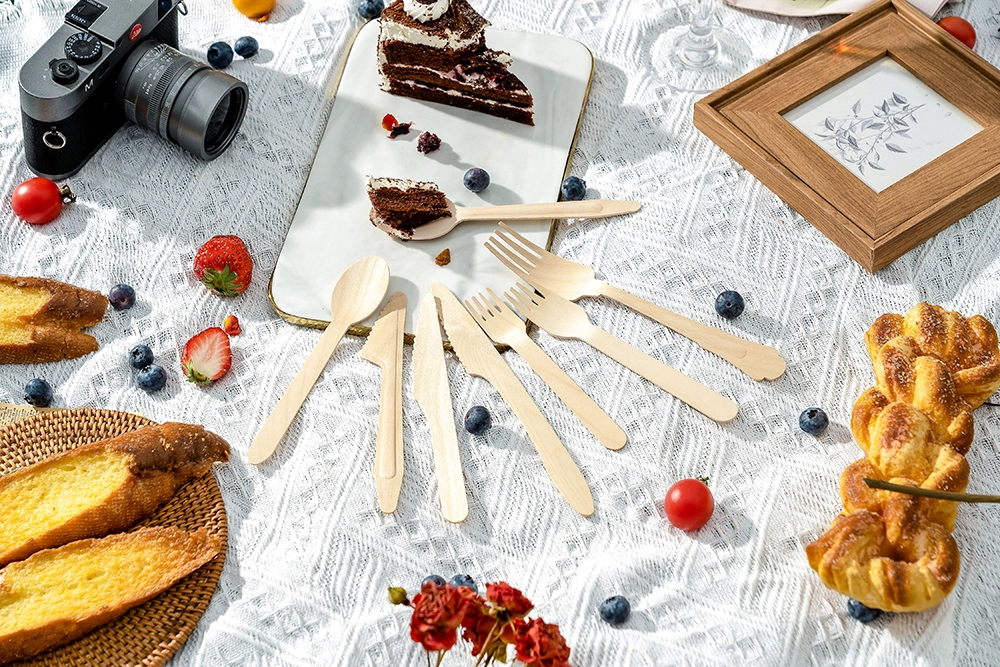
Disposable wooden cutlery is another great option. Made from birch or poplar, the wooden utensils are strong, durable, and can sustain high heat. This type of disposable cutlery takes on a beautiful rustic aesthetic, too!
Last but certainly not least, we have bagasse - derived from sugarcane waste! This wonderful material is not only biodegradable but also compostable. It's incredibly durable and can hold up with heavier meal options, making it a perfect material for disposable flatware.
Corn Starch disposable cutlery is made from the starch extracted from corn. It breaks down naturally, contributing to reduced environmental impact. This material is both biodegradable and compostable, providing an eco-friendly option for single-use utensils.
Choosing any of the above options is great for the environment as they discourage the use of harmful plastic utensils, and lend themselves to a more responsible, sustainable lifestyle.
Material |
Heat Resistance |
Durability |
Compostability Type |
Best For |
|---|---|---|---|---|
Bamboo |
High (up to 200°F) |
Excellent (Extremely Strong) |
Home & Industrial |
Premium dining, steaks, heavy meals |
Wood (Birch) |
High (up to 200°F) |
High (Very Sturdy) |
Home & Industrial |
Takeout, events, ice cream, cafes |
Bagasse (Sugarcane) |
High (up to 212°F) |
Medium (Flexible) |
Home & Industrial |
Plates, bowls, light forks (soft texture) |
PLA (Corn Starch) |
Low (up to 105°F) |
High (Rigid) |
Industrial Only |
Cold drinks, salads, cold desserts |
CPLA (Crystallized PLA) |
High (up to 185°F) |
High (Rigid) |
Industrial Only |
Hot soups, coffee stirrers, hot catering |
Paper |
Medium (up to 160°F) |
Medium (Can soften) |
Home & Industrial |
Stirrers, light snacks, quick service |
If you'd like more comparative information on different disposable tableware, you can read the following articles: bagasse vs paper products, bagasse vs cornstarch food containers, and bamboo vs sugarcane.

When switching from plastic to eco-friendly alternatives, safety is the primary concern for both business owners and consumers. The short answer is yes, but safety depends heavily on the materials used and the certifications held by the manufacturer.
Unlike traditional plastics, high-quality biodegradable utensils (like those from Ancheng) do not contain harmful chemicals such as BPA, phthalates, or PFAS, which can leach into hot food. However, to ensure you are purchasing a truly safe product, you must look for compliance with international food-grade and environmental standards:
1. Food Contact Safety: Ensure the utensils meet FDA (U.S. Food and Drug Administration) or LFGB (German Food and Feed Code) standards. These certifications guarantee that the material will not transfer harmful substances to food, even at high temperatures.
2. Compostability Standards: These are the global benchmarks for compostable plastics and fibers. ASTM D6400 (USA) and EN 13432 (Europe) confirm that the product will break down completely in a composting environment without leaving toxic residues behind.
3. Sourcing Authority: For wood and bamboo products, the FSC (Forest Stewardship Council) certification ensures the material is harvested from responsibly managed forests, making it safe for the planet as well as the user.
4. Chemical-Free Processing: Professional suppliers avoid using toxic glues or coatings. For example, our birch wood and bamboo cutlery are polished using mechanical methods rather than chemical glazes to ensure a 100% natural finish.
The contrast between biodegradable tableware and traditional plastic tableware is reflected in many ways.
First and foremost, the decomposition time. Biodegradable cutlery like disposable wooden, bamboo, or sugarcane bagasse utensils can decompose in around 90 days, depending on the conditions. In stark contrast, plastic utensils can take up to 1,000 years to degrade. That's incredibly wasteful, isn't it?
Biodegradable cutlery has a far less damaging impact on the environment. Plastic cutlery:
- Contributes to landfill overload
- Threatens marine life when wrongly discarded
- Releases harmful toxins when burned
Meanwhile, eco-friendly utensils:
- Naturally go back to the earth
- Don't endanger marine life
- Are carbon-neutral if incinerated
For the production process, plastic cutlery is made from fossil fuels, a non-renewable resource. Biodegradable cutlery, on the other hand, is made from renewable plant-based resources like wood, bamboo, and sugarcane. This results in a substantially diminished carbon footprint.
Lastly, don't underestimate the strength of biodegradable cutlery. While plastic cutlery is known for its functionality, disposable flatware made from biodegradable materials is just as durable, if not more. They can withstand hot temperatures and won't melt or warp, which makes them safe for use with both cold and hot food.
Biodegradable disposable cutlery is a significant invention in the quest for sustainability. Unlike traditional plastic utensils, these eco-friendly alternatives are designed to decompose naturally over time. But, have you ever pondered the manufacturing process behind these products?
The manufacturing process for biodegradable flatware is fascinating. Firstly, raw materials like wood, bamboo, or sugarcane bagasse are gathered. These organic materials are then processed and molded into the shapes of forks, spoons, and knives. After the shaping stage, the cutlery is polished, dried, and packaged ready for consumer usage.
Biodegradable cutlery manufacturers usually employ materials like:
• Bamboo: a fast-growing and renewable plant
• Wood: specifically birch wood due to its durability and availability
• Sugarcane Bagasse: a byproduct from sugarcane manufacturing
• Corn Starch: A bioplastic made from the starch of corn
The production of biodegradable flatware is not just about protecting the environment but also about ensuring product safety. These utensils must comply with food safety regulations set by health authorities to guarantee they’re safe for human use.
Here are some videos of the production process of biodegradable disposable cutlery:
Disposable Wooden Cutlery Manufacturing Process:
Disposable Bamboo Cutlery Manufacturing Process:

Biodegradable tableware is used in many applications and is disposed of in an environmentally friendly way.
Biodegradable disposable cutlery is incredibly versatile, fitting in at both formal and casual events. Whether it's a corporate event, wedding reception, picnic, or a simple family dinner, eco-friendly utensils like disposable wooden, bamboo, or sugarcane bagasse cutlery are sure to make a statement while reducing waste. They are sturdy, functional, and stylish, making your mealtime environmentally conscious and pleasing.
The disposal of biodegradable cutlery is straightforward. Simply toss it in your compost bin or green waste - no sorting required! Unlike plastic cutlery, which often ends up in a landfill, biodegradable cutlery can break down naturally without causing harm to the environment.
• Home composting: Many types of biodegradable cutlery like bamboo or wood can be safely composted at home.
• Commercial composting: Some denser materials may require commercial composting facilities to break down adequately.
The difference between industrial and home composting is also an element of interest.
The future looks bright for the biodegradable disposable cutlery market as the world pivots towards eco-friendlier options. So, what's driving this positive shift? Let’s take a deeper look.
Rapid strides in technology are a significant propelling force. Innovations have made it possible to create disposable cutlery from an array of eco-friendly materials like bamboo, wood, and sugarcane bagasse.
Additionally, the increased availability and affordability of biodegradable cutlery are making it a popular choice. With more and more brands entering the market, prices have become more competitive.
Lastly, government regulations and policies worldwide are increasingly backing the use of biodegradable, eco-friendly utensils. Policies restricting plastic use and promoting sustainable alternatives are compelling businesses and individuals to adopt biodegradable cutlery. These are positive signs, making the future of biodegradable disposable cutlery promising indeed.
There are numerous ways to incorporate the use of biodegradable cutlery into our daily lives and business operations.
Switching from plastic to eco-friendly materials starts at the personal level. We can choose to use disposable wooden, bamboo, or sugarcane bagasse cutlery for picnics, parties, and other gatherings. Additionally, consider carrying a set of biodegradable utensils when dining outside to help eliminate personal use of plastic cutlery.
On a larger scale, food establishments can also make a significant difference. They can opt to:
* Use disposable bamboo or wooden cutlery for takeaway orders
* Offer biodegradable cutlery as an option for customers
* Reduce the use of plastics in dining areas by switching to biodegradable disposable flatware
To amplify the benefits of these environmentally friendly practices, we need to educate more people. Schools, businesses, and local communities can organize campaigns that aim to promote the use of biodegradable cutlery and other eco-friendly utensils.
Q1: How long does it take for biodegradable cutlery to decompose?
The exact duration varies depending on environmental factors. However, most biodegradable cutlery usually breaks down in about 3-6 months. That's a considerable reduction compared to the several centuries it takes for plastic cutlery to decompose!
Q2: Can biodegradable cutlery be used with hot and cold foods?
Absolutely! Biodegradable utensils are designed to withstand both hot and cold temperatures. You can enjoy your steaming hot soup or icy cold dessert without worry.
Q3: Are biodegradable utensils safe for children?
Yes. Biodegradable cutlery is generally non-toxic and free from harmful chemicals that are often found in plastic wares. They are a safer option for children, making earth-friendly choices easy for the whole family!
Q4: What’s the difference between biodegradable and compostable?
Biodegradable is a broad term meaning a material will eventually break down naturally. Compostable is a stricter, professional standard: it must break down into nutrient-rich organic matter within a specific timeframe (usually 90-180 days) without leaving toxic residues. In short: all compostable items are biodegradable, but not all biodegradable items are compostable.
Q5: Are biodegradable utensils microwave safe?
It depends on the material. Wood, bamboo, and CPLA are heat-resistant and generally safe for short-term microwave use (up to 180°F / 82°C). However, PLA (corn starch) utensils have a low melting point and will deform under high heat. For hot food service, we recommend choosing bamboo or CPLA options.
Q6: What is the MOQ for bulk biodegradable cutlery?
Our standard Minimum Order Quantity (MOQ) for wholesale typically starts at 50,000 to 1000,000 pieces per item, depending on the material and customization needs. For specific stock items or trial orders, please contact our sales team for a flexible solution tailored to your business.
As we wrap up our discussion on the benefits and environmental impact of biodegradable disposable cutlery, it's clear that making the switch is not just a passing trend, but a sustainable necessity.
These eco-friendly utensils:
• Help reduce the demand for plastic production, therefore reducing CO2 emissions.
• Swift and natural decomposition without causing harm to the environment.
• Are made of renewable resources, creating a closed loop of sustainability.
Whether you're planning a picnic, running a restaurant, supermarket, or online store, we urge you to consider the environment in your choice of disposable flatware. Choose biodegradable cutlery. Remember, every effort counts – and together it adds up to have a significant impact. It's time to switch, folks - for your sake, and for our planet's. Let's make sustainable choices the new norm.
Discover the benefits, environmental impact, and varieties of biodegradable disposable cutlery in our comprehensive guide. Make sustainable choices for a greener future with Ancheng. Contact us to explore our eco-friendly products and revolutionize your catering supplies today! Shop now and join the movement towards a more sustainable world.


Hello, I'm Sven Wang, the Manager of Ancheng. With extensive expertise in raw materials and production processes, I'm dedicated to advancing sustainable tableware and constantly improving eco-friendly options for the modern catering industry. You can trust that Ancheng is committed to providing the highest quality. Welcome!

Factory: Qian Renqiao Industrial Park, Shucheng County, Luan City, Anhui Province, China
Office: Building 11, Max Science Park, Shushan Dist, Hefei, Anhui, China
Copyright ©2026 Anhui Ancheng Bamboo and Wood Tableware Co., Ltd. Privacy Policy



 Index
Index Product
 Resources
 About
About