The spork represents a strategic tool that combines the functionality of a spoon and a fork into a single unit. By adopting this hybrid utensil, restaurants can reduce procurement expenses by over 25% and cut storage requirements in half. Beyond direct financial savings, sporks streamline the packaging process and minimize order errors during peak hours. With increasing global regulations against single-use plastics, high-quality alternatives like wooden sporks and bamboo sporks from suppliers such as Ancheng offer a compliant and premium solution.
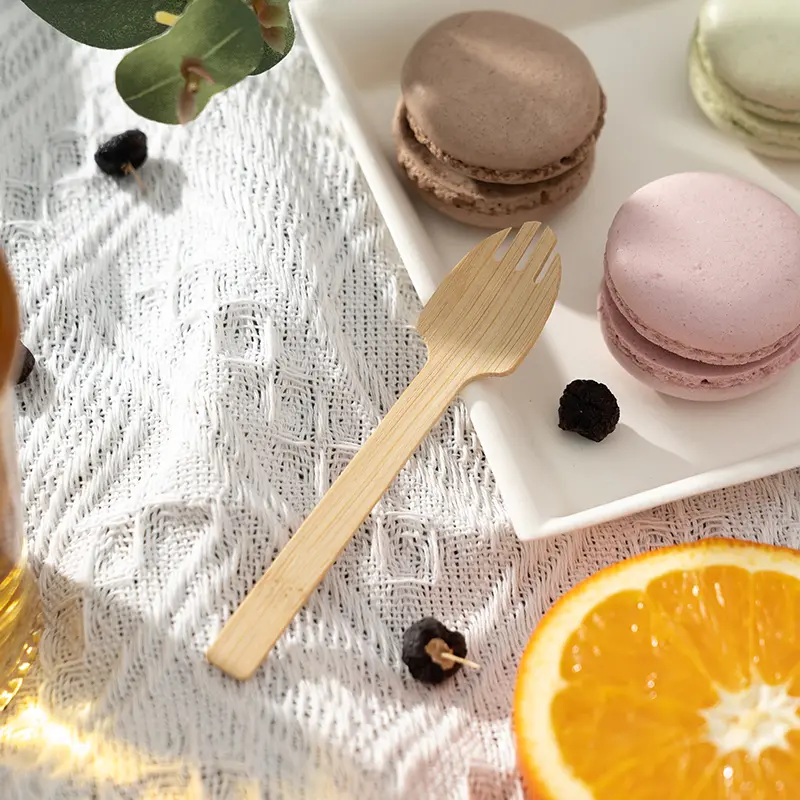
The transition from a traditional fork and spoon set to a singular spork is driven by several critical operational advantages. While cost is a primary factor, the benefits extend across the entire business model.
In a high volume kitchen, every second saved during the packaging phase translates to higher throughput. Employees only need to reach for one item instead of two. This reduces the time spent per order and allows staff to focus on food quality and faster delivery.
Missing utensils are a frequent cause of negative customer reviews. By using a spork, the probability of forgetting half of the utensil set is eliminated. One grab ensures the customer has everything they need to consume their meal.
The spork is a multitasker. It handles salads, grains, pasta, and soups with equal efficiency. This versatility means a restaurant does not need to stock different utensils for different menu items.
Managing one SKU (Stock Keeping Unit) is significantly easier than managing two or three. A single spork occupies less shelf space and simplifies the inventory counting process, reducing the likelihood of stockouts.
Using one utensil instead of two naturally reduces material waste. When restaurants choose biodegradable sporks made from wood or bamboo, they signal a commitment to sustainability that resonates with modern consumers.
Customers appreciate the convenience of a single tool that can handle their entire meal. It eliminates the need to juggle multiple utensils while eating on the go or in a vehicle.

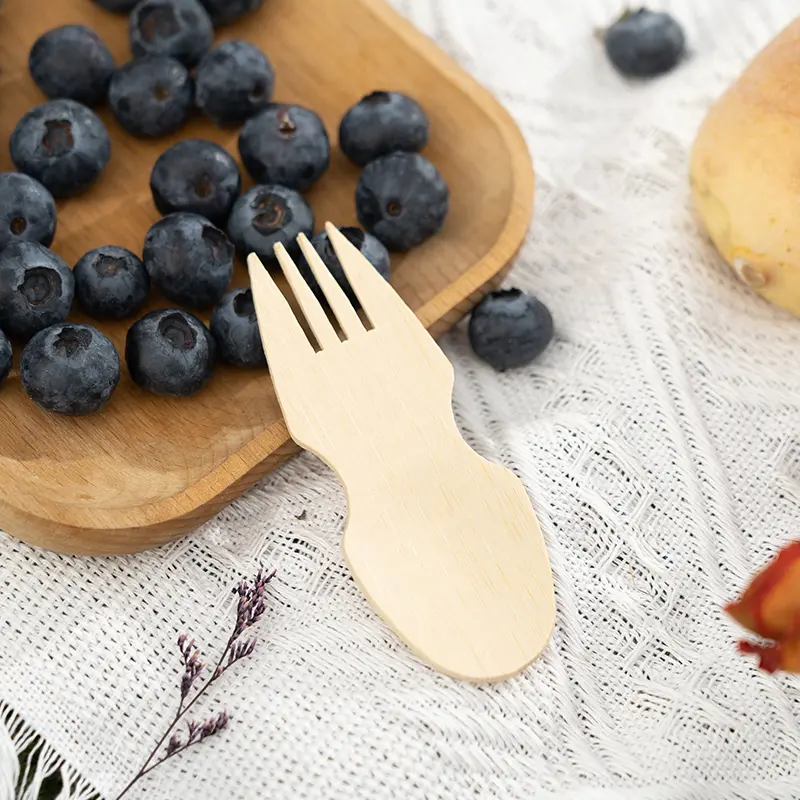
Understanding the variety of sporks available is essential for matching the utensil to your specific menu and brand identity. The following types of biodegradable sporks for catering are currently available on the market:
Wooden sporks are typically crafted from high-quality birch wood. They are popular for their natural aesthetic and smooth finish. They feel natural and work well with dry and semi-wet foods like salads, noodles, rice bowls, and desserts. They are ideal for brands that want a natural look at a competitive price.
1) Mini Spork Designs: Smaller versions, often around 3 to 4 inches, are perfect for tasters, desserts, or fruit cups.
2) Standard Disposable Spork: The 5.5 to 6.3-inch wooden sporks are the industry standard for general takeout.
3) Specialized Designs: Products like the wooden spork with a pointed tip or a deeper bowl are tailored for specific textures like poke bowls or thick stews.
You can view these varieties at the Ancheng wooden spork category.
Bamboo is known for its incredible strength and rapid growth rate. Bamboo sporks are more durable than wood and can handle heavier or tougher food items.
1) Ramen Spork: Longer and stronger, these are designed to withstand the heat of hot broth while allowing users to twirl noodles and sip soup.
2) Specialized Bamboo Spork: Often sold as a travel spork or camping spork, these are thicker and meant for multiple uses, though disposable versions are common in premium takeout.
Eco-Friendly Designs: Explore different bamboo options in the Ancheng bamboo spork category.
These are common in fine dining or as part of a reusable "bring your own" kit. While the initial cost is high, they are the ultimate long-term economic solution for in-house dining due to their infinite reuse.
Traditional plastic sporks are the cheapest but face heavy regulation. Compostable plastic (PLA) versions offer a similar feel to plastic but require specific industrial composting conditions to break down.
The economic argument for the spork is best understood through a direct comparison of procurement and logistics costs. Let us look at the numbers for a restaurant processing 30,000 orders per month.
Purchasing a separate fork and spoon is almost always more expensive than a single hybrid unit.
Option A: Traditional Set (Fork + Spoon)
Average price of one quality wooden fork: $0.025
Average price of one quality wooden spoon: $0.025
Total cost for 30,000 sets: (0.025 + 0.025) * 20,000 = $1,500
Option B: Single Spork
Average price of one quality wooden spork: $0.032
Total cost for 30,000 units: 0.032 * 30,000 = $960
Monthly Savings: $540
Annual Savings: $6,480
Assume it takes 1.5 seconds to pick and place one utensil. Two utensils take 3 seconds. One spork takes 1.5 seconds. That saves 1.5 seconds per order.
30000 orders x 1.5 seconds equals 45000 seconds or 12.5 hours. At 15 dollars per hour, that is 187.50 dollars per month saved.
If 1 percent of orders miss a utensil and lead to a complaint or refund of 5 dollars, that is 300 orders x 5 dollars equals 1500 dollars lost. If a spork cuts that error rate in half, you save 750 dollars.
Wooden spork purchase savings: $540
Labor savings: $187.50
Error reduction: $750
Total: 1477.50 dollars per month

For a high-volume restaurant, the supply chain is a fragile link. Relying on two separate utensils doubles the risk of a disruption. If your spoon shipment is delayed, your forks are often useless for meals that require both.
By switching to spork wholesale, you consolidate your supply chain. This allows for better negotiation power with manufacturers. When you work with biograde wood spork manufacturers like Ancheng, you can set up recurring orders for a single item, ensuring that you never run out of the essential tool needed to serve your customers.
Furthermore, a single SKU reduces the complexity of your warehouse. Large scale operations can utilize automated inventory systems more effectively when there are fewer variables. This leads to fewer mistakes in ordering and less capital tied up in excess safety stock.
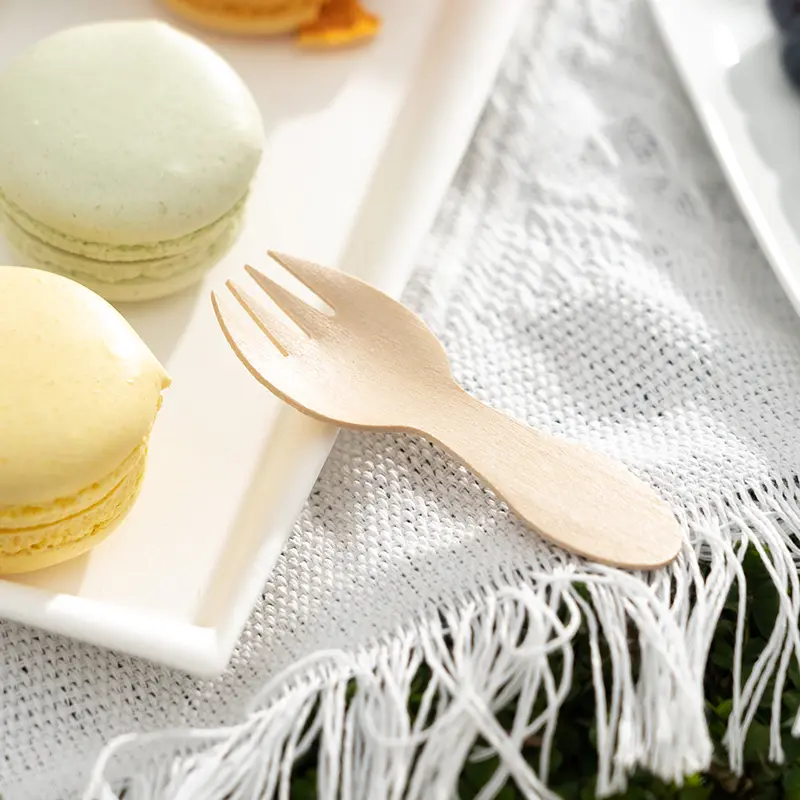
The spork is engineered to handle the complexity of modern global cuisine. It is the perfect partner for diverse food categories.
1) Salads and Grain Bowls: The tines of the spork can pierce large lettuce leaves or cucumber slices, while the spoon base catches small grains like quinoa or rice.
2) Pasta and Noodles: Whether it is a short pasta like penne or a long noodle like ramen, the spork provides enough grip to lift the food while also holding onto the sauce.
3) Rice-Based Dishes: For fried rice or curry, the spoon functionality is essential. The spork ensures that no sauce or small morsels are left at the bottom of the container.
4) Desserts: A mini spork is ideal for cakes or fruit salads where the user might need to both cut into a soft texture and scoop up a sauce.
The ability to use one tool for every item on the menu simplifies the procurement process. You no longer need a "soup spoon" and a "salad fork." The spork covers the spectrum.
The Advantage of Dual Functionality
Modern takeout often features dishes that are neither purely liquid nor purely solid. Think of a thick pasta carbonara, a laksa with noodles and broth, or a burrito bowl with heavy salsa.
In these scenarios, a fork alone fails because it cannot hold the liquid components. A spoon alone fails because it cannot efficiently grab the solid chunks or noodles. The spork solves this dilemma. It allows the customer to enjoy the full flavor profile of the dish in every bite. This functional superiority leads to a more satisfying meal, which directly impacts customer retention and word-of-mouth marketing.
Consumer behavior is shifting rapidly toward environmental consciousness. Providing a spork is not just a cost saving measure; it is a brand statement.
According to a report by Barron's, nearly 70% of consumers in the United States and Canada think it is important that a brand is sustainable or environmentally friendly. Furthermore, research from NielsenIQ & McKinsey indicates that products with environmental claims on their packaging see higher growth rates compared to those without.
When a customer receives a single, high-quality wooden spork instead of a handful of plastic utensils wrapped in more plastic, they perceive the brand as thoughtful and responsible. They recognize that the restaurant is trying to reduce waste. This creates a psychological "halo effect" where the food is perceived as being of higher quality because of the packaging is responsible.
Modern consumers, especially those ordering takeout, value minimalism. They do not want to dig through a bag for multiple items. The spork provides exactly what they need and nothing more. This efficiency appeals to the fast paced lifestyle of urban professionals and students who constitute the majority of the takeout market.
Sporks are popular as travel sporks and camping sporks because they are compact and versatile. This same quality works for delivery and office lunches.
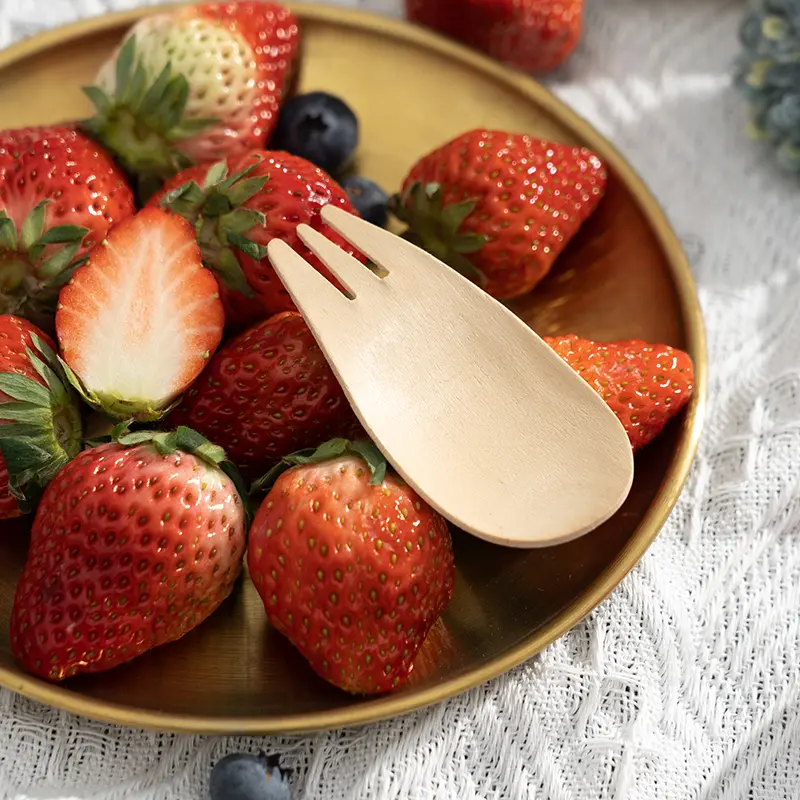
Government regulations are increasingly making traditional plastic utensils a liability for restaurants.
In many jurisdictions, including the European Union under the Single Use Plastics Directive and various states in the US, plastic forks and spoons are being banned or taxed. Transitioning to compostable sporks or an environmentally friendly wooden spork OEM solution is a proactive way to avoid fines and legal complications. By moving to wood or bamboo now, you "future proof" your business against upcoming legislation.
For larger restaurant chains, ESG (Environmental, Social, and Governance) scores are vital for attracting investors and maintaining a positive public image. Reducing the total number of utensils distributed is one of the easiest ways to lower a company's carbon footprint.
1. Material Reduction: One spork uses roughly 40 percent less raw material than a fork and spoon pair.
2. Waste Diversion: Because the spork is made from natural materials, it can often be composted, diverting waste from landfills.
3. Biodegradability: Unlike plastic, which stays in the environment for centuries, a wooden spork will break down naturally in a matter of months.
Yes, high quality birch wood sporks are very sturdy and do not bend like cheap plastic. Bamboo sporks are even stronger and are suitable for tough meats.
When sourced from reputable manufacturers like Ancheng, the wood is polished and treated to ensure there is no residual flavor or texture that interferes with the meal.
Many wholesalers offer customization. Branding your spork with a laser engraved logo is an excellent way to turn a utility item into a marketing tool.
While it can scoop broth, it is best for "chunky" soups or stews. For very thin, clear soups, a dedicated spoon might be preferred, but for most takeout meals, the spork is sufficient.
The spork is the ultimate economic solution because it reduces procurement costs, simplifies the supply chain, and increases labor efficiency. By choosing a single, environmentally friendly utensil made of wood or bamboo, restaurants meet legal requirements and satisfy the growing consumer demand for sustainable practices. It is a rare example of a business decision that lowers expenses while simultaneously improving the customer experience and brand reputation. Switching to sporks is a smart, strategic move for any high volume food service operation.
Ancheng provides a full range of disposable wooden sporks and bamboo sporks designed for real-world food service use. From ramen spork and long spork to mini spork and standard takeout models, Ancheng supports spork wholesale, private label, and environmentally friendly wooden spork OEM programs for restaurants, distributors, and packaging brands. If you want to reduce cost per order, simplify your supply chain, and meet the growing demand for biodegradable and compostable sporks, Ancheng is ready to help. Visit our spork collections or contact our team today to request samples and wholesale pricing for your takeout operation.


Hello, I'm Sven Wang, the Manager of Ancheng. With extensive expertise in raw materials and production processes, I'm dedicated to advancing sustainable tableware and constantly improving eco-friendly options for the modern catering industry. You can trust that Ancheng is committed to providing the highest quality. Welcome!

Factory: Qian Renqiao Industrial Park, Shucheng County, Luan City, Anhui Province, China
Office: Building 11, Max Science Park, Shushan Dist, Hefei, Anhui, China
Copyright ©2026 Anhui Ancheng Bamboo and Wood Tableware Co., Ltd. Privacy Policy


 Index
Index Product
 Resources
 About
About