Learn how to recognize the quality of disposable flatware with our expert guide. Discover common types and key tips to select the best flatware for your needs.
The demand for disposable flatware is growing fast. With this rise, businesses have plenty of opportunities, making it more important than ever to choose high-quality products. However, it is hard to find quality products due to the market being saturated with disposable flatware.
To help you with the selection, we’ll explore how to recognize disposable flatware quality, its five different types, weigh their benefits and drawbacks, and provide expert tips on identifying quality disposable cutlery.
Let’s begin!
All disposable utensils are not created equal. To ensure quality flatware for your next event, we’ve highlighted some important factors to consider before finalizing your cutlery order.
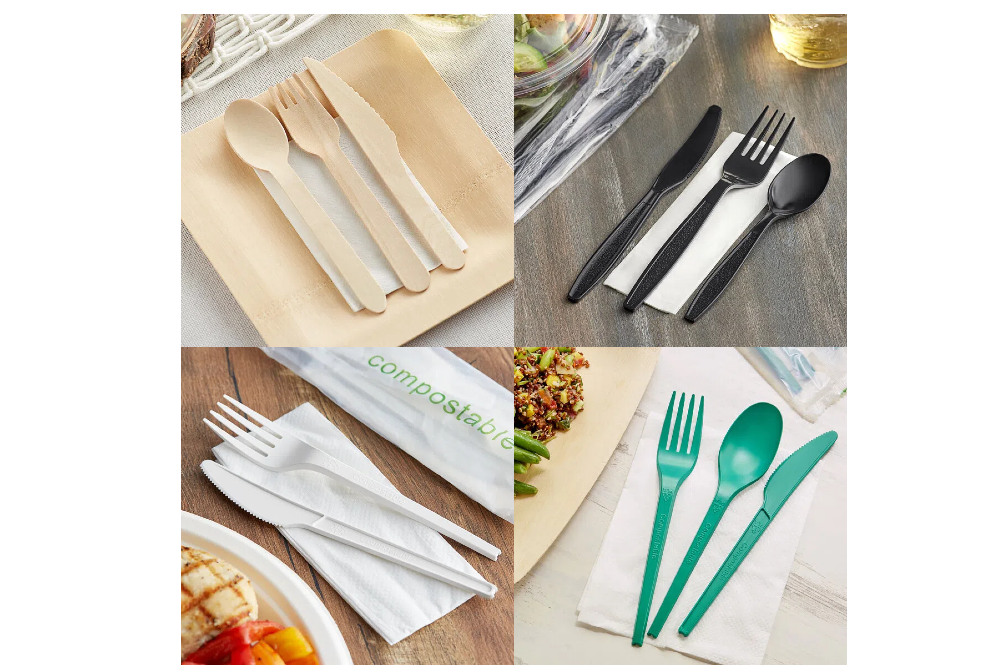
The first step in selecting the right flatware is to streamline your requirements and specifications. Select the material that not only meets the functional and safety requirements but also complements the theme of your event.
For instance, if you are organizing an eco-conscious corporate event or a sustainable product launch, fiber-based or bioplastic flatware offers excellent sustainability and performance. On the other hand, for more formal events like weddings or corporate dinners, consider investing in disposable aluminum cutlery.
Once you have a material and purpose in mind, research the top providers of the best disposable cutlery. Shortlist manufacturers that have a reputation for environmentally friendly disposable tableware, high customer satisfaction, and experience working with big clients.
One pro tip is to go for wholesalers instead of distributors; this will save you a ton of money. To assist you in the process, we’ve compiled a list of the top 10 disposable cutlery manufacturers in the world and their key offerings. Pick out your favorites and check their website for essential information, customer reviews, and ratings.
Once you’ve shortlisted some manufacturers, contact them and inquire about the minimum order quantity (MOQ) for your desired product. Before placing a bulk order, it is wise to request some product samples to check the quality. Some disposable cutlery brands like Ancheng also offer free product samples. You need to be aware of these issues during your interactions with vendors.
Once you have the product sample, inspect the surface. If the surface has tiny bumps or cracks, it is most likely made of low-grade materials. The ideal flatware should feel smooth to the touch, having no sharp edges or rough patches.
To ensure sustainability, check for labels like Biodegradable Products Institute (BPI) - Certified, Compostable, or EN 13432. These labels confirm it can break down in a commercial compost facility without leaving harmful residues.
Additionally, check for labels, ensuring consumer health and safety. Some common ones include BPA-free or FDA-approved.
To help you dig deeper, we've put together a guide to certifications and standards for disposable tableware.
Finally, test the durability and strength by performing some common tests and experiments, such as:
Bend Test: Gently apply pressure to the handle of cutlery (such as a fork or spoon). A good quality utensil should withstand moderate force.
Load test: Try cutting through a piece of meat or a hard piece of bread. Observe if the cutlery remains intact.
Heat Resistance Test: Test your cutlery with hot foods or expose it to low heat and see if it gives a smell or results in melting or warping.
With increasing awareness of potential health risks and environmental impacts of poor-quality materials, approximately 41% of consumers worldwide are now willing to pay a premium for products made from entirely organic or natural ingredients. Combined with the increasing demand and expanding market, which is projected to reach $22 billion by 2032, it is important to be aware of the different qualities of disposable tableware.
This shift in preferences has made it more important than ever to identify poor-quality disposable tableware. Here are a few key indicators of poor-quality flatware:
Low-quality disposable plates, cups, and cutlery are often made from flimsy plastic or other low-quality materials. Such utensils bend and break easily, especially with heavier or hot foods.
Poor-quality dishware, such as some disposable spoons and forks, will often have a rough, uneven surface. This is due to the lack of proper coating or poor manufacturing, causing rough patches, uneven textures, or tiny bumps on the surface.
An unpleasant chemical odor, especially after heating or contact with hot foods, is another key indicator of low-grade materials. These smells can often indicate extremely harmful chemicals such as bisphenol A (BPA), phthalates, or Per- and Polyfluoroalkyl Substances (PFAS).
Some disposable flatware, especially traditional plastic silverware, is more prone to warping or melting than others. Many low-quality disposable items are made from polystyrene or polyethylene, which have low heat tolerance.
Disposable tableware that lacks recognized certifications or eco-friendly labels, such as BPA-free, compostable, or FDA (Food and Drug Administration)-approved, poses significant risks in terms of health, safety, and environmental impact.
Disposable cutlery can come in several types, each having its own positives and negatives. As a business, it is crucial to differentiate quality flatware from poor one.
In this section, we’ll discuss different types of disposable flatware, as well as their benefits and drawbacks. We’ll also share some key insights on identifying quality disposable utensils.
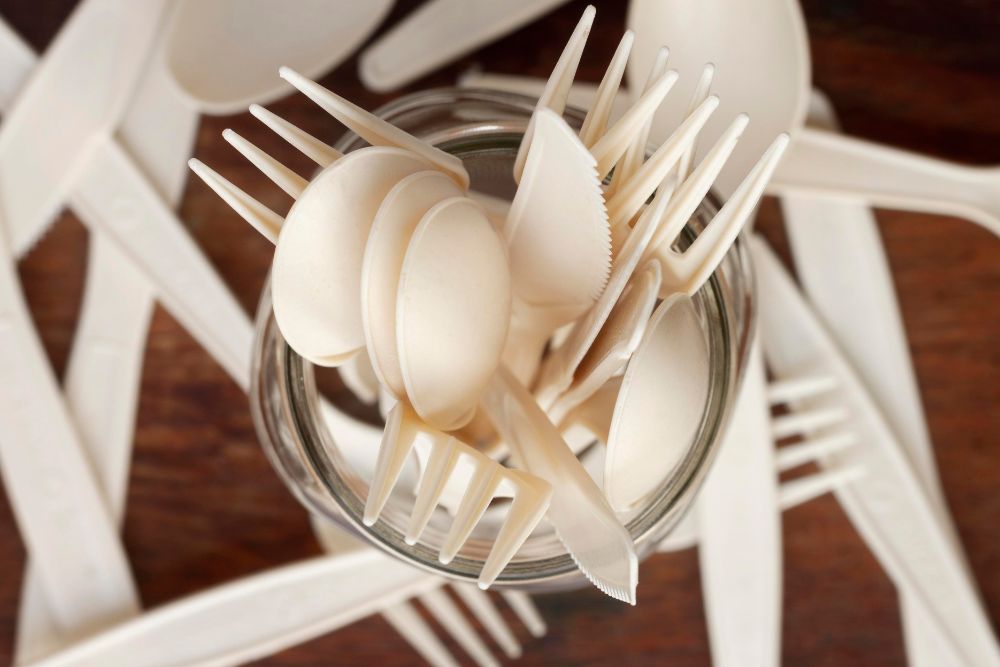
Plastic cutlery is made from petroleum-based plastics, primarily Polystyrene (PS) or Polypropylene (PP). It has been widely used for decades. However, rising concerns about its environmental impact and potential human risks have resulted in a shift towards sustainable alternatives.
In terms of cost, plastic utensils and dishware are among the cheapest disposable cutlery options in the market. They are often used as wedding flatware for parties, as well as for takeout, delivery, and fast food orders.
High-quality plastic utensils are smooth and rigid. Based on the material, PS or PP, plastic silverware can be brittle or slightly flexible, respectively. Ideally, plastic utensils should be odorless and strong. Plastic odor indicates low-grade materials or harmful chemicals.
Pros
a. Affordable
b. Lightweight
c. Available in various strengths
Cons
a. Not-biodegradable
b. Health risks
c. Difficult to recycle
Bioplastic flatware is made from renewable, plant-based resources such as cornstarch, sugarcane, or yeast, having Polylactic Acids (PLA) or Polyhydroxyalkanoates (PHAs) as their primary ingredients.
Bioplastic cutlery offers an eco-friendly, composable alternative to traditional plastic cutlery, made from fossil fuels and difficult to decompose. Bioplastic utensils are often used by fast-casual restaurants and zero-waste business models.
High-quality bioplastics should be smooth without any cracks or rough edges. They are mostly odorless or have a faint, sweet smell from plant materials.
Pros
a. Eco-friendly
b. Compostable
c. Non-toxic (suitable for direct contact with food)
Cons
a. Limited heat resistance (especially for PLA-based products)
b. Require composting facilities
c. Expensive than traditional plastic tableware
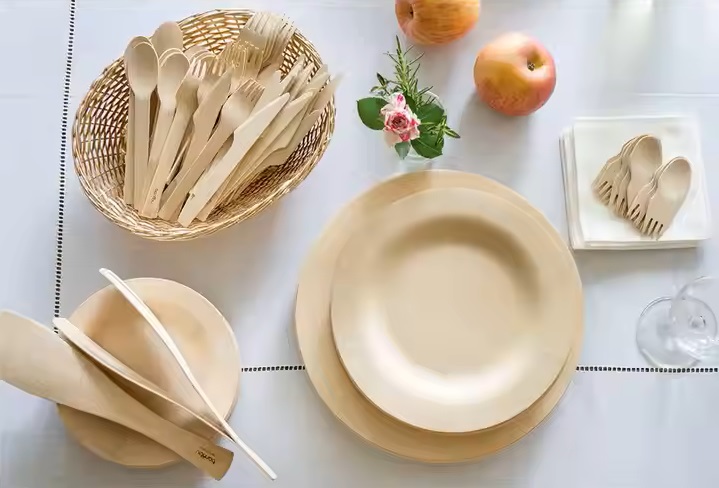
Another eco-friendly alternative to traditional plastic utensils is fiber-based tableware. This type of cutlery is mostly made from natural plant fibers such as wood, bamboo, bagasse, wheat straw, and fiber pulp.
Fiber-based tableware is biodegradable, making it a popular choice for eco-conscious consumers. Fiber-based utensils and dishware are often used in restaurants and catering, especially by sustainable dining establishments.
High-quality fiber cutlery has a smooth, splinter-free surface, and it does not bend or break easily. Fiber-based utensils, especially wooden cutlery, have high heat resistance, making them safe for hot meals and drinks without releasing toxins.
Pros
a. High heat resistance
b. Strong and durable
c. Eco-friendly
Cons
a. Expensive than traditional plastic cutlery
b. Single-use
c. Limited long-term water resistance
Disposable aluminum cutlery is yet another popular choice in the disposable cutlery market. Initially, aluminum foil and aluminum trays were more common for food packaging and baking, but recently, manufacturers began to use aluminum to create disposable cutlery, including forks, knives, spoons, and sporks.
Although aluminum cutlery is not biodegradable, it is highly recyclable. It can be used multiple times without compromising quality. It is also stronger and more durable than plastic. Disposable aluminum flatware is now a common choice in weddings, corporate functions, airlines, etc.
Quality disposable aluminum tableware has a shiny, reflective surface that resembles stainless steel. It shows no signs of warping when exposed to hot foods or liquids. It has a smooth, even surface with no sharp edges or cracks.
Pros
a. Durable and strong
b. Recyclable
c. High heat tolerance
Cons
a. Higher cost than plastic
b. Limited availability and variety
c. Not-biodegradable
Last but not least, we have paper-based flatware, an affordable, eco-friendly alternative to plastic cutlery. It is made from sustainable paper materials like kraft paper or recycled paper. Paper-based cutlery comes in various forms, from disposable spoons and forks to serving dishware.
While paper-based dishware may not be as durable as plastic and can be unsuitable for heavy or greasy foods, it remains a popular choice among many. It is commonly used for fast food packaging, school events, and casual gatherings.
To identify high-quality paper-based tableware, look for products with certifications stating compostability and biodegradability. Additionally, confirm the paper is sourced from recycled or sustainable materials.
Pros
a. Low-cost
b. Eco-friendly
c. Lightweight
Cons
a. Not suitable for heavy or greasy food items
b. Limited durability
c. Low aesthetic appeal
Here are some available options for disposable flatware that you can choose based on your requirements:
If you’re looking for a lightweight, affordable, high-quality disposable tableware option, heavy-duty plastic silverware is the way to go.
If you are an eco-conscious brand that promotes both sustainability and style, wooden or bamboo utensils are a perfect fit. These products offer both compostability and biodegradability with a variety of design options.
If you want a plant-based alternative that balances sustainability, functionality, and modern trends, bioplastic flatware is the ideal choice. Specifically, Crystallized Polylactic Acid (CPLA) cutlery is an excellent option.
If you need something that feels premium and is reusable, consider aluminum disposable flatware. Although more expensive than other options, it offers a sleek appearance and high-quality look.
For an affordable, eco-friendly option for casual or short-term events, like birthday parties and picnics, paper-based tableware is a great choice. Paper is also a popular choice for eco-conscious gatherings or fairs.
In this comprehensive guide, we have discussed how to differentiate quality flatware from low-grade options. We’ve also covered common types of disposable flatware, along with their pros, cons, and applications.
Now that you are familiar with all the key considerations for selecting disposable flatware, you’re all set to place your order for your next event.
Ancheng is a leading manufacturer of eco-friendly disposable flatware specializing in bamboo and wooden utensils. The company has a global reputation for delivering certified high-quality tableware to market-leading businesses worldwide.
With over 20 years of expertise, Ancheng offers 200+ designs for wooden and bamboo cutlery, straws, plates, stirrers, and much more, all made from sustainably sourced birch wood and bamboo. Get free samples before committing to a full order.
To find the best disposable flatware for your business, contact us now!

Hello, I'm Sven Wang, the Manager of Ancheng. With extensive expertise in raw materials and production processes, I'm dedicated to advancing sustainable tableware and constantly improving eco-friendly options for the modern catering industry. You can trust that Ancheng is committed to providing the highest quality. Welcome!

Factory: Qian Renqiao Industrial Park, Shucheng County, Luan City, Anhui Province, China
Office: Building 11, Max Science Park, Shushan Dist, Hefei, Anhui, China
Copyright ©2026 Anhui Ancheng Bamboo and Wood Tableware Co., Ltd. Privacy Policy



 Index
 Product
 Resources
 About