Key Takeaways: Accurate ounces-to-cups conversion is essential for both kitchen use and commercial food service. 1 US cup equals 8 fluid ounces, while dry ounces vary by ingredient density. Distinguishing fluid ounces from dry ounces prevents measurement errors in baking, cooking, and bulk catering. Understanding the US customary and imperial systems avoids inconsistencies in recipes and food packaging. Ancheng’s standardized eco-friendly cups match common ounce specifications, helping businesses reduce waste, ensure portion consistency, and streamline operations. Proper conversion supports cost control, compliance, and reliable product sizing for takeout and food service industries.
Have you ever been confused in the kitchen: exactly how many cups fit into one ounce? Whether you are trying a new baking recipe or bulk ordering disposable cups for your coffee shop, accurate volume conversion is key to success. A wrong number won't just spoil a pastry. For a business, it can lead to huge waste of raw materials and even affect the product standard you offer to your customers.
This Complete Conversion Guide for Ounces to Cups will give you the expert tools and knowledge you need, from a home kitchen to commercial procurement. We will go beyond basic tables to explore the challenges of volume measurement in the food service industry and ensure you never make a measuring mistake again.

To make a perfect conversion, we first need to know one core number and one important difference: the type of ounce. For most daily cooking, the answer is simple: 1 US Customary Cup equals 8 fluid ounces.
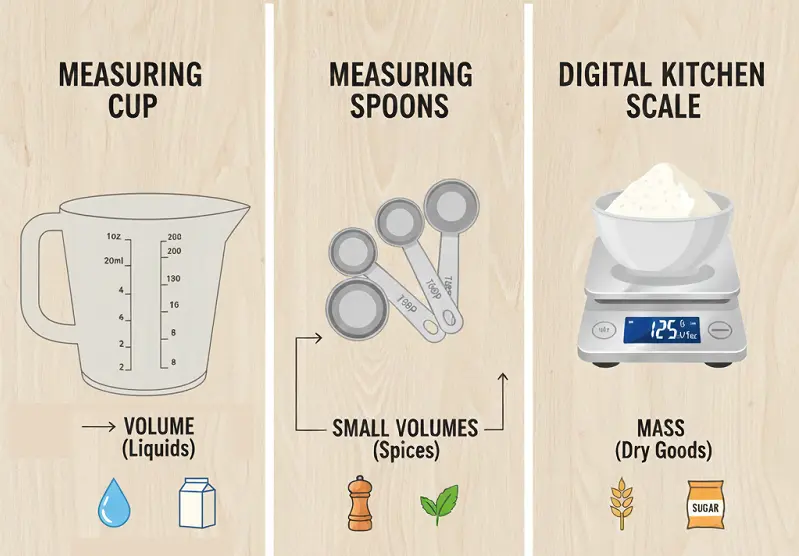
The unit most often used in cooking is the fluid ounce (fl oz). It measures volume, which is the space a liquid takes up. A dry ounce (oz) measures weight (mass). While they have similar names, they have different uses. In baking or precise recipes, using weight (dry ounce) for flour or sugar is much more accurate than using volume (cups). But for liquids like water or milk, we focus on the fluid ounce.
In the US, Canada, and most home kitchens, we use the US Customary System. If you work abroad, you might see 'Imperial' measurements, where one cup is about 10 fluid ounces. But don't worry, all conversions in this guide are based on the most common US Customary System (8 fl oz = 1 cup).
You can easily convert between ounces and cups using our ounce-to-cup converter.
Enter a value in either field to convert instantly.
Conversion Logic: 1 Cup = 8 Fluid Ounces. This tool is designed for liquid volume measurements in professional food service.
If you need a quick reference table, we’ve got you covered:
Table 1: Core Conversion Table
Get Precise Size Cups for Your Business
Order Standard Eco Friendly Containers in Bulk
Whether you are cooking in large batches or figuring out bulk ingredients for your food business, you need a more complete conversion table. Below is a full quick check from 1 fl oz up to 32 fl oz. This covers all measurements, from a single serving drink up to half a gallon of liquid. In business operations, using this table can greatly reduce waste and make sure your recipes are consistent every time.
Table 2: Full Fluid Ounces to Cups Conversion
As we mentioned in Part 1, the fluid ounce (fl oz) is for measuring volume. But when you measure dry ingredients like flour, sugar, or cocoa powder, you use the dry ounce (oz), which measures weight. A "cup" of flour can weigh very differently depending on how you scoop it.
The Golden Rule of Baking: In baking, weight is always more reliable than volume. This is why professional bakers and commercial kitchens rely on a kitchen scale for exact measurements. When a recipe asks for "4 ounces of flour," that is a weight requirement, and you must use a kitchen scale.
For a food service, coffee shop, or beverage business, knowing how ounces line up with milliliters (mL) is very important. This helps you keep product volumes standard and steady when buying containers, and it helps you meet the needs of international customers.
Table 3: Most Common Volume Comparison Table
While conversion tables give quick answers, knowing how to calculate step-by-step gives you more confidence in the kitchen or during procurement. Remember the core formula: Cups = Fluid Ounces / 8. Below are the step-by-step conversions for the most common commercial and cooking volumes:
Use: A common medium drink size.
Calculation: 12 fl oz / 8 = 1.5 cups.
Result: 12 fluid ounces is 1 and a half cups (1 1/2 cups).
Use: A common large drink size or a pint.
Calculation: 16 fl oz / 8 = 2 cups.
Result: 16 fluid ounces is exactly 2 cups.
Use: Bulk ingredients for food service or an extra-large cup.
Calculation: 24 fl oz / 8 = 3 cups.
Result: 24 fluid ounces is 3 cups.
Use: A Quart, large containers, or storage size.
Calculation: 32 fl oz / 8 = 4 cups.
Result: 32 fluid ounces is 4 cups (or 1 quart).
By using these step-by-step calculations, you can quickly change any ounce volume into cups. This gives you exact control over your recipes and stock.
For a home cook, a conversion mistake might just be a small taste issue. But for a food service business that makes hundreds of drinks or meals every day, accurate ounce-to-cup conversion is the key to profit. Even a half-ounce mistake, when multiplied by thousands of orders, quickly turns into a huge waste of raw materials and lost money.
In addition, inconsistent volumes hurt brand trust. If your "medium" coffee cup is a different size every day, customers will notice. Professional commercial kitchens must set strict volume standards from the start. They must ensure that all staff and all purchased containers follow these standards.
After mastering ounce conversion knowledge, the next challenge for businesses is this: How do you find reliable, eco-friendly tableware with certified volumes? Many suppliers provide cups or containers that have slight volume differences from the label. This can erase all the accuracy you worked hard to calculate. This is when you need a professional partner.
Ancheng is an eco-friendly tableware manufacturer with over 20 years of history. We understand that for B2B customers, volume standardization and trusted quality certification are just as important as being eco-friendly. We offer deep OEM/ODM customization services for global customers. We can provide exact and compliant containers—from 8 fl oz to 32 fl oz—made of bagasse, pulp, or wood that meet international standards like BRC and FDA. This ensures your supply chain is stable and your product recipes are perfectly executed.
Whether you need an exact 16 fl oz cold cup or a biodegradable 12 fl oz food container, check out Ancheng's customizable eco-friendly containers to find the solution that best fits your business volume needs.
In B2B purchasing, it is easy to mix up two ideas: Mass Ounce and Volume Fluid Ounce. Mass ounce measures the weight of an item (for example, the weight of an empty paper cup). Volume fluid ounce measures how much liquid it can hold.
Remember: When you buy drink containers, the "ounce" the supplier quotes is usually the volume. But in some dry ingredients or weighing, it will be the weight unit. As a professional buyer, you must always double-check the product specs your supplier gives you. Make sure the container volume you buy is the actual usable fluid ounce capacity, not its weight.
Certified Reliable Cups for Food Service
FDA and FSC Approved Food Packaging from Ancheng
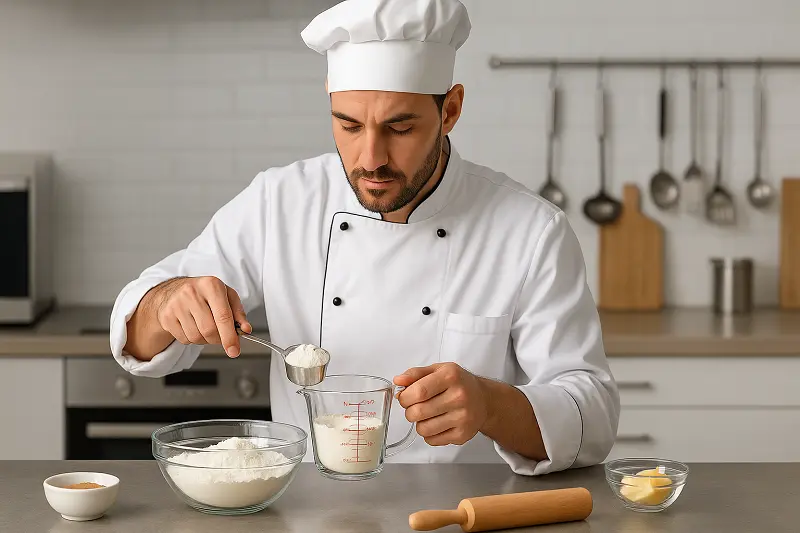
After you master the math of ounce-to-cup conversion, the next step is to use the right tools. For liquids, you should use a clear measuring cup with markings, reading the line at eye level. For dry goods, especially baking items, you should always use a kitchen scale and measure by weight (dry ounces), not volume (cups). An accurate digital kitchen scale is a trustworthy investment for any kitchen that wants professional quality.
When it comes to flour, sugar, or thick liquids like peanut butter and honey, conversion gets trickier.
If you are in a place without a standard measuring cup (for example, at an outside event or in an emergency), knowing some close-to-volume replacements can be helpful:
No, they are different. A US Customary Cup is 8 fluid ounces or about 237 milliliters. An Imperial Cup used in some regions is about 10 fluid ounces or 284 milliliters. Always check the origin of your recipe or container specifications to ensure accuracy.
Yes, Ancheng cups are produced to standard US fluid ounce sizes, ensuring reliable portioning for takeout and food service.
To find the answer, divide the total fluid ounces by 8. For 16 ounces, the calculation is 16 divided by 8, which equals exactly 2 cups. This size is common for large beverages or standard pint containers in takeout service.
Yes, Ancheng cups are produced to standard US fluid ounce sizes, ensuring reliable portioning for takeout and food service.
Accuracy is the basis for professional kitchens and supply chains. Whether you are baking the perfect cake at home or running a global coffee chain that needs reliable, standard volume containers, the knowledge of ounces-to-cups conversion is a must-have.
Remember, 1 US cup is 8 fluid ounces. On top of this core number, the expert way to think is to separate liquids from dry goods. You must always chase weight measurement for the best accuracy. For businesses that need stable, certified containers to support their exact recipes, partnering with a maker who understands the importance of volume standards is key.
With over 20 years of experience in tableware and kitchenware, Ancheng offers precise sizing for our products. You can purchase our standard-sized items directly or contact our team to customize dimensions to your specifications. Additionally, our compostable products hold multiple international certifications, including FSC, BRC, and ISO9001, ensuring compliance with regulations across global regions.
Custom Size Food Containers for Your Brand
Professional OEM Service for Sustainable Packaging

Hello, I'm Sven Wang, the Manager of Ancheng. With extensive expertise in raw materials and production processes, I'm dedicated to advancing sustainable tableware and constantly improving eco-friendly options for the modern catering industry. You can trust that Ancheng is committed to providing the highest quality. Welcome!

Factory: Qian Renqiao Industrial Park, Shucheng County, Luan City, Anhui Province, China
Office: Building 11, Max Science Park, Shushan Dist, Hefei, Anhui, China
Copyright ©2026 Anhui Ancheng Bamboo and Wood Tableware Co., Ltd. Privacy Policy


 Index
Index Product
 Resources
 About
About