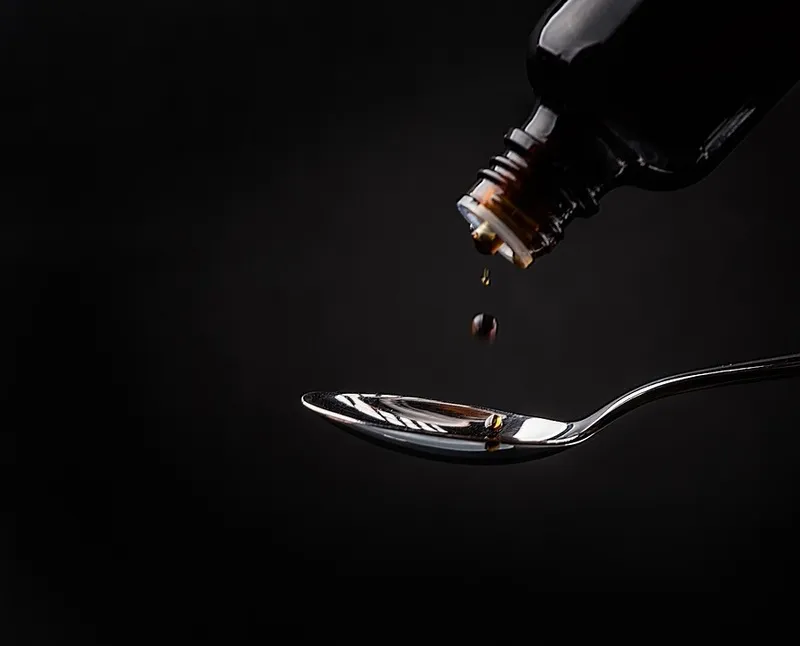
You often get medicines that say “Feed 1 teaspoon to your child,” and you end up fishing in your kitchen drawers, messing around with your silverware. But science tells you that dinner-table spoons are not to be used for liquid meds. In fact, 40% of parents give their kids the wrong dosage just because they don’t know the difference between tsp and tbsp. What's the difference between a teaspoon and a tablespoon? How do you know if a spoon is the “tea” one or the “table” one?
You need to understand the correct teaspoon vs tablespoon size here. Learn the true difference between table spoon vs tea spoon. You may have questions in your mind. How many teaspoons in a tablespoon? How many tablespoons in an ounce? How many tablespoons are in a cup? Is a regular spoon a teaspoon? We’ll answer all these questions in this Anchenggy blog today!
Let’s check the annals of history to find out where all this fuss about tbs vs tbsp came from in the first place! We learn that the teaspoon is of European origin. Small spoons date back to at least the 13th century. Medieval-era Europeans designed these tiny utensils from metals like gilt silver. They were used to stir your coffee and tea, serving as elegant dining accessories.
The earliest mention of teaspoons in recorded history appears in a 1686 edition of the London Gazette, listed as a “small gilded tea spoon.” The term “teaspoon” is quintessentially English in its origins. This term emerged because of how popular tea was in the British Isles at that time. In fact, a Portuguese princess called Catherine of Braganza popularized this concoction when she became the Queen of England in 1662 and brought this tradition to the British aristocracy.
On the other hand, the tablespoon was a large spoon used to serve food. It has a long history of usage in our kitchens. During the late 17th century, dining customs started to evolve in Europe; larger spoons were used to serve and eat food. That’s how the modern tablespoon emerged.
This utensil was part of the dining table accessories of that era. Its size standardized over time. This historical discussion takes us to the problem of the difference between tbsp and tsp.
You may want to ask about the true size of a teaspoon. A teaspoon is a small unit of volume. It equals 5 ml in volume, used in cooking and baking. Teaspoons measure minute quantities of a liquid or dry ingredient, such as spices, baking powder, oil, honey, butter, ajinomoto, extracts, or something else. Teaspoons also refer to a standard spoon used at dining tables, but these are often not reliable for measuring ingredients because their sizes often vary.
A tablespoon is around 3x larger than a teaspoon. You can understand the difference between teaspoon and tablespoon in this way: 3 teaspoons are the same as a single tablespoon. So, a tablespoon accommodates 15 ml of ingredients. You can measure flour and syrups with this unit of measurement. Tablespoons are used as utensils for eating as well; they’re usually larger than teaspoons and with a different shape and depth to accommodate more food.
You may have heard that two tablespoons of apple cider vinegar helps you lose weight. Experts also claim that two tablespoons of chia seeds should be consumed daily for better health. When a website tells you that half a teaspoon of household oils can improve your memory, you want to ask them, “Just how many tablespoons in a cup?” We shall answer this question here. We’ll give you a teaspoon-tablespoon size comparison chart. It’ll make things pretty clear.
When you measure ingredients in the “tablespoon vs teaspoon” discussion, don’t forget that you have to differentiate b/w dry and liquid measurements for accuracy.
1. Dry Stuff: You should use a dry measuring spoon/cup. Fill the thing and level it off with a flat edge. That’s how you can avoid packing. You can do this thing with flour, sugar, salt, etc.
2. Liquids: You can use a liquid measuring cup or spoons designed for liquids. They come with a spout as well. Always measure at eye level for precision. Examples include milk, oil, water, etc.

When we discuss tablespoons to cups, we should bear in mind that tablespoons are noticeably larger than teaspoons. They have a broader and deeper bowl. This design lets them hold more material. That’s why they are perfect for eating soups and serving dinner. Teaspoons are smaller and narrower. They are also very delicate. So, they are sized perfectly for stirring hot beverages (like your tea/coffee). Their smaller capacity has room only for precise, individual portions.
Teaspoons traditionally serve as beverage utensils. They are mainly for stirring hot drinks such as tea or coffee and for eating small desserts or portions. They are also delicate and suitable for individual use. Tablespoons are multipurpose utensils used for eating substantial meals. If you want, you may use them in cooking for tasks that require scooping or mixing larger amounts. While the tablespoon also doubles as a measuring spoon, as a utensil, it often handles heartier foods. Hopefully, you now understand the debate around how many tsp in a tbsp.
When you ask how many tsp in tbsp, you should remember that even though regular spoons share this name (i.e., “spoon”) with their measuring counterparts, these two are not the same. You should never substitute regular spoons for measuring spoons in recipes. For instance, the Heart Foundation of Australia recommends a single teaspoon of salt per day. But you should keep this in your mind that this teaspoon corresponds to 5 grams of salt.
Note: Weight-to-volume conversions vary by ingredient density, so use weight measurements for baking accuracy when possible.
Mistakes are part of life! Some people mistake baking soda for baking powder, while others do not know that a tablespoon is more than a teaspoon. When you choose your measuring tools & utensils, you need to contact reputable manufacturers to ensure accuracy and durability.
Quality measuring cups & spoons help you do precise baking & cooking. Inferior utensils may vary in size, so they lead to inconsistent results in your customers’ recipes. Well-made utensils use sturdy materials like stainless steel or BPA-free plastics. These materials are safer and a lot stronger than traditional materials. They last longer than usual and are also easier to clean.
So, invest in reliable measuring tools. That’s how you can guarantee that your customers make culinary creations with quality + consistency. That’s something only Anchenggy can offer!
1. How many teaspoons are in a tablespoon?
There are three teaspoons in a tablespoon.
2. What is the difference between measuring spoons and regular spoons?
Measuring spoons are standardized tools for cooking measurements. Regular spoons vary in size; they are unreliable for measuring ingredients.
3. How many tbsp in a cup?
There are 16 tablespoons in a cup.
4. How do I measure sticky ingredients like butter/honey?
Use a liquid measuring spoon and lightly coat it with oil or spray to help the sticky ingredient slide out easily.
5. Why are some tablespoons larger in recipes?
Some countries use different tablespoon sizes; the U.S. tablespoon is 15 ml, while Australia uses 20 ml (four teaspoons). Always check the recipe origin.
You should choose Ancheng as your trusted partner for bamboo and wooden tableware. We have 20+ years of experience & expertise in this field. We deliver quality products favored by businesses all over the world (more than 100 countries). Our product range includes cutlery sets, teaspoons, plates, skewers, and straws, all certified by the FDA, LFGB, and the EU for safety and sustainability. So, elevate your business with our customized solutions; we offer only the best shipping service as well. Visit our website to learn more, and feel free to contact us today.

Hello, I'm Sven Wang, the Manager of Ancheng. With extensive expertise in raw materials and production processes, I'm dedicated to advancing sustainable tableware and constantly improving eco-friendly options for the modern catering industry. You can trust that Ancheng is committed to providing the highest quality. Welcome!

Factory: Qian Renqiao Industrial Park, Shucheng County, Luan City, Anhui Province, China
Office: Building 11, Max Science Park, Shushan Dist, Hefei, Anhui, China
Copyright ©2026 Anhui Ancheng Bamboo and Wood Tableware Co., Ltd. Privacy Policy


 Index
Index Product
 Resources
 About
About