Key Takeaways: Gulf nations accelerate single-use plastic bans to align with national net-zero goals. 2026–2027 serves as the critical transition window for all GCC states, targeting cutlery, plates, foam containers, and thin plastic bags. Non-compliance carries fines and import restrictions, creating urgent demand for certified sustainable options. The Middle East compostable packaging market reaches $500 million in 2026 with 12%+ annual growth. Key materials include sugarcane bagasse, paper pulp, and cornstarch blends. Businesses must prioritize compliance, optimize product portfolios, and align supply chains to capture growth in food service, hospitality, and retail sectors.
The Middle East is currently undergoing a significant shift in environmental policy. Traditionally known for its energy exports, countries within the Gulf Cooperation Council (GCC) are now leading global sustainability efforts. National strategies such as Saudi Vision 2030 and the UAE Net Zero 2050 pathway have turned environmental protection into a top economic priority.
This region maintains some of the highest per capita consumption rates globally. The rapid expansion of cloud kitchens, fast food chains, and delivery platforms like Talabat and Noon has historically led to high volumes of plastic waste. However, government authorities are now taking decisive action to mitigate this impact.
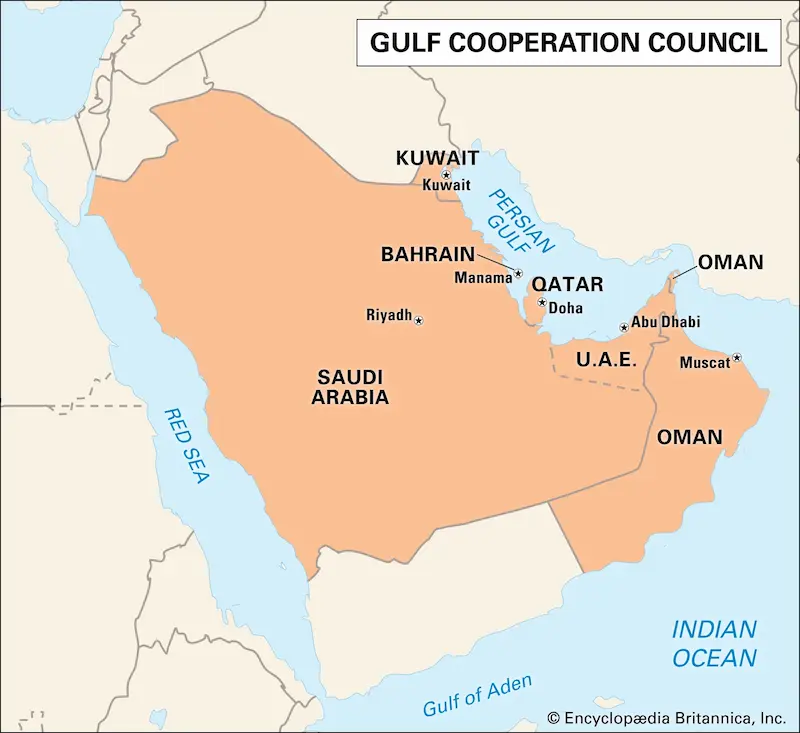
UAE enforces the strictest regulatory framework across the GCC. The policy follows MOCCAE Resolution No. 380/2022, implemented in two phases.
Phase 1 took effect on January 1, 2024, banning all single-use plastic shopping bags, including biodegradable variants, from import, production, and circulation.
Phase 2 commences on January 1, 2026, imposing a full ban on plastic cutlery (forks, spoons, knives), plates, cups and lids, straws, stirrers, and foam food containers. All single-use bags with a thickness below 50 micrometers, including paper-based options, are also prohibited.
Exceptions: export-only products, medical packaging, and items made from recycled materials.
Fines: non-compliance starts at 200 dirhams, with repeat offenses reaching up to 2,000 dirhams.
Abu Dhabi and Dubai implement detailed rules, with a transition from charging to a full ban to ensure market adaptation.
Saudi Arabia’s policies align with Vision 2030, focusing on circular economy development.
2025: A total ban on single-use plastic bags will be enforced nationwide.
2026 to 2027: The government will phase out plastic cutlery, plates, and other food service disposables.
Requirement: Importers must ensure that all plastic alternatives carry mandatory compostability certifications approved by the Saudi Standards, Metrology and Quality Organization (SASO).
Qatar: Building on the legacy of a plastic-free FIFA World Cup, Qatar has banned plastic bags and foam containers in food service. By 2026, the ban will extend to all plastic cutlery and straws.
Oman: Oman implemented a plastic bag tax in 2024, followed by a full ban on single-use plastic tableware in 2026. The policy follows Environment Authority Resolution No. 8/2024, aiming to reduce plastic waste and promote sustainable alternatives across the retail and food service sectors.
Kuwait: Following a bag ban in 2025, Kuwait plans to prohibit all single use food service plastics by 2027.
All GCC countries converge on 2026–2027 as the critical transition window, targeting the same core product categories: cutlery, plates, foam containers, straws, and thin plastic bags. The shared goal is to eliminate 80% of single-use plastics by 2030, creating a unified market shift toward sustainable alternatives.
source: Towards Packaging
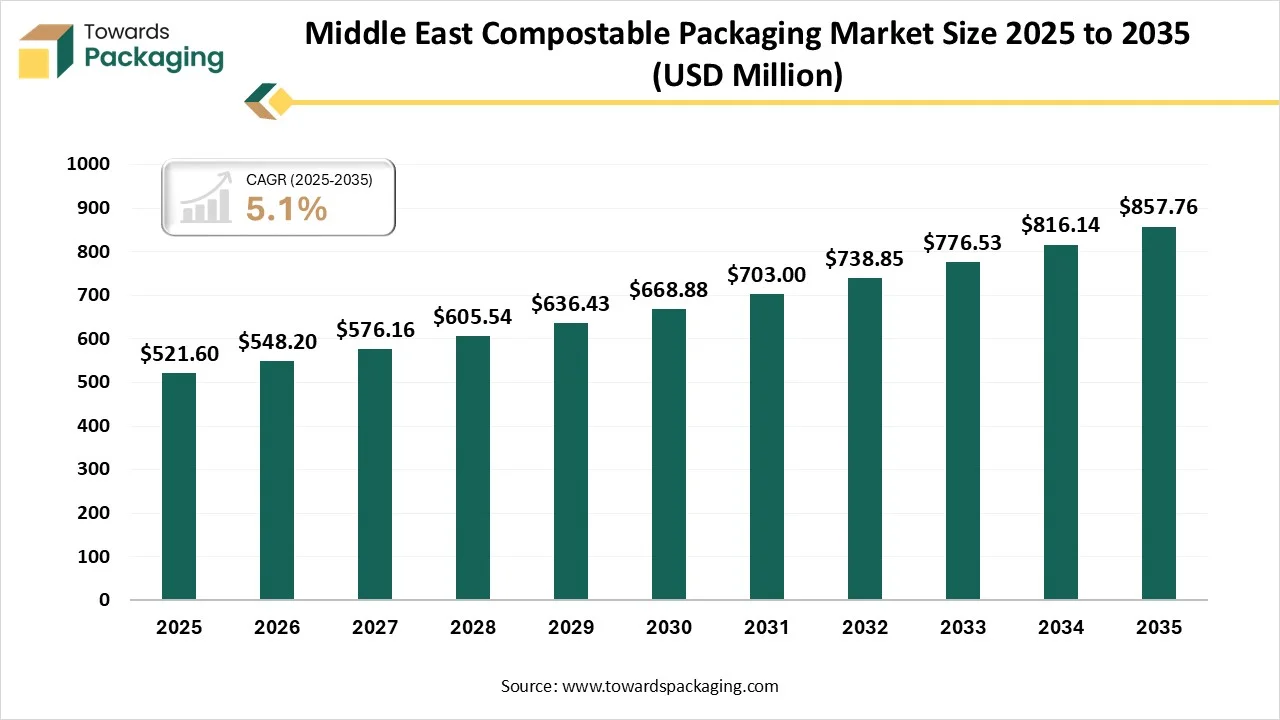
The demand for sustainable packaging is accelerating at an unprecedented rate. According to Towards Packaging, the Middle East compostable packaging market is forecasted to expand from USD 548.2 million in 2026 to USD 857.76 million by 2035, growing at a CAGR of 5.1% from 2026 to 2035.
This growth is driven by 4 primary factors:
Young consumers have shown a strong preference for eco-friendly dining, which has become a key purchasing consideration for restaurant operators and is driving demand for sustainable products. According to forecasts by regional environmental protection agencies, consumer preference for eco-friendly products is expected to increase by approximately 20% in the future.
International hotel brands, including Hilton and Marriott, enforce global ESG commitments, pushing local hospitality and catering sectors to adopt eco-friendly practices.
The ban is not only a restriction but also a huge demand gap for eco-friendly materials such as bagasse pulp, bamboo fiber, and PLA. Gulf countries are importing compliant biodegradable tableware and food packaging from other countries to meet domestic demand for sustainable products.
With its abundant renewable resources and advanced manufacturing sector, China has become one of the largest exporters of compostable products. According to market research by Towards Packaging, China is the top exporter of the compostable bags worldwide with 1,491 shipments.
If enterprises violate regulations, they may face penalties such as fines and import bans. More importantly, the use of non-compliant products can cause damage to the brand.
The Middle East climate presents unique challenges for dinnerware and packaging. Hot food delivery requires materials that can withstand high temperatures and humidity without losing structural integrity.
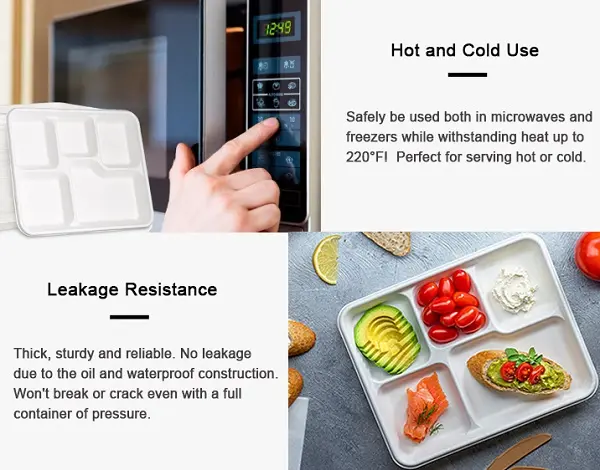
Sugarcane bagasse is one of the most widely used biodegradable materials for disposable tableware. It is made from agricultural residue after sugar extraction.
Performance
Good oil resistance, performs well with greasy food
Rigid structure maintains shape during transport
High heat resistance; withstands temperatures from -20°C to 120°C
Microwave and freezer safe
Fully compostable within 60 to 90 days in commercial facilities
Common Products
clamshell takeout containers
multi-compartment meal trays
bowls for rice and mixed dishes
disposable drinking cups
This material is suitable for hot meals, fried food, oily food, soups, and catering dishes. It can hold hot food for long periods without softening. It fits takeout services, restaurants, hotels, and events in the GCC region.
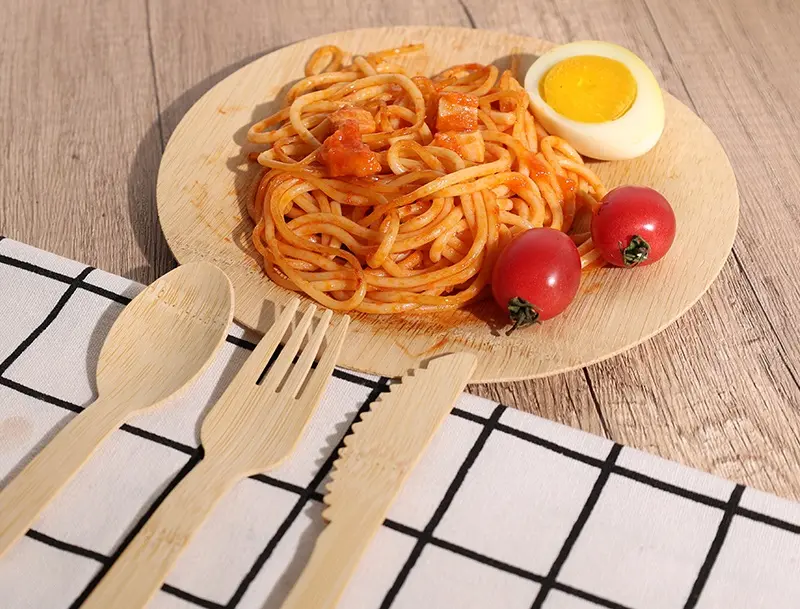
Bamboo fiber uses fast-growing bamboo as a raw material. It has natural rigidity and a long service life. It is reusable and recyclable. It shows high stability in daily catering scenarios.
Performance
high strength and rigidity
heat resistant
no melting or deformation
natural appearance
Common Products
forks, knives, spoons
skewers and stirrers
plates
reusable straws
Compostable bamboo tableware is ideal for chilled salads, poke bowls, and heavy desserts. Bamboo cutlery is particularly effective for cutting through tough meats without breaking.
Birch wood provides a 100% natural, chemical-free alternative to plastic cutlery. It is a functional and aesthetic choice for the hospitality sector.
Performance: Rigid and heat-resistant. Birch wood does not conduct heat, making it comfortable for consuming hot soups or teas.
Key Products: Cutlery sets, coffee stirrers, and plates
Best For: Casual dining, coffee shops, and fast food sets. It is ideal for dry or solid foods that require mechanical strength for cutting or piercing.
CPLA is a heat-resistant version of PLA. It can withstand higher temperatures than standard PLA. It does not soften easily when in contact with hot food. It maintains shape and safety during food delivery.
Products include hot drink lids, soup bowl covers, hot food containers, and cutlery sets.
It is suitable for hot drinks, soups, noodles, hot meals, and cooked takeout food. It solves the heat resistance demand in the GCC’s fast food and delivery industry.
Wood pulp materials use thick and durable paper fiber. They have strong water and oil resistance. They can be processed into disposable and recyclable items. They meet food contact safety requirements.
Products include paper bowls, paper plates, noodle boxes, and sauce containers.
They are suitable for noodles, rice, fast food, fried items, and street food. They are widely used in street food services in GCC countries.
Find everything you need for your wholesale business.
Conduct inventory audits to phase out non-compliant plastic items. Verify product certifications, including EN13432, OK Compost, and GCC regional marks. Update supply chains to partner with certified sustainable manufacturers, ensuring consistent product quality and regulatory adherence. Train teams on product specifications, storage requirements, and customer communication to support a smooth market transition.
Prioritize high-demand items such as sugarcane bagasse plates, cornstarch cutlery, and molded fiber containers. For the foodservice and events sectors, it is best to choose integrated solutions that include cutlery, plates, and napkin sets. Hotels, fast-food chains, and retailers should make strategic use of customization services to combine sustainability with brand promotion. If you’re unsure about which product combinations to choose, consult a professional tableware manufacturer.
Choose a manufacturer that offers a one-stop solution to optimize costs and procurement efficiency. Ensure that all customs documents are complete, including product certifications and compliance certificates, to prevent import delays.
Establish long-term partnerships with vetted manufacturers of sustainable products and conduct regular spot checks to ensure product quality. It is advisable to select manufacturers that offer products made from a variety of materials to adapt to the evolving policy landscape and maintain a competitive edge.
The UAE bans plastic cutlery, plates, cups and lids, straws, stirrers, foam food containers, and all single-use bags with thickness below 50 micrometers, including paper-based options.
The most widely accepted certifications include EN13432 (Europe), ASTM D6400 (USA), and specific local marks like the SASO Green Label in Saudi Arabia.
Yes. In the GCC, "compostable" is the preferred legal standard. It ensures the material breaks down within a specific timeframe without leaving toxic residue, whereas "biodegradable" can be a vague term without a fixed timeline.
Natural materials like bamboo and bagasse are chemically inert. Unlike some plastics, they do not leach chemicals or odors into hot food, often improving the overall customer experience.
The shift toward sustainable tableware in the GCC represents a permanent change in the business environment. Companies must prioritize compliance with the 2026 plastic bans to avoid operational risks. Adopting certified materials like sugarcane bagasse and bamboo fiber ensures long term growth in the expanding Middle East food service market. Early adaptation is the most effective strategy for maintaining market share and building consumer trust in this high growth region.
The transition to a plastic free future in the GCC is a complex process that requires reliable supply chain partners. Ancheng specializes in providing high performance, eco-friendly solutions that meet the rigorous standards of the Middle East market.
Whether you are a wholesaler in Dubai or a food service provider in Riyadh, our diverse product range—including sugarcane bagasse containers, bamboo cutlery, and PFAS-free plates—is designed to withstand high temperatures and demanding delivery conditions. We ensure that every product comes with the necessary international compostability certifications to guarantee smooth customs clearance and full regulatory compliance.
Contact our expert team today to request samples or a customized transition plan for your business.
Professional OEM Service for Sustainable Packaging

Hello, I'm Sven Wang, the Manager of Ancheng. With extensive expertise in raw materials and production processes, I'm dedicated to advancing sustainable tableware and constantly improving eco-friendly options for the modern catering industry. You can trust that Ancheng is committed to providing the highest quality. Welcome!

Factory: Qian Renqiao Industrial Park, Shucheng County, Luan City, Anhui Province, China
Office: Building 11, Max Science Park, Shushan Dist, Hefei, Anhui, China
Copyright ©2026 Anhui Ancheng Bamboo and Wood Tableware Co., Ltd. Privacy Policy


 Index
Index Product
 Resources
 About
About