When sourcing tableware from international markets, importers and brand owners often encounter issues such as false sustainability claims, inconsistent product quality, and regulatory ambiguities. A structured factory audit process can mitigate these risks and help identify reliable suppliers of eco-friendly tableware.
Drawing on over 20 years of experience in the sustainable disposable products industry, Ancheng has compiled this factory audit guide for the cross-border procurement of eco-friendly tableware.
Eco-friendly tableware production involves raw materials, food safety compliance, and environmental standards. Suppliers must demonstrate consistent manufacturing capability and transparent sourcing.
Factory audits can help buyers gain a comprehensive understanding of their supply chain.
Audits confirm whether a supplier is a genuine eco-friendly tableware manufacturer or a trading company. Manufacturers offer wholesale prices, while trading companies typically mark them up. Buyers can evaluate production equipment, workforce size, and process control.
Disposable tableware is manufactured from certified materials that comply with regulatory requirements in most regions where plastic bans are in effect. However, some tableware manufacturers may use inferior or mixed materials to cut costs, which can result in non-compliant products and damage your brand image.
International markets require compliance with food contact regulations and compostability standards. Certifications such as FDA approval, EN13432, and BPI often apply to biodegradable disposables.
Factory visits provide direct visibility into quality control systems, production capacity, and operational stability.
In short, factory audits can help buyers mitigate 90% of procurement risks.

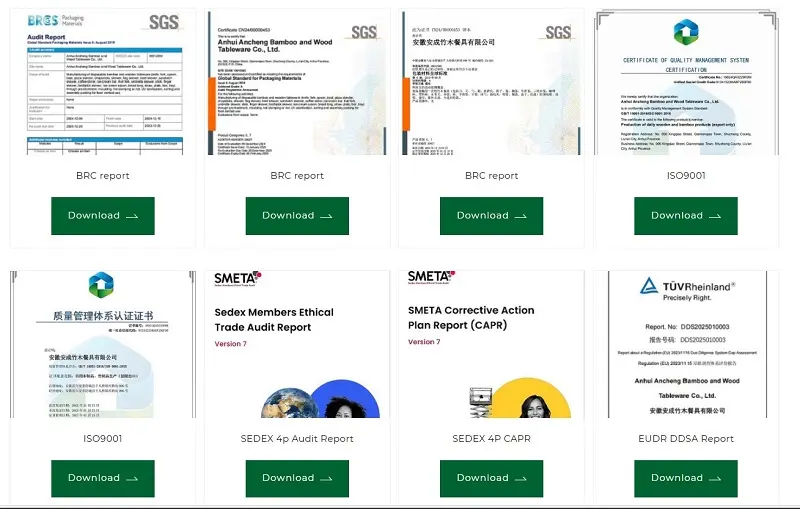
To ensure an efficient and thorough factory audit, certain preparations should be made in advance.
Before visiting the factory, request documents such as:
1) Business license
2) Export license
3) Product certifications
4) Environmental compliance records
5) Quality management certificates
Cross reference supplier claims with industry benchmarks to identify potential red flags early in the process.
A structured checklist helps standardize supplier evaluation. Determine the audit scope based on supplier size cooperation risk and procurement scale choosing between an on site full audit and a targeted remote audit.
Typical categories include:
1) Company background
2) Raw materials
3) Production equipment
4) Quality control systems
5) Environmental management
6) Warehouse management
7) Certification records
Using a checklist ensures consistent evaluation across multiple suppliers.
If the documentation is in order, the next step is a physical inspection of the production facility. This stage focuses on the operational reality of the factory.
A buyer must evaluate whether the factory can handle large orders. Key points to inspect include:
1) Production lines: For example, in a factory producing bamboo skewers or wooden cutlery, the buyer should observe the cutting, polishing, and sterilization equipment.
2) Equipment maintenance
3) Automation level: Automated machinery often indicates a higher level of consistency compared to manual processes.
4) Process stability
The quality of eco friendly tableware depends heavily on the raw materials. In the case of bamboo and wood, moisture control is vital. If the raw material is too damp, the final products may develop mold during shipping. The factory should have a clear process for inspecting incoming materials before they enter the production line.
Auditors should verify:
1) Material origin
2) Supplier traceability
3) Certification, such as FSC for wood products
4) Material storage conditions
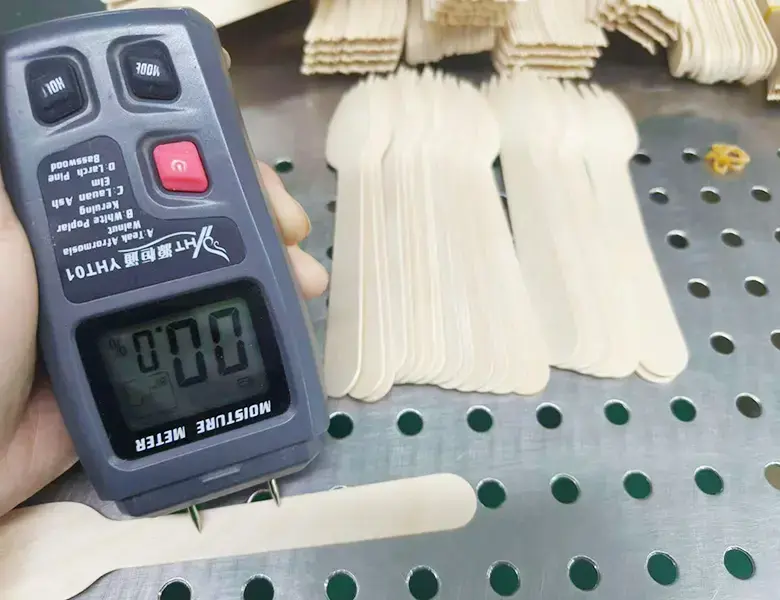
A reliable eco friendly tableware manufacturer must have a structured quality control department. The audit should focus on three levels of inspection:
1. Incoming Quality Control: Testing raw materials for contaminants.
2. In Process Quality Control: Monitoring the production line for defects such as burrs on wooden spoons or deformation in bagasse trays.
3. Final Quality Control: A final check of the packaged goods to ensure they meet the specific requirements of the buyer.
The auditor should look for testing equipment on site, such as scales for weight consistency, moisture meters, and tools for stress testing the durability of the tableware.
To avoid purchasing products with false sustainability claims, buyers should verify the authenticity of third-party certifications through official databases. Be sure to check the validity period and scope of the certification; for example, some suppliers may present raw material certifications as product certifications.
Common certifications include:
FDA food contact compliance
BPI compostability certification
EN13432 compostability standard
ASTM testing standards
A transparent supply chain with documented raw material traceability is essential for sustainable tableware procurement. These certifications confirm that biodegradable disposables meet international regulations.
Suppliers’ labor practices are becoming increasingly important. Auditing social responsibility compliance has now become a standard requirement.
Review social audit reports from recognized bodies such as Sedex and Amfori, with a focus on ratings for worker protection fair remuneration and freedom of association. Outstanding social responsibility performance, as evidenced by higher ratings in key categories, demonstrates that a manufacturing partner is trustworthy and operates ethically.
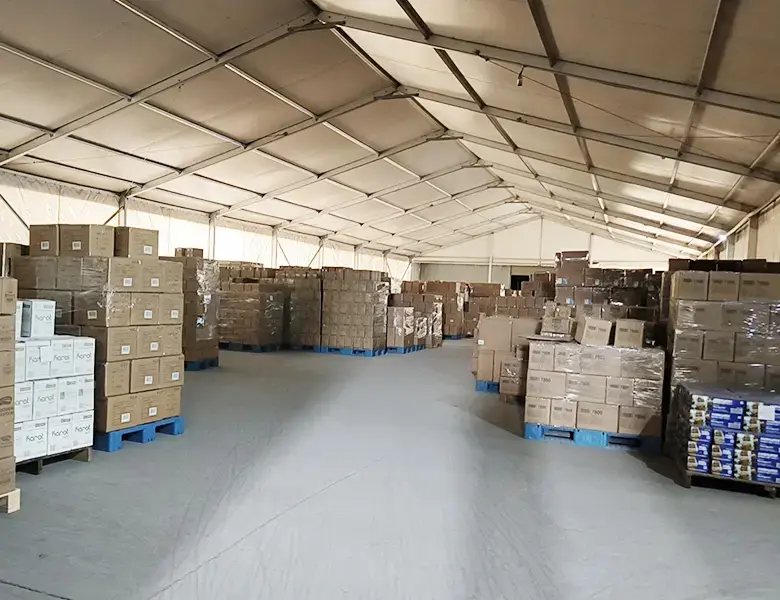
Proper packaging and storage conditions ensure that products are protected from humidity and pests. Inspect the warehouse conditions at the tableware factory. This includes:
1) Warehouse cleanliness
2) Packaging procedures
3) Inventory management
4) Export preparation processes
Inquire with the supplier about their logistics partners, as well as the methods and processes used to transport tableware. Effective logistics management can reduce the risk of damage to goods during international shipping.
Conduct random sampling of finished and semi-finished products across different production batches to ensure representativeness. Perform on site quality tests aligned with international standards, including heat resistance, biodegradability performance, leak proofness, and sensory checks for odor and taste. For wooden and bamboo tableware, test surface smoothness to eliminate splinter risks and verify food-grade wax application. Label and store samples for post audit laboratory testing and future batch comparison. Retain test records for compliance verification, including SGS reports and internal quality control data to establish a product quality baseline for future cooperation.


After completing the inspection, buyers should evaluate suppliers using a structured scoring system.
Organize all on-site records. Establish a multi-dimensional scoring system to better quantify supplier performance, for example: production capacity accounts for 30%, quality control for 25%, sustainability for 25%, and social responsibility for 20%. Identify strengths and gaps in supplier capabilities to provide a basis for the final evaluation and negotiation process.
Provide suppliers with clear corrective action requirements and timelines. Manufacturers found to have serious issues, such as forged certificates, should be immediately disqualified. Based on the audit results, initiate quotation and contract negotiations, and adjust procurement terms, including price, payment terms, and delivery lead times.
Many buyers cannot visit factories in person due to travel restrictions, budget constraints, or time limitations. In such cases, alternative methods must be used to maintain the integrity of the supplier evaluation process.
The most effective alternative to a personal visit is hiring a professional third party inspection company. Firms such as SGS, Intertek, or QIMA have local auditors in manufacturing hubs who can perform a factory audit on behalf of the buyer. These companies provide detailed reports including photographs, video footage, and a scored assessment of the factory based on international standards. This approach provides an unbiased view of the manufacturer. The downside is that it is relatively expensive.
Technology allows buyers to conduct real time inspections from their own offices. A buyer can schedule a live video call with the factory manager. During this call, the buyer can request to see specific areas of the facility, such as the warehouse, the production floor, and the testing laboratory. While this method is less thorough than a physical audit, it provides a sense of the factory scale and organization. It is important to ask the factory to show specific details, like the labels on raw material bags or the calibration stickers on machines, to ensure the video is not staged.
When an on site audit is not possible, the importance of sample testing increases. The buyer should request samples from a regular production run rather than specially prepared samples. These samples should be sent to an independent laboratory for testing against food safety and compostability standards. If the samples pass rigorous testing, it builds confidence in the production capabilities of the factory.
A buyer can ask the supplier for references from existing international clients. Contacting other businesses that procure from the same eco friendly tableware manufacturer can reveal insights into the reliability and communication style of the supplier. Professional platforms and trade databases can also be used to check the export history of the factory.
If the following issues are identified during a factory inspection, the supplier cannot be considered fully reliable.
1. Incomplete certification records
2. Poor equipment maintenance
3. Inconsistent raw material sourcing
4. Limited production lines despite large capacity claims
5. Lack of documented quality procedures
The most efficient and reliable approach is to choose an experienced manufacturer of sustainable tableware.
Factory audits should not be a one-time activity. Ongoing monitoring improves supply chain stability.
For long-term suppliers, the following measures can be taken to ensure quality.
1. Conduct periodic audits. Follow-up audits ensure suppliers maintain compliance.
2. Maintain clear communication. Regular communication helps resolve problems early.
3. Monitor performance metrics. Track delivery time, defect rates, and customer feedback.
4. Encourage sustainable innovation. Suppliers that invest in sustainable materials and efficient production processes provide stronger long term value.
Reliable partners often have long manufacturing experience, stable production systems, and strong quality control procedures.
Factory audits play an essential role in cross-border procurement of eco-friendly tableware. A structured supplier evaluation process also supports long-term cooperation with responsible disposable tableware manufacturers. As demand for biodegradable disposables and sustainable tableware continues to grow, businesses that invest in careful factory audits will build stronger partnerships and maintain consistent product quality across global markets.
Ancheng is an experienced eco-friendly tableware manufacturer specializing in bamboo and wooden disposable tableware. The company focuses on sustainable materials, strict quality control, and international export standards. Its products are widely used by global distributors, food service companies, and retailers seeking safe and compliant tableware solutions.
If you are sourcing eco-friendly tableware wholesale or looking for dependable disposable tableware manufacturers, Ancheng can provide professional support, consistent product quality, and sustainable manufacturing solutions.
Contact Ancheng today to request product information, factory details, or samples for your next procurement project.


Hello, I'm Sven Wang, the Manager of Ancheng. With extensive expertise in raw materials and production processes, I'm dedicated to advancing sustainable tableware and constantly improving eco-friendly options for the modern catering industry. You can trust that Ancheng is committed to providing the highest quality. Welcome!

Factory: Qian Renqiao Industrial Park, Shucheng County, Luan City, Anhui Province, China
Office: Building 11, Max Science Park, Shushan Dist, Hefei, Anhui, China
Copyright ©2026 Anhui Ancheng Bamboo and Wood Tableware Co., Ltd. Privacy Policy


 Index
Index Product
 Resources
 About
About