The demand for disposable plates in the US is rising; this market currently stands at $2 billion. Many countries are moving toward banning plastic and making sustainable tableware the only form of cutlery available nationwide. That’s why sourcing biodegradable tableware has become a main priority for many B2B players in the world.
If you run a restaurant, you’ll realize that disposable tableware wholesale isn’t an easy nut to crack. One bad supplier can lead to recalls and hefty fines (especially since shoddy suppliers are making bagasse plates that still have microplastics in them). You need reliable suppliers and certified manufacturers. So, this blog will be your guide to the world of eco-friendly disposable tableware. Learn how to vet different manufacturers on your own.
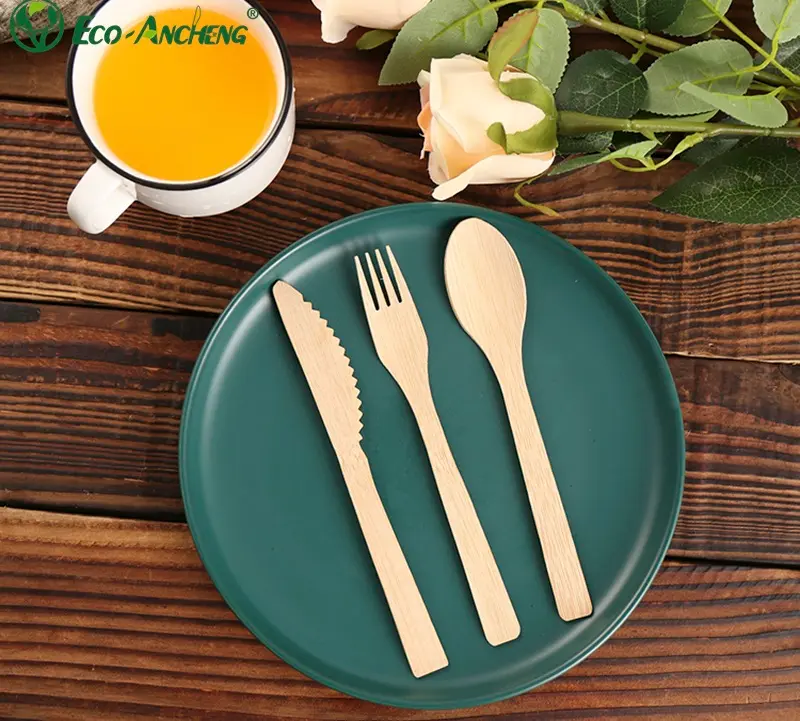
The global market for disposable plates is expected to be worth over $10 billion by 2034. That’s why you have to act fast and partner with reliable manufacturers. Let’s begin with the lay of the land. Disposable tableware has become the backbone of global foodservice, from your normal QSR takeaways to massive catering events. We’ll give you a brief overview of this market.
There’s no one-size-fits-all approach to biodegradable tableware. Some major product types in this industry include:
1. Plates & Bowls: Round, square, or compartment-style plates. They’re ideal for salads and soups. Their grease-resistant coatings handle all food types for 30+ minutes.
2. Cups & Lids: You can think of hot (paper/poly-coated, 8-20oz) and cold (PET/PLA clear, leak-proof lids). They have double-wall options to keep your coffee scorching and lattes chilled all the time.
3. Cutlery & Utensils: Imagine forks, spoons, knives, sporks, etc. They are in wood, PLA, bamboo, or other forms. Look into stirrers and skewers for drinks/BBQs.
4. Containers & Trays: You can get hinges, clamshells, and noodle boxes. Get sushi trays with vents to let the steam escape.
5. Specialty Items: Specialty items include bagasse for premium events and molded fiber boats for sides.
You may wonder what fuels this boom of disposable cutlery. Some reasons for this are:
1) The EU’s SUP Directive and California’s SB 54 have mandated strict sustainability. They are trying to ban polystyrene products. In fact, over two-thirds of the buyers in these two regions will demand compostable options by 2027.
2) You can add in the convenience explosion from quick-service restaurants like KFC and McDonald’s; customers crave stackable, high-volume disposables.
3) Supply shifts play a key role here as well; sugarcane prices can jump 15% because of ethanol demand. They are pushing India and Vietnam to challenge China’s dominance amid Trump’s tariffs.
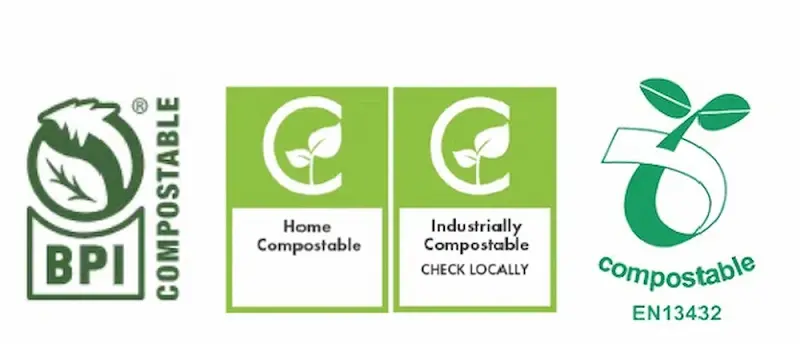
But here’s the problem: not all disposable cutlery suppliers are reliable. Research shows that some compostable dishes contain gluten, and this gluten sometimes contaminates your food. That’s where certs play a key role! These certificates are not just paperwork; they’re your legal moat against lawsuits and border rejections. I have personally seen suppliers getting rejected over fake stamps.
These certificates make sure there are no toxins in your disposable cutlery:
1. FDA (US 21 CFR 175-178): It tests migration limits and ensures there are no BPA or PFAS present in your cutlery.
2. LFGB (EU/Germany): It performs sensory + chemical tests, and is said to be stricter than the FDA on odors.
3. GB 4806 (China): This one has become a national standard for exports. You can pair it with HACCP for better hygiene.
4. NSF/ANSI 51: This one is important for food equipment contact and is pretty heavy on antimicrobial claims.
We see that regions like Hong Kong are trying to get rid of single-use plastics forever. In Europe and other regions, we see that the SUP Directive is banning these plastics; REACH restricts all horrible chemicals, while EUDR is tracking deforestation. In the US, we see California’s Prop 65 warnings (much like the NY styrofoam ban) setting new standards. You need to understand your region’s unique regulatory landscape to resolve the case of fake suppliers.
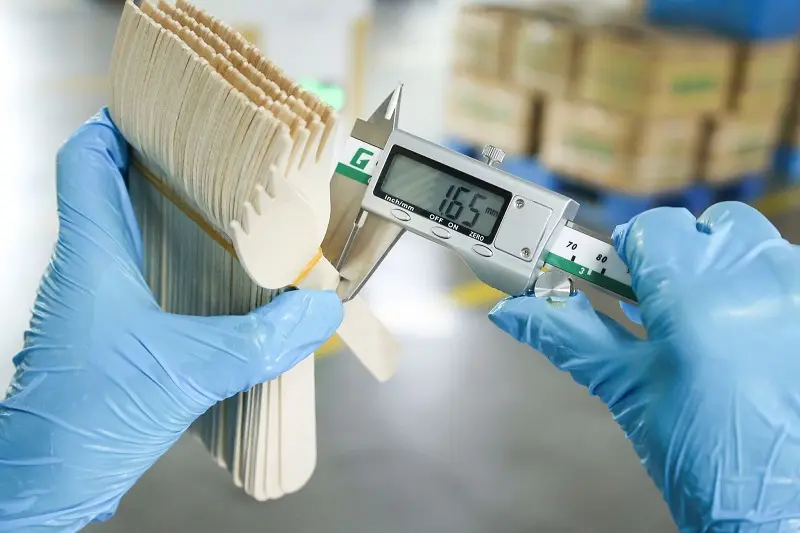
Remember that specs turn commodities into winners. Weak plates lead to complaints from your consumers. That’s why you should choose disposable tableware manufacturers once you’ve checked their product requirements.
1) Thermal Resistance: You need 100 to 200 degrees Celsius for bagasse tops that go in ovens.
2) Mechanical Strength: Look for plate stack loads like 10kg per 50 plates. If users drop them from 1m, they shouldn’t be cracked.
3) Food Interaction: Ask for grease and oil barriers (no staining). These plates shouldn’t transfer odors or flavors.
4) Customization: Many China-based manufacturers offer logo embossing and related services. You may ask for anti-fog lids and other custom features.
5) Shelf Life: The shelf life of your disposable dinnerware should be 12 to 24 months (if kept in dry conditions).
You should look into Alibaba or global sources. You should easily find reliable manufacturers as you filter stuff like “Trade Assurance” and see how many employees each supplier has (choose companies with 20+ workers, but avoid giants with a thousand employees). It’s really beneficial to trade with China-based manufacturers, as they offer higher product quality.
Another option lies in attending trade shows and import/export fairs. There’s a Canton Fair that happens biannually in Guangzhou (has 10,000+ booths). Consider Singapore’s FHA Food and HotelAsia shows as well. The US Pack Expo helps you spot innovative compostable products. Trade shows let you check what’s trending these days, or which products are disappearing. It is a great way to broaden your horizon and get your hands on the latest cutlery sets.

1. Check Your Supplier Type: If you deal with factories (or their offices) directly, it means you have your own lines. This process is the cheapest and offers you ample customization opportunities. With traders, you get flexible MOQs, but there’s a 10% to 15% markup, with less control.
2. Evaluating Hard Skills: Check your manufacturer’s delivery capacity. Can they do 500 million units annually? Do they have extrusion/molding lines? What’s their peak monthly output? You may ask for virtual tours of their factory.
3. Soft Skills and Relationship Fit: Does your supplier reply within 24 hours? Do they talk to you in your regional language? Can they offer free samples and after-sales fixes?
If you want to purchase compostable tableware at affordable rates, you need to be good at negotiating and talking terms with your supplier. Squeeze value without burning bridges from your seat as the buyer. Some of the key strategies I personally recommend are:
I’ve seen $100k disasters when people ordered Single Use Products, assuming they’re getting disposable cutlery. You should watch out for these pitfalls when ordering eco-friendly tableware:
1. Fake or Irrelevant Certificates: Some suppliers have expired certs. Others may show you industrial-only claims or region-specific certifications. That’s why you have to look into these certs and verify them properly.
2. Low-Price Traps: You may order disposable items by spending $0.01 per unit. But don’t forget that these low-priced units are made of brittle wood.
3. Skimping on Quality Control: Some clients are getting 15% defect rates without doing an inspection. So, you have to inspect your products properly by doing pre/in/post-ship checks.
4. Regulatory Oversights: EU bans can surprise you when you least expect them (such as seized cargoes). That’s why you should hire a lawyer to review your contracts and do an annual compliance scan.
5. Logistics Delays: You may face stockouts during the Chinese New Year halts. That’s why it’s better to look into buffer stocks and have contacts with multiple suppliers.
1. Have you defined what categories, specs, or volumes you want?
2. Have you set a budget for the unit price, QC, shipping, etc.?
3. Did you research the certificates and standards needed for your specific market?
4. Did you list at least possible suppliers of disposable cutlery?
5. Did you ask for a quote? Talked to them about certs and samples?
6. Did you vet the top 5 disposable cutlery manufacturers?
7. Did you test their samples (kitchen trials)?
8. Did you negotiate the terms and MOQs with these suppliers?
9. Did you sign a contract about IPs and penalties?
10. Did you place a trial order for something like 10,000 units?
11. Did you do in-line inspections (20/80)?
12. Have you done a final pre-ship audit?
13. Did you arrange for logistics and insurance?
14. Have you lab-tested the arrival batch?
15. What is your feedback loop mechanism for reorders?
1. What are the most important certifications for disposable cutlery?
For US buyers, go with BPI for compostability, FDA for safety, FSC for eco-sourcing, and NSF 537 to nix PFAS.
2. How do I spot fake supplier certifications?
You should cross-check certs on BPI.org or FDA's site, grab fresh audit reports, and use SGS for third-party checks; skip any supplier without solid proof!
3. What’s the ideal MOQ for first-time wholesale orders?
You should start by ordering 5,000 to 10,000 units for trials. You can test for quality and logistics. Then, you may scale to 50,000+ units to get discounts like $0.03/unit on bagasse.
4. How can I get microwave-safe tableware?
You can demand specs for 100-120°C resistance with lab tests (ASTM migration). Use samples for trials with hot foods like curry. See if you can spot warping or leaching.
There you have it! This is your complete roadmap to mastering disposable tableware wholesale, from spotting hot trends like bagasse dominance to dodging pitfalls with ironclad vetting & QC.
The big takeaway? You need to focus more on certified, sustainable suppliers who deliver real performance, and you'll build a compliant and profitable supply chain that impresses your B2B clients. So, are you finally ready to dive deeper into bagasse sourcing or PFAS-free options?
If you need bamboo tableware, let Ancheng be your trusted partner. We can offer premium and certified tableware that elevates your B2B business. We have been operating in this industry for the past two decades. We make sustainable bagasse plates, bamboo cutlery, and other types of compostable containers. We deliver heat-resistant and leak-proof tableware worldwide.
Explore our certifications and business services. Get free quotes via our custom design service and seamless shipping options. Also, contact us today for free samples and turn your wholesale needs into success! We’re your go-to partners for disposable tableware excellence.

Hello, I'm Sven Wang, the Manager of Ancheng. With extensive expertise in raw materials and production processes, I'm dedicated to advancing sustainable tableware and constantly improving eco-friendly options for the modern catering industry. You can trust that Ancheng is committed to providing the highest quality. Welcome!

Factory: Qian Renqiao Industrial Park, Shucheng County, Luan City, Anhui Province, China
Office: Building 11, Max Science Park, Shushan Dist, Hefei, Anhui, China
Copyright ©2026 Anhui Ancheng Bamboo and Wood Tableware Co., Ltd. Privacy Policy


 Index
Index Product
 Resources
 About
About