This detailed guide discusses the differences between Bio-Based, Biodegradable, and Compostable Plastics, and highlights their viability for your business.
Today, many plastic products are labeled as bio-based, biodegradable, or compostable. The bioplastics are then promoted as eco-friendly alternatives to conventional plastics. But do they truly deliver on their green promise? Well… not really. Bioplastics are eco-friendly but only under certain conditions.
In this article, we clear up the confusion regarding these terms and share deeper insights into the topic of bioplastics.
Let's start with a quick background on bioplastics.
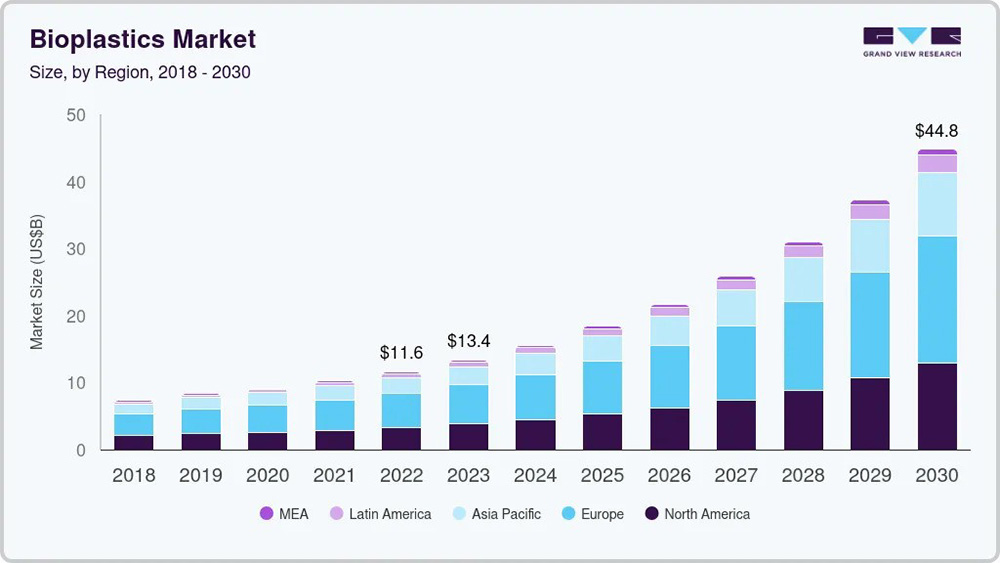
source: Grand View Research
Bioplastic refers to plastic polymers derived from natural, renewable sources. As of the publishing of this article, bioplastics account for less than 1% of the global plastics manufacturing. Researchers expect the bioplastics market share to double over the next five years. But even then, it wouldn’t be enough to address our current plastic pollution.
Market share is only one of the problems on the path to bioplastic adoption. The bigger and more concerning hurdle is poor communication and definition of bioplastics.
Some definitions use wording such as "biodegradability" and "bio-based" in conjunction with one another. However, these definitions are somewhat misleading. Only a handful of bioplastics are actually biodegradable.
To understand the complex world of bioplastics, we can divide it into three categories.
1. Bio-Based Plastics - Plastics made from renewable bio-sources. Some of these can decompose naturally, while others result in microplastics.
2. Biodegradable Plastics - Plastics made from bio-sources or petroleum, and they all decompose naturally.
3. Compostable Plastics - Plastics that can be converted (composted) into fertilizers. But not necessarily made from natural sources.
Table 1 - Comparing the environmental aspects of different bioplastics.
There is a wide range of plastic materials that are touted as environmentally friendly. But their properties vary drastically. Let’s look at each bioplastic category separately.
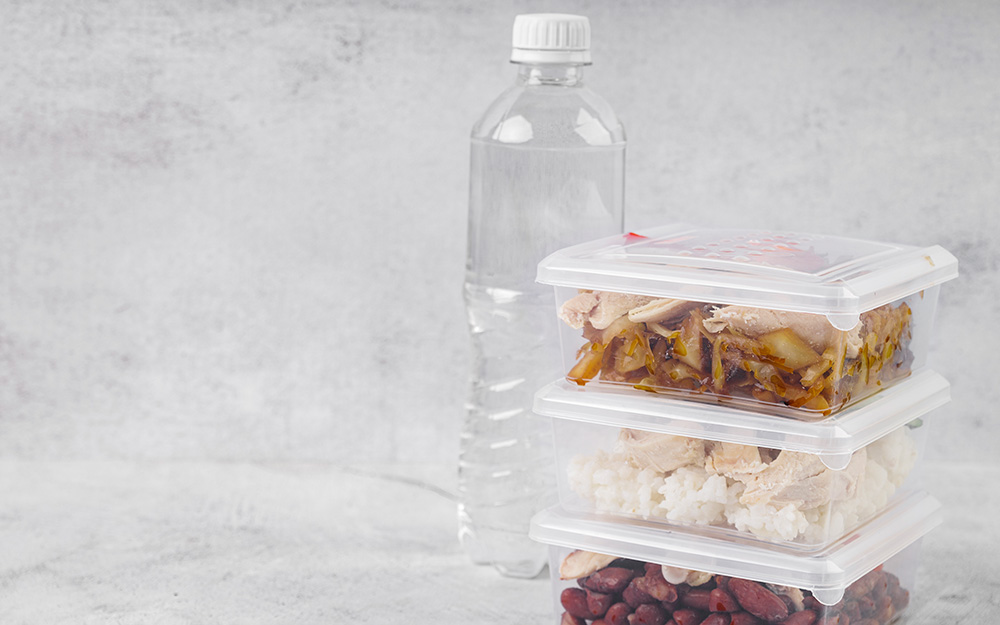
Bio-based plastics refer to polymers made from renewable sources, including plant cellulose, sugars, starch, and, in some cases, fungi (mushrooms).
We can further classify bio-based plastics by their base material.
a. Starch from Corn, Sugar, Potato, or Wheat
b. Cellulose from Plant Fibers
c. Chitin from Mushrooms or Seaweed
d. Microorganisms Produced from Fermentation.
Polylactic acid, or PLA, is the most common type of bioplastic made from plant starch. High starch plants include beet, corn, cassava, and sugar cane. As corn is the most economical crop, corn starch is the primary ingredient in bioplastic manufacturing.
Making bioplastics is actually a simple process, as long as you have the right base material. For example, cornstarch can be mixed with some water, glycerine, and stabilizers to make bioplastics.
The difficult part is processing raw corn stalks into pure starch. It should also be mentioned that using food crops to manufacture “natural plastic” comes with some ethical challenges.
1. Renewable Resources: Bio-sources like plants can be regrown indefinitely and will never run out.
2. Lower Carbon Footprint: Bio-based plastics consume fewer resources and energy to manufacture.
3. Versatile Applications: Bio-based plastics can be used in packaging, textiles, agriculture, and other consumer goods.
4. Biodegradability: Some bio-based plastics can decompose naturally or compost under special industrial conditions, reducing long-term waste.
5. Potentially Recyclable: Many bio-based plastics are non-biodegradable but recyclable.
6. Supports Circular Economy: Encourages consumers, manufacturers, and industries to reuse, recycle, and repurpose plastic before composting or biodegrading.
Biodegradable means that the plastic products will naturally decompose (break down) after a short period. After breaking down into tiny plastic particles, biodegradable plastic is consumed by bacteria and converted into water, carbon dioxide, and biomass.
Biomass just means the resulting compounds are organic and carbon-rich.
Conventional plastic doesn't naturally decompose. Suppose you take a piece of regular plastic like ABS and bury it in the ground. It will take thousands of years for that plastic to decompose and return to the natural ecological cycle.
In comparison, biodegradable plastics have a much shorter decomposition rate. Under good industrial conditions, bioplastics like PLA decompose within three months. A downside of biodegradation is that it occasionally results in methane gas release, which is very harmful to our ecosystem.
Some biodegradable plastics are made from natural sources, while others are made from fossil fuels (crude oil or petroleum).
Table 1- List of biodegradable plastics based on their base material.
1. Less Plastic Pollution: The plastic is converted back into natural organic material after three months, reducing the risk of microplastics.
2. Less Waste & Garbage: Currently, only 9% of conventional plastic is recycled. Biodegradable plastic will result in less plastic waste in our landfills.
3. Reduce Toxicity: If you burn traditional plastic, it results in toxic fumes. If you biodegrade plastic, it results in clean natural elements (water, CO₂, biomass).
4. Versatile Applications: Biodegradable plastics are used for packaging, disposable cutlery, medical applications, and more.
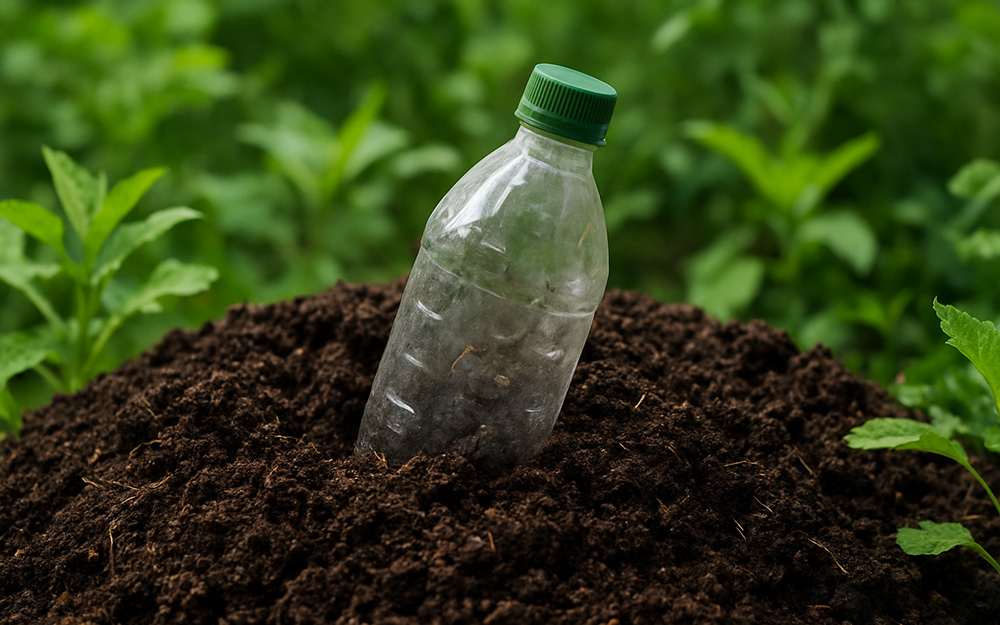
Composting means the plastic product is converted into a nutrient-rich soil. Biodegradation can result in methane, a dangerous greenhouse gas. In comparison, composting only forms stable carbon and nitrogen compounds, which act as natural fertilizers.
With compostable plastics, you can dispose of your plastic waste and get natural fertilizer in return. You can think of composting as a superior plastic processing technique to biodegrading.
There is one major drawback to composing plastics. It requires industrial equipment to ensure proper breakdown. By contrast, composting organic material like waste fruits and veggies or paper packing is easy. Throw everything into a bin, keep it moist, and occasionally toss it to bring fresh air to the mixture.
Plastics are generally unsuitable for composting. But under certain temperatures and environmental conditions, you can compost bioplastics.
These specific conditions are impossible for home composting. Therefore, plastic is sent to industrial plants for proper composting. PLA composting requires a consistent temperature of 136°F and a water-to-plastic ratio of 60%.
For those seeking more detailed information, this is an article comparing home composting and industrial composting.
1. Less Methane: Unlike biodegradation, composting doesn't produce methane gas.
2. No Microplastics: Composting converts all the plastics into natural compounds. So there is zero risk of microplastic pollution.
3. Healthy Soil: The nutrient-rich compost improves soil quality and agricultural output.
4. Non-Toxic Fertilizer: Modern fertilizers are full of harmful chemicals that damage the earth. Compost, by comparison, is all-natural and safe.
5. Less Landfill: Less plastic waste means less land allocated for landfill use.
6. Circular Economy: Composting is designed for closed-loop systems where waste becomes a resource again.
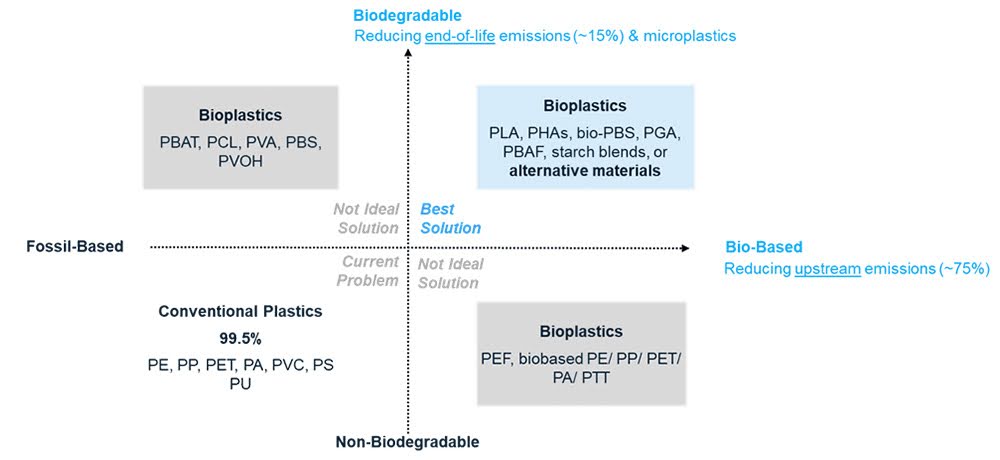
Source: Carbon Limiting Technologies
All of these bioplastics are designed to tackle one specific aspect of plastic pollution. The biggest differences between bio-based, biodegradable, and compostable plastics are their expected outcome.
1. Bio-Based Plastic is designed to ensure we use renewable materials and decrease our fossil fuel reliance.
2. Biodegradable Plastic was designed so that we can properly dispose of plastic and reduce microplastic pollution.
3. Compostable Plastic was designed to reduce greenhouse gases in addition to reducing microplastic pollution.
Table 3 - Comparing the properties of different bioplastics.
As we discussed at the beginning of this article, bioplastics make up less than 1% of the global plastics industry. Meaning even if we double or tenfold our bioplastic use in the coming years, it will not offset microplastic pollution.
There are some fundamental challenges to adopting bioplastics that are difficult to overcome.
Despite the numerous benefits of bioplastics, their sustainability is questionable. The current plastic industry isn't optimized for bioplastic production. So, bioplastics are more expensive to make, and they use more energy and resources.
Then there is the question of proper disposal. Manufacturers and suppliers often market PLA and PHA as biodegradable or compostable. However, they fail to mention that most plastics require proper industrial facilities to decompose.
If biodegradable or compostable plastics end up in landfills or oceans, they will not degrade properly. Then we are back to square one. All this effort and still no environmental benefits.
To solve this issue, manufacturers must provide assurance that their bioplastics are made using ethically sourced materials and eco-friendly production processes. Additionally, plastic separation and disposal infrastructure needs to be improved.
Bioplastics are fairly strong, but they still cannot compete with other, more durable plastics. Comparing PLA (bioplastics) to ABS (fossil-based plastic) reveals some interesting insights.
1) PLA has better tensile strength than ABS.
2) ABS has higher impact resistance.
3) ABS is more flexible.
4) ABS has better chemical resistance.
5) ABS has a higher melting point.
Currently, bioplastics can only substitute conventional soft plastics like polypropylene (PP) or Polyethylene (PE). In the context of the packaging industry, Bioplastics can replace some flexible packaging. But all rigid packaging will depend on conventional plastic.
At the end of the day, bioplastics are still plastics. They share the same health and safety concerns as conventional plastic.
Manufacturers use harmful chemicals to produce bioplastic parts. These chemicals run off from the factory and into nearby water sources.
Food heated in bioplastic packaging can result in microplastics migrating into the edible food and into our bodies.
So, bioplastics don’t offer significant health benefits over traditional plastics. Instead, in many applications, they are less viable due to lower material strength. These compromises don’t justify the value of bioplastics.
Even after several years of advocating for plastic recycling. Governments around the world have failed to provide meaningful legislation for post-use plastic processing. Now, with bioplastics, we are back to square one.
Mixing bioplastics with conventional plastic recycling streams can contaminate batches, making recycling less efficient.
Very few municipalities provide separate waste bins for bioplastics. So, if we can't reliably sort plastic from bioplastics, it will just end up in landfills.
Plastic composting requires industrial facilities, and very few of them are present worldwide.
Many bioplastic products are made from starch or sugar, which is sourced from edible plants like corn and sugarcane. Instead of using edible food to stop world hunger, we use it to make single-use plastic products.
Even if we use excess crops that are inedible, there is an issue of agricultural diversity. Corn is not the most land-friendly crop, and over-farming of corn can lead to soil degradation.
To make matters worse, studies have linked corn farming to increased air pollution.
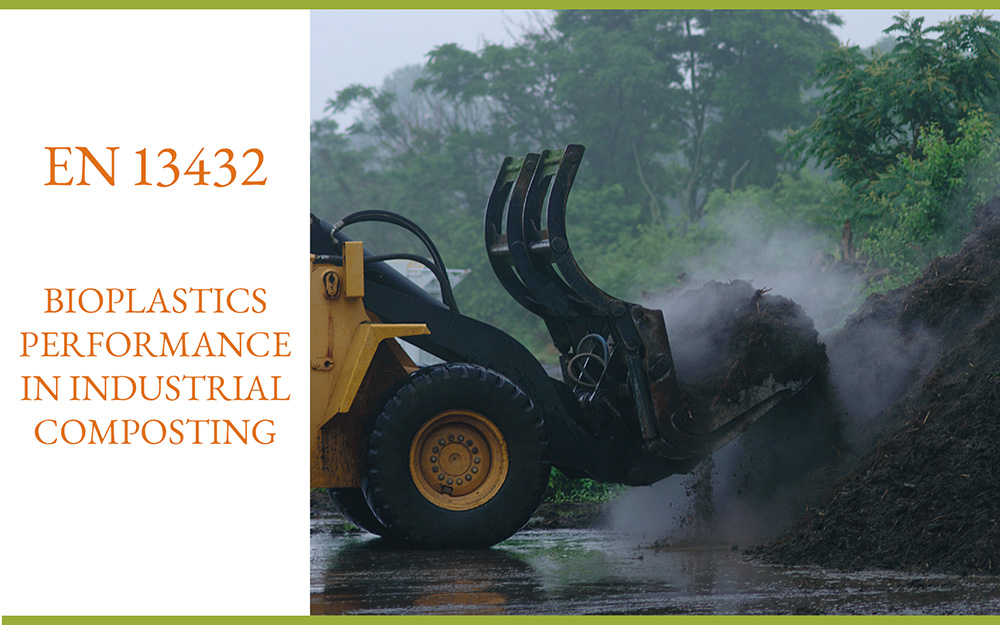
While bioplastics have been around for quite some time, regulations on the matter have been slow. Here’s the current update on the state of bioplastics.
ASTM International is the leading testing and materials standards organization. It has published over a dozen standards related to biodegradable plastics.
1. ASTM D6954-24 - Outlines the natural degradation of plastic through environmental effects.
2. ASTM D6868-03 - Sets specifications for biodegradable plastic. But only as a coating on compostable surfaces like paper.
Other ASTM standards generally focus on the strength and performance of biodegradable and bio-based plastics. Shockingly, there are no standards related to the term bioplastic.
The European Union has been more proactive in countering plastic pollution. In 2015, the EU established its EN 13432 standard that addresses industrial composting of bioplastics.
In 2022, the EU penned down the European Green Deal. It aims to reduce plastic waste by 2040, promote reusable/refillable packaging, and reduce bioplastics confusion.
Although the EU has a bioplastics association, the actual standards don't use the term bioplastic. Instead, they prefer to focus on the word biodegradable as it is not only clearly defined but also enforceable.
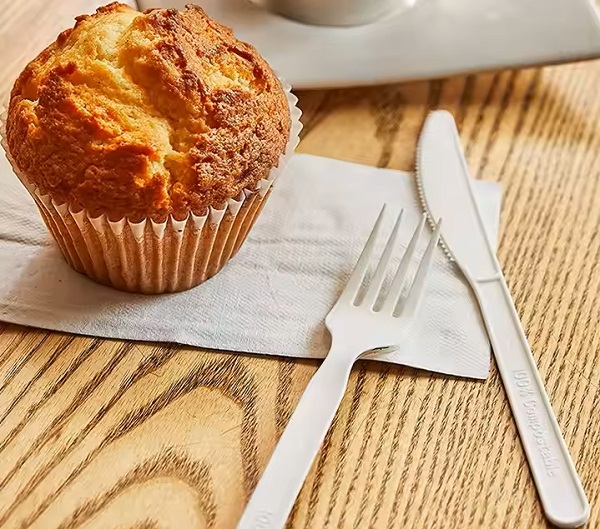
Crystallized polylactic acid or CPLA is a variant of PLA plastic. It's manufactured using high pressure and heat, which results in a crystalline molecular structure. In simple terms, as the liquid PLA solidifies, it forms large crystals. Resulting in a stronger and heat-resistant material.
CPLA is significantly better than simple PLA for most applications. Higher material strength means greater product versatility.
If you have ever used disposable plastic cutlery, you know it's flimsy and ineffective. CPLA cutlery offers the following benefits.
1) It's stronger, so the risk of snapping is reduced.
2) It has better heat resistance, so you can easily eat hot foods without thinking about microplastic leaching.
3) CPLA is industrially compostable, resulting in eco-friendly disposable plastics.
Bioplastics can be part of the solution, but only if businesses and consumers understand their differences and handle them correctly. Business owners interested in bioplastic packaging or cutlery should invest in educational promotional events to raise awareness and brand recognition.
Whether it’s bio-based, biodegradable, or compostable plastics, they help push your company towards a greener business model.
Ancheng is the go-to manufacturer for high-quality, eco-friendly cutlery and tableware. We specialize in products made from ethically sourced bamboo and wood. At the same time, leveraging our extensive experience in sustainable tableware, we have also developed tableware manufacturing using other biodegradable materials.
Our CPLA cutlery set is made from renewable materials, has high heat resistance, and is industrially compostable. You may also want to check out our biodegradable bagasse plates and food containers. Made from 100% natural sugarcane fiber with no harmful chemicals. Our diverse product range can meet all your needs.
Give your business a green makeover with Ancheng. Contact us now!

Hello, I'm Sven Wang, the Manager of Ancheng. With extensive expertise in raw materials and production processes, I'm dedicated to advancing sustainable tableware and constantly improving eco-friendly options for the modern catering industry. You can trust that Ancheng is committed to providing the highest quality. Welcome!

Factory: Qian Renqiao Industrial Park, Shucheng County, Luan City, Anhui Province, China
Office: Building 11, Max Science Park, Shushan Dist, Hefei, Anhui, China
Copyright ©2026 Anhui Ancheng Bamboo and Wood Tableware Co., Ltd. Privacy Policy


 Index
Index Product
 Resources
 About
About