In late June 2025, an overseas food-service supplies distributor approached Ancheng to develop a custom birch wood knife, fork and spoon set for a chain restaurant brand. The client had an initial concept drawing but no previous experience purchasing customized wooden cutlery.
Because the design was inspired by stainless-steel cutlery, its original proportions could not be transferred directly to wood. Ancheng completed three sampling rounds, tested the products in use and adjusted critical dimensions until the end brand approved the final samples. The client then placed its first formal order with Ancheng.
| Item | Project details |
|---|---|
| Client type | Overseas food-service supplies distributor |
| End Customer | Chain restaurant brand |
| Product | Custom birch wood knife, fork and spoon |
| Main Requirement | Convert an initial concept into functional wooden cutlery |
| Main Challenges | Limited specifications, product performance and a tight sample schedule |
| Customization | Shape, width, thickness, handle proportions and knife cutting edge |
| Project Scope | Design review, mold development, three sampling rounds and functional testing |
| Final Result | Final samples approved and first formal order placed |
The client received a purchasing request from a chain restaurant brand for a customized birch wood knife, fork and spoon set.
At the beginning of the project, the client could provide only a basic concept drawing. As the company had not previously purchased similar wooden cutlery, several details concerning the material, manufacturing feasibility and suitable product dimensions had not yet been defined.
Ancheng therefore needed to convert the concept into a manufacturable birch wood product and help the client establish the specifications required for sampling and end-brand approval.
The client provided Ancheng with only a simple sketch and set August 1 as the sample delivery date, leaving just one month for design approval, mold preparation, sample production, and shipping. In response to this situation, Ancheng immediately coordinated internal resources, established an expedited process, and worked closely with the client to move the project forward.
The project had to address three main requirements:
- Preserve the slim appearance requested by the end brand
- Adapt the design to the characteristics of birch wood
- Complete sampling and revisions within the end brand’s review schedule
The client required the first samples to be delivered by August 1, leaving approximately one month for design confirmation, mold preparation, sample production and shipment.
After receiving the initial drawing, Ancheng clarified the product price, mold cost, sample schedule and available customization options with the client.
After further clarifying the product customization details with the client, Ancheng immediately coordinated with the factory that same day to arrange mold making and prototyping, and shipped the first set of samples strictly in accordance with the agreed-upon timeline.
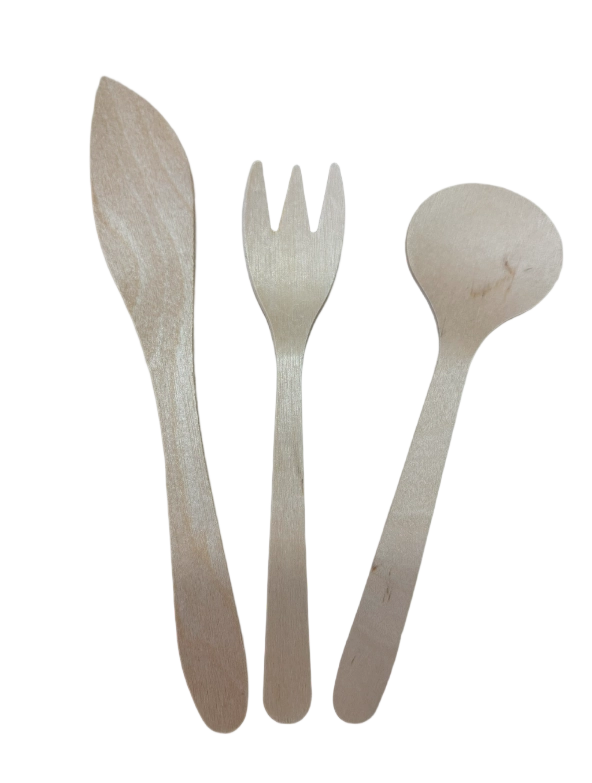
Sample Feedback: Upon receiving the samples, the client indicated that the finished product’s design differed somewhat from their expectations and requested that the design be optimized and adjusted.
The client requested a second version with a slimmer and more refined profile.
The first sampling round converted the customer’s concept into a physical reference, allowing both parties to identify the differences between the original drawing and the desired finished product.
Further discussion confirmed that the product’s visual inspiration came from stainless-steel cutlery. Ancheng reviewed the original drawing, intended restaurant application and similar metal cutlery proportions before preparing the revised design.
The second version included three main changes:
- The overall width of the knife, fork and spoon was reduced by 5 mm.
- The handle width of all three pieces was reduced by 3 mm.
- A cutting edge was added to the wooden knife to improve cutting performance.
These changes brought the product closer to the slimmer appearance requested by the end brand while retaining the functions required for restaurant use.
The factory modified the mold according to the revised drawing and produced a second set of samples.
Before shipment, Ancheng recorded a detailed product video for the client’s preliminary review. The client approved the appearance online, and the physical samples were then sent for further evaluation.
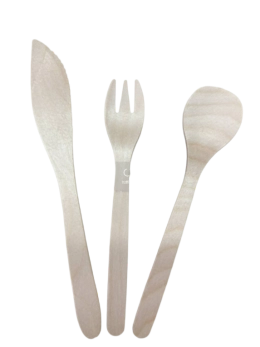
Testing identified two remaining issues:
- The wooden knife lacked sufficient stability when cutting food and could move from side to side.
- The fork and spoon appeared too narrow for the intended in-store presentation.
The second version had achieved the required slimmer appearance, but the reduced proportions affected the practical performance and visual balance of the set.
Ancheng worked with the factory’s technical team to test the knife repeatedly on food. The team also considered the behavior of birch wood during processing before revising the dimensions.
The final changes focused only on the areas connected to the test results.
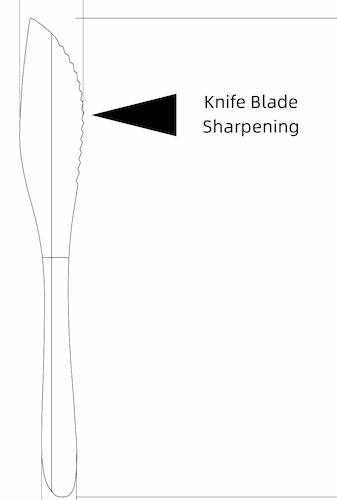
- Thickness increased from 1.2 mm to 1.6 mm
- Existing knife width retained
- Cutting-edge design retained
The increased thickness improved cutting stability without changing the approved outline.
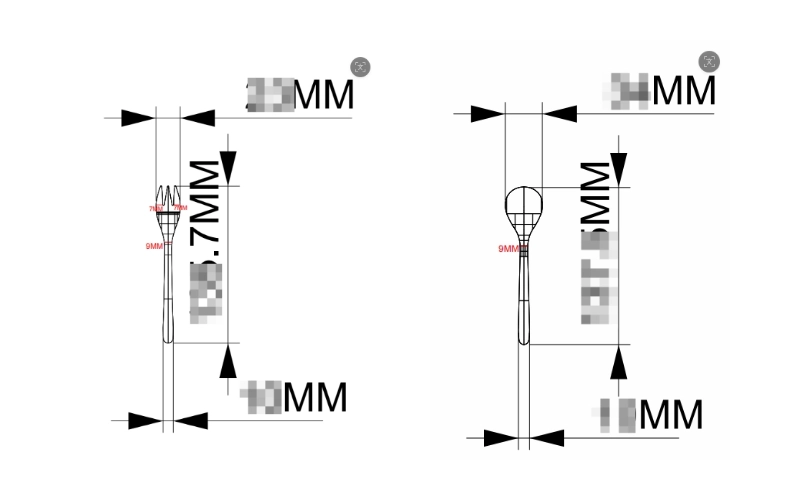
- Thickness increased from 1.2 mm to 1.4 mm
- Head width increased by 1 mm
- All other dimensions retained
These adjustments gave the fork and spoon greater visual weight while preserving the overall style established during the second sampling round.
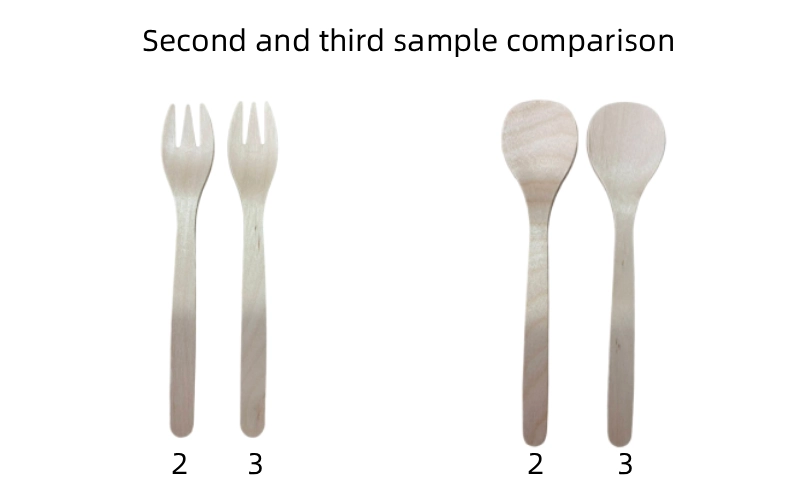
After the client approved the revised dimensions, Ancheng arranged the third sampling round.
By this stage, the project had reached late September, and the end brand required the final samples to be submitted by the end of October. The approaching National Day holiday left limited time for mold adjustment, sample production, inspection and delivery.
Ancheng coordinated closely with the factory and monitored production throughout the holiday period to keep the project on schedule.

When the third-round samples were completed, the end brand’s submission deadline was approaching. International courier delivery would have used part of the remaining time, and the client had previously expressed interest in visiting the factory.
Ancheng proactively invited the client to visit the factory to inspect the samples on-site and tour the production line.
After inspecting the finished products in person, the client was very satisfied with the optimized samples and highly appreciated our professional service, which included patient follow-up throughout the process and multiple rounds of iterative improvements.
The client took the samples back to their home country, submitted them for end-user review within the specified timeframe, and the end-user brand successfully approved them, marking the official start of our first collaboration.
The project achieved five confirmed results:
- The first samples were delivered according to the client’s August 1 requirement.
- The initial concept was converted into a manufacturable birch wood cutlery design.
- Three sampling rounds resolved the identified appearance and functional issues.
- The final samples were completed within the end brand’s approval schedule.
- After sample approval, the client placed its first formal order with Ancheng.
The approved design and dimensions also established a clear production standard for the formal order.
Through this collaboration, Ancheng successfully helped the client establish their very first wooden tableware product line. The success of this project boils down to three core strengths:
Faced with vague initial concepts from the overseas client, our design team provided precise requirement analysis and step-by-step refinement, successfully transforming rough ideas into market-ready products that met all terminal brand expectations.
Through continuous physical testing and iterative modifications, our technical team optimized both structural dimensions and material thickness, delivering finished items that achieved flawless standards in both visual appeal and practical application performance.
Our sales and account management teams maintained close, transparent collaboration with the client. By ensuring rapid communication and tight coordination with factory production lines, we overcame extremely tight deadlines to deliver the final samples on schedule.
A custom wooden cutlery project may begin with a drawing, reference product or initial idea rather than a complete technical specification.
Turn Your Cutlery Concept into a Production-Ready Product
Share your concept, specifications or reference sample with us.

Factory: Qian Renqiao Industrial Park, Shucheng County, Luan City, Anhui Province, China
Office: Building 11, Max Science Park, Shushan Dist, Hefei, Anhui, China
Copyright ©2026 Anhui Ancheng Bamboo and Wood Tableware Co., Ltd. Privacy Policy


 Index
Index Product
 Resources
 About
About