A cutting board is, arguably, the single most used tool in any kitchen. From the simplest slicing of a piece of fruit to the intricate butchering of a holiday roast, your cutting surface is the foundation of almost every culinary creation. For years, home cooks and professional chefs debated the merits of wood versus plastic, but a clear, superior contender has emerged: the bamboo cutting board.
Bamboo is not merely a trend; it's a revolutionary material that combines the best properties of traditional materials while eliminating most of their drawbacks. If you're looking for the best cutting board for your kitchen—one that balances sustainability, durability, sanitation, and affordability—bamboo is the definitive answer.
In this post, we’ll explore the top benefits of bamboo cutting boards, compare them with other materials, and help you choose the best bamboo cutting board for your cooking needs.
The shift towards bamboo is driven by a compelling list of advantages that make it the safest cutting board and the most sensible investment for your kitchen.
Bamboo is technically a grass, not a wood, but it boasts a tensile strength similar to that of steel. This makes bamboo cutting boards incredibly hard and durable. Its dense structure is naturally resistant to knife scarring, which means your board will maintain a smooth, even surface for longer. Unlike softer woods or plastics that quickly become pitted and worn, a high-quality bamboo board, such as the Heavy Duty Bamboo Cutting Board offered by Ancheng, can withstand years of heavy chopping, slicing, and dicing without easily warping or cracking, making it a truly long-lasting kitchen accessory.
For the environmentally conscious consumer, bamboo is the ultimate choice. It is the fastest-growing plant in the world, capable of growing to a harvestable size in just a few years, compared to decades for traditional hardwoods like maple or walnut.
1) Rapidly Renewable: Bamboo requires no fertilizer and minimal water, and it can self-regenerate after being harvested.
2) Carbon Sequestration: It absorbs more carbon dioxide and releases more oxygen than an equivalent stand of trees. Choosing a bamboo cutting board is an easy way to reduce your carbon footprint and opt for a truly non plastic cutting board that is fully biodegradable.
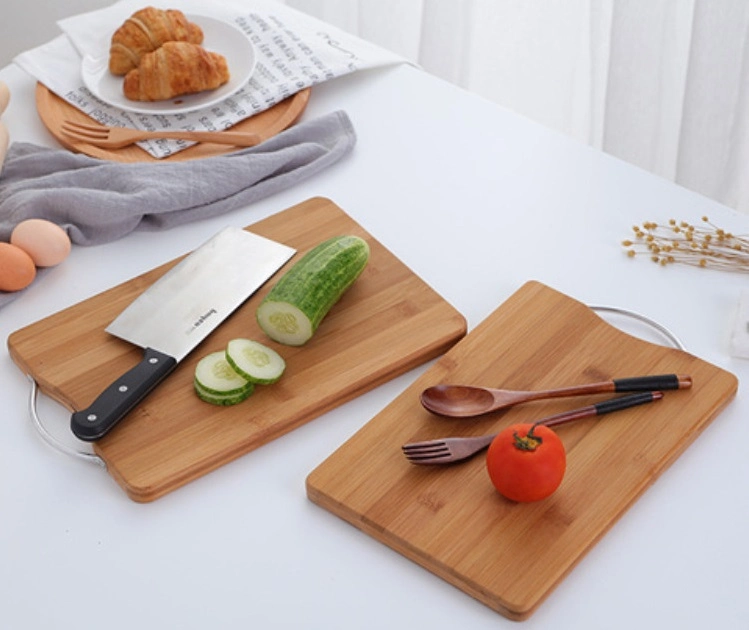
Hygiene in the kitchen is non-negotiable, and bamboo delivers big here. Bamboo contains natural antimicrobial properties that make it resistant to bacterial growth. Its ultra-dense and non-porous structure is less likely to absorb liquids, juices, and moisture from foods like raw meat, preventing bacteria from penetrating and growing deep inside the board. Studies show that bamboo fibers contain an antimicrobial bio-agent called “bamboo kun”, which helps fight odor and bacteria, making it one of the safest cutting boards you can own.
If you’re searching for the best non-toxic cutting board, bamboo is a winner. Most bamboo boards are made with organic adhesives and food-safe finishes, free from BPA or phthalates commonly found in plastic boards.
Look for chopping boards labeled as “formaldehyde-free” or “eco-glue bonded” to ensure your food doesn’t come into contact with harmful substances. The result? A healthiest cutting board option for your family and pets.
While bamboo is very hard, its dense, fine grain is surprisingly easy on your knife blades. It provides enough resistance for a smooth cut without dulling your expensive cutlery as quickly as glass or marble boards do. Bamboo is the best material for a cutting board that helps maintain the razor-sharp edge of your knives, leading to a better cutting experience and less frequent sharpening.
This makes bamboo the best cutting board material for chefs who value their knives. Whether you’re using a Japanese chef’s knife, a serrated bread knife, or a cleaver, your blades will stay sharper for longer when used on bamboo.
Due to bamboo’s rapid growth and abundance, bamboo cutting boards are often markedly more affordable than their hardwood counterparts. This allows you to purchase a high-quality, durable, and sustainable cutting board, or even a full cutting board set, without a significant investment, providing exceptional value for your money.
Bamboo cutting boards are stylish and fit perfectly into any kitchen décor, such as modern, rustic, or minimalist.
The smooth grain and warm color of bamboo make it aesthetic enough to use as a serving board for cheese, bread, or charcuterie. You can even get a cutting board set of different sizes for various cooking tasks without breaking the bank.
Bamboo is lightweight yet remarkably strong. This makes boards like Ancheng's Cutting Board With Handle easy to lift, move, and carry from your preparation area to the stove or serving dish, especially helpful in a fast-paced kitchen or when you are using it as a serving board.
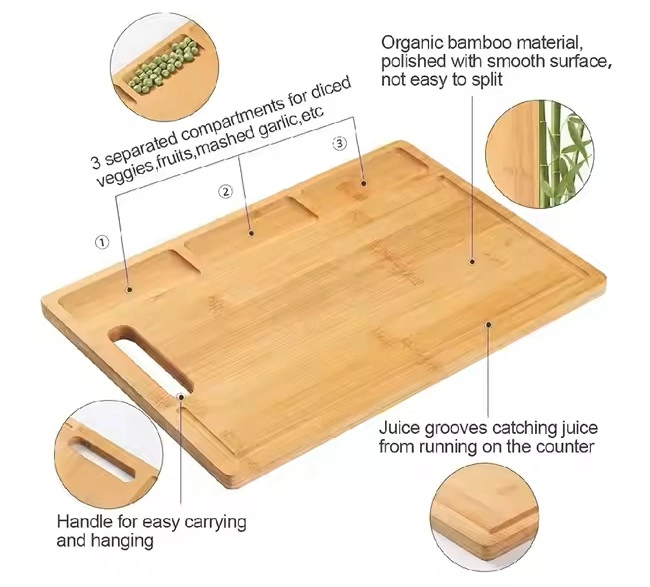
Modern bamboo cutting boards come with an array of practical features that enhance functionality. Many models, including those with compartments or juice grooves, are designed to catch liquid run-off from meat or juicy vegetables, keeping your countertop clean and organized. The versatility of bamboo allows it to double perfectly as a charcuterie board or elegant serving platter, such as a Classic Serving Board.
Bamboo boards are relatively easy to care for. They require hand washing only and occasional oiling to maintain their shine and prevent drying out.
How to clean a bamboo cutting board:
1) Wash it with warm, soapy water immediately after use.
2) Rinse thoroughly and wipe dry with a towel.
3) Stand upright to air dry completely.
4) Apply food-grade mineral oil once every few weeks to keep the bamboo hydrated.
Avoid soaking your board in water or putting it in the dishwasher, as this can cause swelling or cracking. While some brands advertise “bamboo cutting board dishwasher safe”, it’s best to hand wash to preserve its lifespan.
Different types of cutting boards have distinct characteristics. We've compared the most common bamboo, wood, and plastic cutting boards.
Bamboo is harder, less porous, and more sustainable than wood. While hardwoods are slightly gentler on knives, bamboo offers a better balance of durability and hygiene with less required maintenance.
Plastic boards are cheap and dishwasher-safe, but they can harbor bacteria in deep knife grooves and often contain toxins like BPA. Bamboo offers a natural, non-toxic alternative that’s equally durable and much better for the environment.
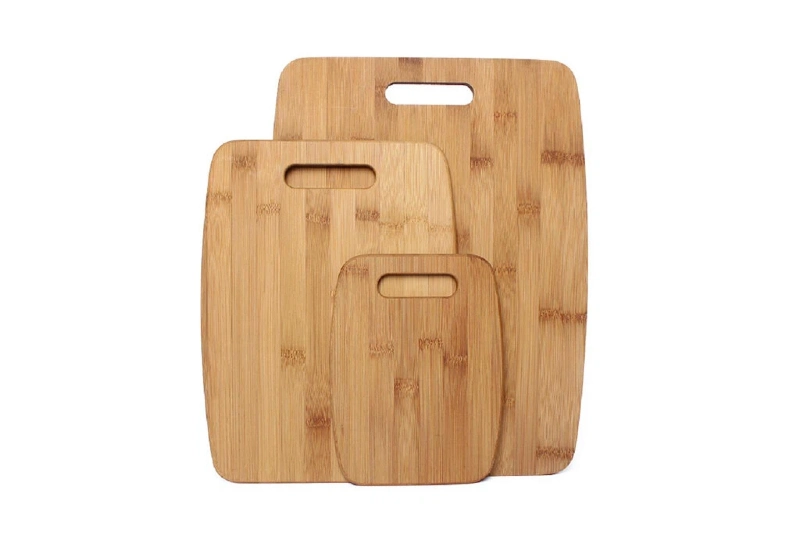
Selecting the perfect bamboo chopping board involves considering a few key factors to ensure it meets your specific kitchen needs.
The right cutting board sizes depend on your primary use and available counter space. A good rule of thumb is to have a small, medium, and large board, or at least two distinct sizes:
1) Small (e.g., 8” x 12”): Ideal for quick tasks like mincing garlic, slicing a lime, or serving cheese.
2) Medium (e.g., 10” x 15” to 12” x 18”): The versatile workhorse for daily vegetable prep and general chopping.
3) Large (e.g., 18” x 24”): Essential for large prep jobs, rolling dough, or carving the best cutting board for meat like turkey or brisket.
Ensure you have enough surface area for comfortable chopping, since a board too small will lead to ingredients falling off.
Look for boards that are made from edge-grain construction (where the wood strips are glued together with the edges facing up) or end-grain (where the ends of the wood strips are visible on the cutting surface). While end-grain is the absolute most knife-friendly construction, edge-grain bamboo offers a fantastic balance of durability, hygiene, and affordability. Avoid boards that feel flimsy or have visible gaps between bamboo strips.
Consider boards with practical additions:
1) Juice Grooves: Channels around the perimeter of the board are crucial for catching liquids, especially when prepping raw meat or carving a roast.
2) Handles or Finger Grooves: These aid in transporting a cutting board with a handle and washing/storing the board.
3) Non-Slip Feet: Rubber feet prevent the board from sliding, ensuring maximum safety while chopping.
Always opt for a high-quality bamboo board that uses food-grade adhesive. If you are particularly conscious of your footprint, look for boards that are FSC Certified, indicating the material was sourced from responsibly managed forests, and that the company has certifications like LFGB or FDA for food safety, which Ancheng carries.
1. Are bamboo cutting boards safe?
Yes, they are considered one of the safest cutting board options. Bamboo is naturally antimicrobial and less porous than wood or plastic, making it more resistant to bacterial growth. High-quality boards use food-safe glues and are non-toxic.
2. Is bamboo good for cutting boards?
Absolutely. Its hardness, durability, natural resistance to moisture/warping, sustainability, and affordability make bamboo an ideal and increasingly popular cutting board material.
3. Can you put a bamboo cutting board in the dishwasher?
No. Like all wood and bamboo cutting boards, it should never be placed in the dishwasher. The intense heat, prolonged exposure to water, and harsh detergents will dry out the material, cause the board to warp, crack, and potentially dissolve the food-safe adhesive. This will ruin the board’s longevity.
4. How to maintain the bamboo cutting board?
Occasional oiling (about once a month for heavy use) with food-grade mineral oil or a bamboo/wood conditioning oil is recommended. This simple step keeps the board hydrated, prevents cracking, and enhances its natural resistance to water absorption.
When it comes to outfitting your kitchen, choosing the right tools is paramount. The bamboo cutting board rises above its competitors—plastic and traditional wood—by offering an unmatched trifecta of benefits: superior hygiene, environmental sustainability, and long-term durability.
Bamboo is the best cutting board choice for the modern kitchen: naturally antibacterial, gentle on your fine cutlery, non-toxic, and economically sensible. Upgrading to a bamboo board is a small change that yields big returns in terms of food safety, kitchen efficiency, and ecological responsibility.
Not yet, currently finishing other tasks.
Bamboo cutting boards are stylish and complement any kitchen decor, whether modern, rustic, or minimalist.
Ready to bring the power of bamboo into your kitchen? Ancheng specializes in high-quality, eco-friendly bamboo kitchen essentials, including a variety of durable and stylish cutting boards. Whether you need a simple bamboo chopping board or a complete cutting board set, we have the perfect non-toxic, sustainable solution for all your culinary needs.
We are committed to providing you with the best material for a cutting board, manufactured with the highest standards of quality and sustainability. Our MOQ for reusable cutting boards is 2000 pcs. Contact us now to discuss details and factory pricing.

Hello, I'm Sven Wang, the Manager of Ancheng. With extensive expertise in raw materials and production processes, I'm dedicated to advancing sustainable tableware and constantly improving eco-friendly options for the modern catering industry. You can trust that Ancheng is committed to providing the highest quality. Welcome!

Factory: Qian Renqiao Industrial Park, Shucheng County, Luan City, Anhui Province, China
Office: Building 11, Max Science Park, Shushan Dist, Hefei, Anhui, China
Copyright ©2026 Anhui Ancheng Bamboo and Wood Tableware Co., Ltd. Privacy Policy


 Index
Index Product
 Resources
 About
About