When sourcing bamboo tableware in bulk, buyers often focus on product shape, size, packaging and price. However, for bamboo cutlery, bamboo skewers, bamboo plates and other natural bamboo products, moisture control is just as important.
Because bamboo is rich in nutrients, such as sugar, protein and starch, it is vulnerable to fungi, bacteria and pests, causing it to be prone to mold, decay and deformation, which limits the application of bamboo to a certain extent.
At present, in order to improve the biological durability and dimensional stability of bamboo products, heat treatment technology has been widely used in the bamboo processing industry.
The method mainly degrades the hemicellulose in the bamboo through high-temperature heat treatment, reduces the content of free hydroxyl groups and some nutrients in the bamboo, and finally achieves the purpose of improving the dimensional stability and corrosion resistance of the bamboo.
At Ancheng, we translate academic findings on high temperature heat treatment into a standardized manufacturing process. By applying precise thermal modification, we fundamentally alter the bamboo’s chemical composition to ensure that our tableware—from skewers to cutlery—remains mold resistant and structurally sound during long distance shipping and storage.
Bamboo tableware is widely used as an eco-friendly alternative to plastic disposable utensils. It is suitable for many foodservice and takeaway applications, including bamboo forks, knives, spoons, sporks, cutlery sets, skewers, picks and plates.
For B2B buyers, mold prevention is not only about product appearance. It also affects:
Warehouse storage stability
Container shipping safety
Retail packaging presentation
Customer complaints and returns
Brand trust in foodservice supply chains
Because bamboo products are often shipped in large cartons and stored for weeks or months before use, moisture control must be considered throughout production and packaging.
Bamboo contains natural nutrients such as starches, sugars, and hemicellulose, which can serve as a food source for mold and microorganisms.
In environments with:
High humidity
Warm temperatures
Poor ventilation
these factors can accelerate mold growth on untreated bamboo products.
If bamboo products are not dried and stored properly, moisture may remain inside the material or packaging. In humid climates, this can create conditions where mold is more likely to appear.
Common risk factors include:
Incomplete drying before packing
Long storage in humid warehouses
Poor carton ventilation or moisture protection
Container shipping through humid routes
Direct contact with water before use
Damaged outer cartons during transport
This is why bamboo tableware quality control should not rely on one single step. Heat treatment can help, but it must work together with drying, inspection and proper packaging.
Heat treatment modifies the internal chemical structure of bamboo without the use of harmful chemicals.
At elevated temperatures, several changes occur:
1) Reduction of hemicellulose and sugars limits nutrients available for mold
2) Decrease in moisture absorption capacity. The processing reduces the internal moisture content, making the bamboo less susceptible to moisture
3) Structural stabilization improves durability and resistance to environmental changes
In simple terms, heat treatment makes bamboo drier, more stable, and less “friendly” to mold growth.
High Performance Heat Treated Bamboo
Durable, food safe, and mold resistant B2B solutions.
Scientific analysis shows that the anti mold efficacy of heat treatment is primarily driven by the degradation of hemicellulose. Among the three main components of bamboo (cellulose, lignin, and hemicellulose), hemicellulose is the most thermally sensitive.
At temperatures between 180°C and 210°C, hemicellulose undergoes significant dehydration and decomposition. This process reduces the concentration of free sugars and starches which serve as the primary "food source" for mold species like Aspergillus niger.
In Ancheng’s actual bamboo tableware production, precise high-temperature baking reduces residual soluble nutrients in bamboo raw materials. This greatly improves anti-mold stability of finished products, especially suitable for long sea freight, humid tropical environments and long-term warehouse storage of bulk wholesale goods.
One of the most critical factors highlighted in heat treatment studies is the change in hygroscopicity (water absorption).
High temperature treatment reduces the number of hydroxyl groups (—OH) in the bamboo cell wall. This leads to a significant decrease in Equilibrium Moisture Content (EMC). A lower EMC means the bamboo is less likely to absorb moisture from the atmosphere.
Optimized hydrophobic property also makes Ancheng bamboo tableware more resistant to deformation, cracking and damp damage when contacting hot soup, oily food and wet catering scenarios, perfectly matching daily use demands of restaurants, hotels and food service businesses.
High temperature heat treatment regulates and stabilizes the pH value of the bamboo internal structure. A reasonable pH environment is not conducive to the reproduction and colonization of mold microorganisms, and effectively delays the occurrence of mildew spots.
We strictly control heat treatment temperature and duration to maintain optimal pH stability of bamboo. No chemical preservatives are used, keeping our bamboo tableware food-safe, compliant with FDA & LFGB standards, while achieving long-lasting anti-mold effects.
Experimental data show that reasonably high-temperature parameters can significantly improve the mold resistance of moso bamboo. Proper temperature and treatment time maximize anti-mold effect, while excessive heating will damage bamboo fiber strength and product appearance.
For B2B procurement, the practical question is not only whether bamboo is heat-treated, but whether the supplier controls the full process from raw material handling to final carton packing.
Ancheng summarizes mature industrial parameters through long-term production verification. We balance bamboo structural strength, appearance quality, and anti-mold performance at the same time, providing high-quality, stable bamboo products for bulk wholesale and customized orders.
Research proves that physical heat treatment offers a cleaner alternative to traditional chemical preservation. Here is how Ancheng applies this logic to ensure food safety compliance.
|
Chemical Treatment (Sulfur/Fungicides) |
Ancheng Physical Heat Treatment |
|---|---|---|
Material Purity |
May leave chemical residues or "bleached" odors. |
100% Chemical Free; preserves natural bamboo scent. |
Food Safety |
Risks of leaching during contact with hot food. |
Fully compliant with FDA and LFGB standards. |
Environmental Impact |
High wastewater toxicity during processing. |
Low carbon footprint; no harmful discharge. |
Anti Mold Depth |
Often limited to surface protection. |
Deep Core Protection via structural fiber change. |
The whole physical treatment process ensures green safety, environmental protection and reliable quality, matching global export food contact safety requirements.
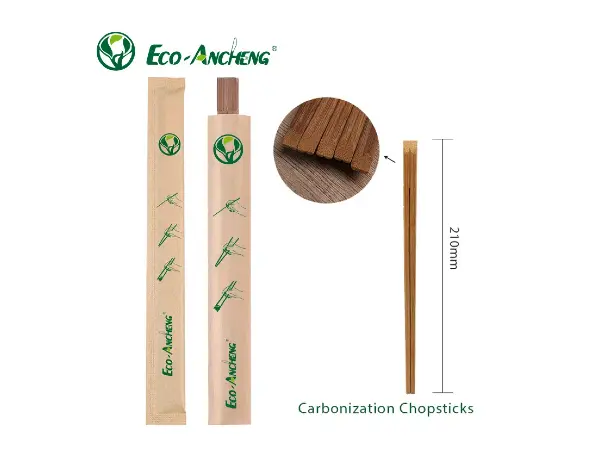
As lignin is redistributed and hemicellulose decomposes, the bamboo naturally shifts from a pale yellow to a rich, dark amber. This is known as carbonization.
We use this color change as a natural quality indicator. Our Carbonized Bamboo Collection is treated at specific temperature intervals to achieve a consistent, premium dark finish. This aesthetic is not achieved through dyes or stains but is a byproduct of the bamboo’s increased density and durability.
Combined with verified academic research on bamboo thermal modification, high-temperature heat-treated moso bamboo has become the mainstream raw material for safe food-contact disposable products. It is widely applied in professional catering and food packaging scenarios:
1. Disposable Cutlery (Forks, Knives, Spoons): Heat treatment ensures that the cutlery does not snap or splinter, providing a smooth and safe user experience.
2. Plates and Trays for Takeaway or Catering: The reduced moisture absorption prevents plates from becoming soggy or losing their shape when holding oily or hot meals.
3. Food Packaging Accessories: Items like bamboo boats, cones, and skewers benefit from the natural amber aesthetic and anti mold properties, enhancing food presentation.
4. Outdoor Dining and Event Catering Supplies: Its durability and resistance to environmental fluctuations make it a practical, eco friendly solution for large-scale outdoor events.
For disposable bamboo tableware, buyers often need documents for food-contact compliance, factory audits or customer approval. Depending on the product and order requirement, Ancheng can support relevant documentation such as FDA, LFGB and DGCCRF-related food-contact documents where applicable.
Ancheng also holds BRCGS Packaging Materials certification, which supports factory quality management and packaging-related production control. For buyers serving chain restaurants, distributors or import markets, these documents can help with supplier evaluation and internal approval.
Because documentation requirements may vary by product and destination market, buyers should confirm the required files before placing bulk orders.
The effectiveness of high temperature heat treatment depends heavily on manufacturing expertise and rigorous process control. When sourcing bulk bamboo tableware for catering and retail brands, business partners should prioritize core supplier strengths:
1. Production Consistency and Quality Control: A reliable partner must use precision-controlled kilns to ensure every batch reaches the required thermal threshold for anti mold efficacy.
2. Food Safety Compliance: Ensure the manufacturer holds international certifications such as FDA, LFGB, or SGS, proving the process is 100% chemical free.
3. Experience in Bamboo Processing: Deep knowledge of Moso bamboo’s specific density and moisture curve is essential for optimizing the heat treatment cycle.
4. Ability to Handle Bulk Orders: High volume production capacity ensures that your supply chain remains resilient during peak seasons.
5. Customization Capabilities: The ability to offer laser engraving or custom packaging adds significant brand value to your sustainable product line.
6. Reliable Packaging: Packaging is an important part of bamboo mold prevention. We offer a variety of moisture-proof packaging options for our disposable bamboo products, including inner bags, individual packaging, custom retail packaging, and bulk cartons.
Cooperating with an experienced professional manufacturer like Ancheng allows brands to fully leverage the advantages of heat-modified bamboo, avoid mold deterioration risks in humid environments and maritime transportation, and maintain stable, high-quality, sustainable food service supplies.
After receiving bamboo tableware, buyers should also manage storage conditions carefully. Good warehouse practices can help protect product quality before distribution or use.
Recommended storage practices include:
Store cartons in a dry and ventilated area
Avoid direct contact with floors or walls
Keep products away from rain, water and strong humidity
Do not store cartons near strong odors or chemicals
Use first-in, first-out warehouse rotation
Check outer cartons if goods are stored for a long period
These simple steps are especially useful for importers, wholesalers and distributors that hold inventory before selling to restaurants, retailers or foodservice operators.
No. Heat treatment helps improve bamboo stability and moisture control, but mold prevention also depends on drying, packaging, storage and shipping conditions. Buyers should treat mold control as a full supply chain process.
Bamboo is a natural plant-based material. If moisture remains in the product, carton or storage environment, mold risk may increase during long-distance shipping or humid warehouse storage.
Buyers should check product quality, packaging method, carton condition, food-contact documentation, factory audit documents and whether the supplier has routine quality inspection before shipment.
Yes. Bamboo cutlery and bamboo skewers are widely used in takeaway meals, catering, events, airline catering, restaurants and retail foodservice packs. Buyers should choose the right size, packaging and product type for their application.
Yes. Ancheng supports custom packaging, wrapped cutlery sets, paper sleeves, kraft packaging and OEM options for bamboo tableware orders.
High-temperature heat treatment plays a critical role in improving the anti-mold properties of moso bamboo. By altering its internal structure, this process enhances durability, reduces moisture absorption, and creates a safer, more reliable material for food contact applications.
For businesses in the food service and packaging industry, choosing heat-treated bamboo tableware means better product performance, improved hygiene, and greater confidence in supply quality.
As demand for sustainable solutions continues to grow, advanced material processing techniques like heat treatment will remain essential in delivering high-quality eco-friendly tableware.
Are you looking for high-quality, mold-resistant bamboo solutions for your B2B supply chain? Ancheng combines scientific material research with large scale manufacturing to deliver the most reliable bamboo tableware on the market.
View Our Carbonized Collection – Discover the durability of heat-treated bamboo.
Request Technical Data – Learn more about our moisture control and safety testing.
Get a Custom Quote – Competitive wholesale pricing for professional orders.
High Performance Heat Treated Bamboo
Durable, food safe, and mold resistant B2B solutions.

Hello, I'm Sven Wang, the Manager of Ancheng. With extensive expertise in raw materials and production processes, I'm dedicated to advancing sustainable tableware and constantly improving eco-friendly options for the modern catering industry. You can trust that Ancheng is committed to providing the highest quality. Welcome!

Factory: Qian Renqiao Industrial Park, Shucheng County, Luan City, Anhui Province, China
Office: Building 11, Max Science Park, Shushan Dist, Hefei, Anhui, China
Copyright ©2026 Anhui Ancheng Bamboo and Wood Tableware Co., Ltd. Privacy Policy




 Index
Index Product
 Resources
 About
About