Disposable chopsticks are an indispensable item in Asian restaurants across the region. Buyers typically purchase them in large quantities to reduce costs and the frequency of purchases. Quality inspections are essential in this process; otherwise, issues such as splinters, mold, and non-compliance may arise.
Based on Ancheng’s more than 20 years of experience in disposable plant-based tableware and its own quality control system, this guide summarizes a quality inspection checklist for chopsticks to serve as a reference for buyers during the procurement process.
The cheapest quotation is not necessarily the lowest-cost order. Buyers need a repeatable acceptance standard that separates normal natural variation from defects that affect safety, function or presentation.
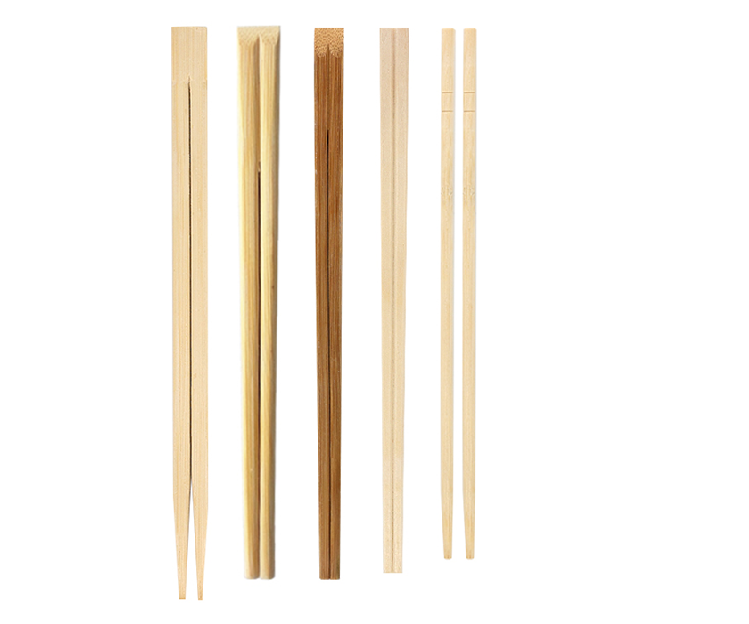
Inspection only works when the approved specification is clear. Before comparing samples, confirm the following:
Material: bamboo or wood, including the declared species where required;
Style: twin, tensoge, round, double-pointed, carbonized or another design;
Dimensions: length, diameter or width, taper and permitted tolerance;
Tip: blunt, pointed, rounded or double-pointed;
Pair format: separate pieces or joined disposable chopsticks;
Surface: natural, carbonized, waxed, coated or otherwise finished;
Packaging: bulk inner bag, paper sleeve, full-paper wrap, individual film wrap or retail pack;
Printing: artwork version, colour reference, barcode and legal text;
Quantity: pairs per inner pack and packs per carton;
Target market: the destination and requested food-contact documents.
Ancheng's current disposable chopstick range includes common twin, round, tensoge and double-pointed formats. Available references include 195–230 mm lengths and approximately 4–5.5 mm thicknesses, depending on style. Final dimensions should always be confirmed against the selected item and approved sample rather than assumed from the product name alone.
Use the following 16-point checklist to inspect pre-production samples, production samples and finished shipments.
Confirm that the chopsticks match the approved bamboo or wood specification. Investigate any undeclared material change, mixed material or inconsistent species claim.
The surface should be smooth, clean and dry, without loose fibres. Reject sharp burrs, splinters, rough shedding areas or embedded debris.
There should be no open cracks in the food-contact area. Reject open splits, deep cracks or fractures that grow under light handling.
Natural colour variation is acceptable when it remains within the approved sample range. Investigate mould-like spots, green-grey staining, severe burnt areas or unexplained discoloration.
Accept a neutral bamboo or light natural wood smell. Mouldy, sour, damp, oily or strong chemical odours require investigation.
Each chopstick should be straight enough for normal use and correct pair alignment. Reject obvious warping that prevents the two sticks from meeting properly.
The two pieces should have matching length, thickness, colour and profile. Check for mismatched pieces, missing sticks or one noticeably weaker member.
Tips should be complete, aligned and consistent with the approved style. Reject crushed, broken, excessively sharp, uneven or badly misaligned tips.
For joined chopsticks, the connection should be centred and intact before use. Reject broken bridges, off-centre cuts and connections that are too weak or too difficult to separate.
The pair should separate reasonably evenly without producing dangerous fibres. Reject large tear-outs, sharp projecting fibres or damage caused to either stick during normal separation.
Measure the length, diameter, width, thickness or taper specified in the purchase order. Results should remain within the agreed tolerances.
The product should be dry and within the agreed moisture-control range. Investigate a damp feel, condensation, softened wrappers or other signs of moisture exposure.
Individual wrappers should be clean, correctly sealed and easy to open. Reject open seals, trapped dust, wood fragments, oil marks or damaged wrappers.
Check the artwork, colours, language, barcode and print registration against the approved files. Reject incorrect versions, unreadable text, severe colour shifts or misaligned printing.
Verify the agreed number of pairs in each inner pack and carton. Record short quantities, inconsistent counts or cases in which individual sticks have been counted instead of pairs.
The carton should be dry, clean, intact and correctly marked. Reject or investigate water damage, crushing, contamination, incorrect carton marks or missing batch information.
Need Reliable Disposable Chopsticks for Bulk Orders?
Start with a low MOQ
Bamboo and wood are natural materials. A buyer should not expect every chopstick to have an identical grain pattern or tone. Attempting to eliminate all natural variation can increase unnecessary sorting and cost without improving function.
The more useful distinction is whether the variation is cosmetic, functional or hygiene-related.
- light differences in natural tone;
- normal grain and bamboo fibre patterns;
- small visual marks that do not open into cracks;
- minor variation that does not affect pairing, strength or food contact.
- fuzzy or spreading spots that resemble mould;
- green, grey or damp-looking discoloration;
- an open dark line accompanied by a crack or loose fibre;
- fibres that detach when the surface is rubbed lightly;
- sour, musty or chemical odour;
- deformation that prevents the two sticks from aligning;
- severe scorching unless it is part of an approved carbonized finish.
The most practical approach is to attach approved and rejected photographs to the quality specification. Written terms such as “natural colour” or “minor defect” can be interpreted differently; photographs make the boundary much clearer for the buyer, supplier and inspection company.
Moisture control matters because bamboo and wood can change during production, packing, sea transport and warehouse storage. Excess moisture may contribute to mould, odour or deformation, while material that is dried incorrectly may become brittle or prone to cracking.
At Ancheng, we check moisture during incoming material inspection, semi-finished production, and after drying. The internal control range used for these bamboo and wood products is 8%–10%. Finished acceptance should still be confirmed against the product material, order specification and applicable test requirements.
Buyers should not assess moisture only by touching a showroom sample. For bulk orders, ask how the factory records moisture by batch and how products are protected after drying.
Two individually acceptable sticks can still form a poor pair. This is especially important for restaurant and takeaway service, where customers immediately notice if one stick is shorter, thicker or more curved than the other.
Place the pair side by side and compare:
1. total length;
2. handle and tip alignment;
3. thickness and taper;
4. straightness;
5. colour range;
6. weight and handling feel.
For joined twin or tensoge chopsticks, test the bridge as a separate feature. It should remain intact through packing and distribution, but separate under normal hand force. After separation, both sticks should remain usable without large tears or sharp projecting fibres.
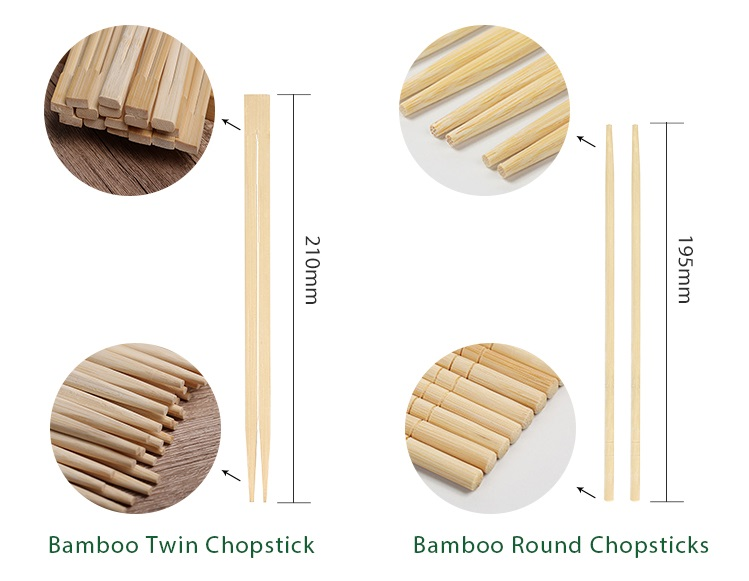
Buyers do not need laboratory equipment for every preliminary check. Several practical tests can reveal whether a sample is suitable for its intended service.
Inspect all sides under neutral lighting. Run a dry hand carefully along the surface and edges to detect raised fibres, sharp points and rough polishing. Do not test only the handle; the food-contact end needs equal attention.
Place the chopsticks on a flat surface and roll or compare them. Then hold them as a pair to see whether the tips meet naturally. Repeat across several pairs rather than choosing one visually perfect sample.
For joined chopsticks, separate them using normal customer handling. Record whether the bridge breaks evenly and whether either stick develops a split or long loose fibre.
Use the sample with the foods it is intended to serve, such as noodles, sushi, rice, dumplings or oily takeaway dishes. Check grip, rigidity, comfort and whether the surface changes noticeably during the expected meal period.
Open multiple wrapped pairs. Check seal integrity, ease of opening, dust or fragments inside the sleeve, print rub resistance and whether the wrapper transfers any noticeable odour to the chopsticks.
These practical checks do not replace laboratory testing. Microbiological performance, chemical residues and food-contact compliance require appropriate test methods and supporting reports.
Certificates and laboratory reports should be reviewed together with physical quality, not used as a substitute for inspection.
For bamboo or wooden chopsticks, check whether the document matches:
- the declared material and species;
- the chopstick or relevant product category;
- any coating, ink or treatment used;
- the intended food-contact conditions;
- the target sales market;
- the current supplier and production site;
- the report date and tested sample description.
Depending on material, process and destination, third-party testing may address sensory performance, relevant migration indicators, formaldehyde, preservatives, heavy metals and microbiological requirements. The exact test scope should be confirmed with the laboratory and buyer instead of presenting every possible item as mandatory for every order.
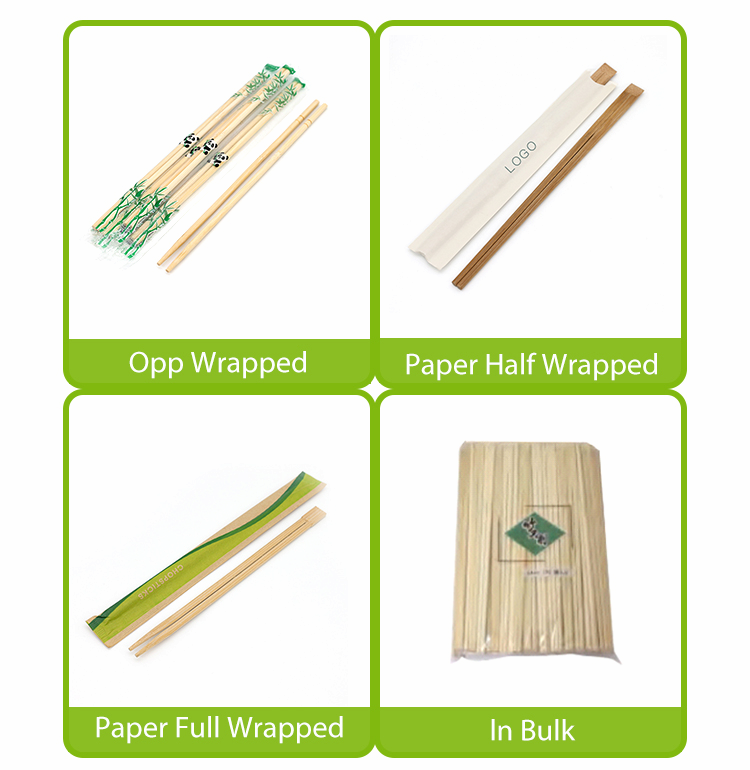
Packaging affects hygiene, distribution speed and the condition of the product after transport. A smooth chopstick inside a dirty or poorly sealed sleeve is not an acceptable finished product.
Bulk buyers should inspect:
- inner bags for cleanliness and secure closure;
- individual sleeves or wraps for complete sealing;
- paper dust, bamboo fragments or foreign matter inside wrappers;
- correct pack count stated in pairs;
- printed logo, language, barcode and artwork version;
- batch number, order number and carton marks;
- carton strength and moisture condition;
- packing arrangement that prevents bending or crushing in transit.
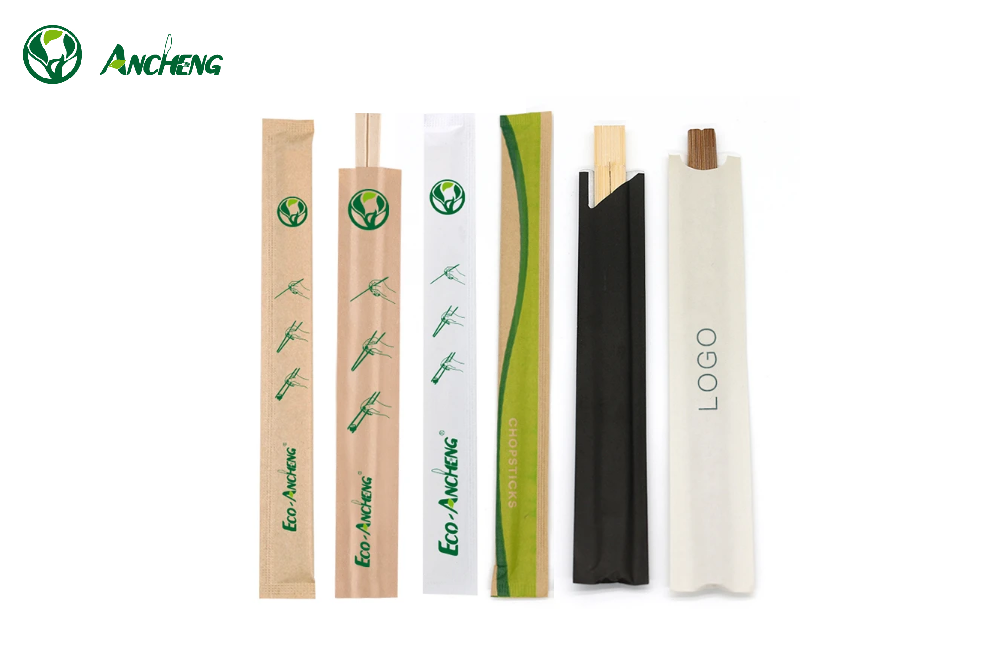
Ancheng supports bulk inner bags, paper sleeves, full-paper wrapping, individual film wrapping and customized retail or private-label packaging. Packaging should be approved together with the chopsticks because changing the wrapper material or pack structure can affect sealing, storage and carton dimensions.
Ancheng applies quality checks from incoming bamboo or wood through finished packing.
Each incoming batch is checked before storage for insect damage, decay, mould-like marks, cracks, bark residue, contamination, abnormal colour and odour. Dimensions and moisture are measured, while FSC orders include checks of species, Latin name, supplier certificate number, batch and quantity against the supporting documents.
The first item is checked when production begins, followed by inspections during production and renewed confirmation after material or cutting-tool changes. Cutting, polishing and forming checks cover dimensions, burrs, splits, missing material, surface cleanliness, colour and dust residue.
Products are cleaned, dried and checked for moisture and water residue. Ancheng also uses ultraviolet disinfection before finished-product packing. No unsupported temperature, treatment time or sterilization rate should be assumed unless it is stated in the relevant production record.
Finished products are checked for cracks, mould, insect holes, splinters, dirt, abnormal colour, odour and dimensional consistency. Chopstick inspection additionally covers pair matching, straightness, tip alignment and joined-pair separation. Packaging, labels, batch details, carton quantity and carton condition are checked before shipment, with sampling carried out by production batch.
The MOQ for Ancheng disposable bamboo or wooden chopsticks is 300,000 pairs. Buyers can request samples and confirm product style, dimensions, packaging and quality criteria before the bulk order.
1. Approving only a perfect sales sample. Production quality must be checked across multiple pairs and cartons.
2. Using vague requirements such as “no defects.” Define measurable dimensions and use accept/reject photographs.
3. Ignoring pair consistency. Inspect the two sticks together, not only as separate pieces.
4. Focusing on artwork but not wrapper hygiene. A correct logo cannot compensate for dust, fragments or open seals.
5. Treating every natural mark as mould. Agree on acceptable natural colour variation while rejecting damp, spreading or fibre-damaging defects.
6. Assuming a certificate covers every product. Verify material, sample description, treatment and target market.
7. Counting pieces instead of pairs. Write quantities, MOQ and pack counts consistently in pairs.
The appropriate limit depends on the material, product standard and purchase specification. Ancheng controls moisture at 8%–10% during production. Buyers should confirm the agreed range in the order and review batch records where required.
No. Bamboo naturally varies in colour and fibre pattern. A dark line becomes a stronger rejection signal when it is accompanied by an open crack, loose fibre, damp appearance, spreading stain or abnormal odour. Approved and rejected reference photographs help avoid inconsistent decisions.
No. Reports support compliance for a tested material or product, while inspection checks the actual production batch, dimensions, defects, packaging and quantity. Bulk buyers need both where applicable.
Keep the approved chopstick sample, dimensional specification, wrapper artwork, colour reference, packing plan, defect photographs and inspection report. These records make it easier to maintain consistency across future batches.
Disposable chopstick quality is not defined by one feature. Before mass production, agree on the specification, approved sample, acceptable natural variation and defect rules. Before shipment, inspect samples from multiple cartons and record the result. This creates a clearer basis for supplier communication, protects the buyer's brand and reduces avoidable problems after the goods arrive.
Ancheng supplies disposable bamboo and wooden chopsticks in bulk with multiple styles and packaging options. Buyers can contact the team to review samples, specifications, food-contact documents and custom packaging for restaurant, distribution or private-label orders.
Need Reliable Disposable Chopsticks for Bulk Orders?
Get quality-controlled chopsticks with private-label support.

Hello, I'm Sven Wang, the Manager of Ancheng. With extensive expertise in raw materials and production processes, I'm dedicated to advancing sustainable tableware and constantly improving eco-friendly options for the modern catering industry. You can trust that Ancheng is committed to providing the highest quality. Welcome!

Factory: Qian Renqiao Industrial Park, Shucheng County, Luan City, Anhui Province, China
Office: Building 11, Max Science Park, Shushan Dist, Hefei, Anhui, China
Copyright ©2026 Anhui Ancheng Bamboo and Wood Tableware Co., Ltd. Privacy Policy




 Index
Index Product
 Resources
 About
About