The convenience of paper plates makes them a staple in many kitchens today. However, various paper plates are made from different materials and have different properties. It can thus be tricky to determine the right way to use them, especially with kitchen tools like microwaves that can pose serious safety risks.
So, in today’s blog, we answer one of the most common yet confusing questions for lots of people simply looking to warm a meal: Can you microwave paper plates?
Come along as we explore how to identify microwave-safe paper plates and how to properly use them to warm your meals while keeping your appliances safe.
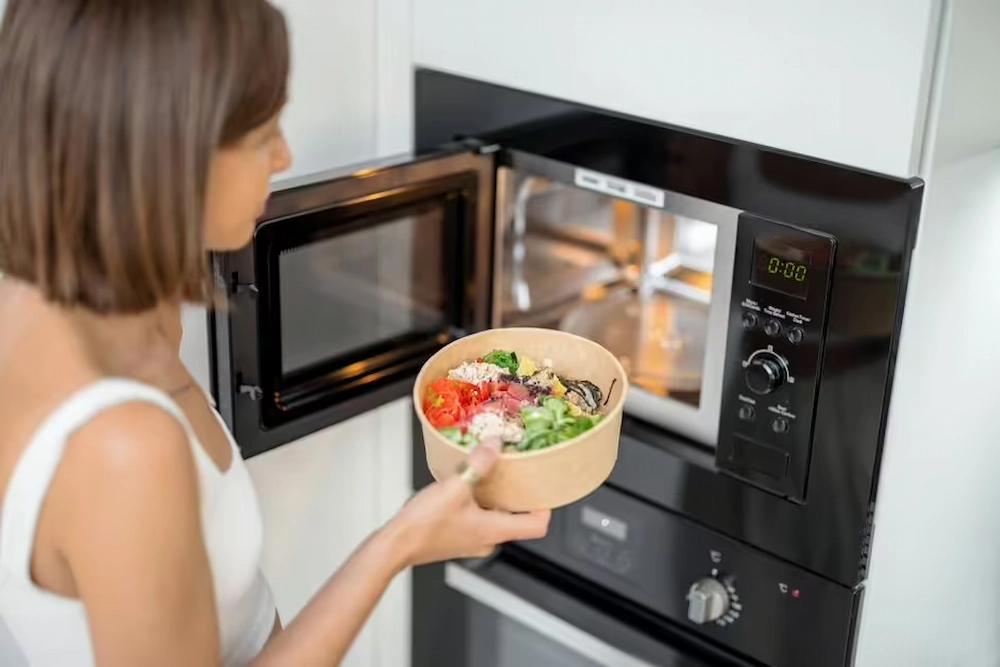
Microwave ovens heat food using electromagnetic waves, which go through food items and cause the water molecules in them to vibrate and generate heat through friction. The microwave energy is absorbed by the water, fats, and sugars in food more than external solids, which is why the interior surfaces of a microwave remain cool even after you use it to reheat meals.
Different materials respond uniquely to microwave energy.
1) Metals reflect microwaves and can cause dangerous sparking
2) Glass and ceramics are non-reactive and allow microwaves to pass through to the food
3) Some plastics are microwave-safe, while others may melt and leach chemicals depending on their composition (it is best to confirm microwave safety before use)
Paper is made up of cellulose fibers, which contain some moisture. Subsequently, in a microwave, paper plates typically remain stable because they do not absorb enough microwave energy to overheat. They may only heat up through conduction from the hot food on the plate.
On the other hand, challenges or risks may arise if a paper plate contains additives, coatings, or decorations made of materials that react differently to microwave energy. (More on this below)
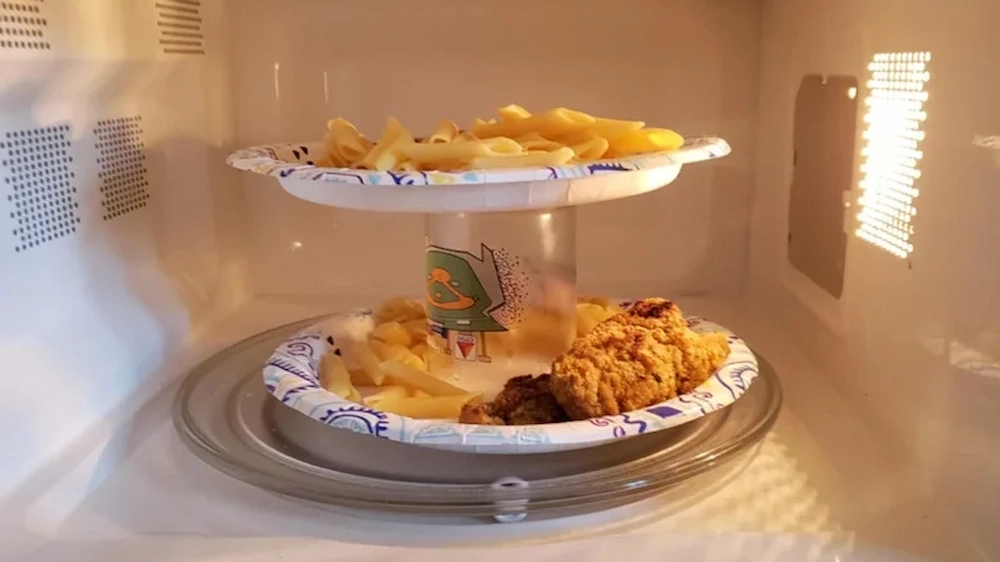
source: BBC
Microwave-Safe: Yes
Plain, uncoated white paper plates are the safest option for microwaving. They are typically made from virgin paper fibers without chemical treatments or coatings. They, therefore, handle microwave energy well and do not spark, melt, or release harmful chemicals into your food after short durations of heating.
Microwave-Safe: Proceed with Caution
Some paper plates have a thin plastic or wax coating to make them moisture-resistant and better for serving a wider array of foods. The key challenge is that one can never be sure which coatings are microwave-safe unless it is explicitly indicated. Moreover, even coatings that may not necessarily melt or react in a microwave can start to break down and leach into food when they are exposed to heat.
Therefore, as a rule, do not use paper plates with plastic or wax coatings in a microwave unless the manufacturer indicates that they are microwave-safe.
Microwave-Safe: No
Recycled paper plates often contain a mix of materials, including small metal fragments from staples, paper clips, or other contaminants that survived the recycling process. These tiny metal pieces can cause sparking in the microwave, creating a fire hazard. It is thus best to avoid microwaving recycled paper products unless they are explicitly labeled as microwave-safe.
Microwave-Safe: No
Paper plates with metallic inks, foil designs, gold or silver trim, or certain printed patterns are dangerous in the microwave. The metallic elements cause arcing and sparking, which can damage a microwave or start a fire. Some non-metallic decorative inks may also contain dyes that are not heat-stable and could leach into food.
Microwave-Safe: Check Label
Reinforced paper plates are ‘padded’ to make them more rigid or stable enough to serve heavy or wet foods. Some paper plate manufacturers use microwave-safe reinforcement, while others incorporate materials that should not be microwaved. Always check the packaging for microwave-safe certification.
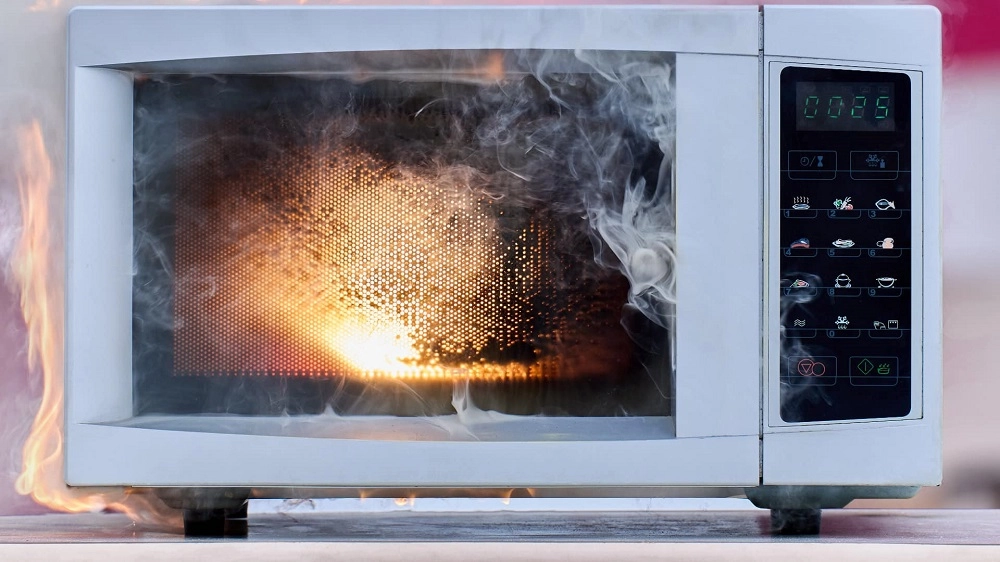
Microwaving very small food portions or microwaving food on paper plates for extended periods can cause the paper to brown, smoke, or even ignite. Paper typically combusts at around 451°F (233°C), and it is possible for paper plates to reach these temperatures with prolonged heating.
Paper plates treated with chemicals, dyes, or plastic coatings may release harmful substances when exposed to heat. These unsafe substances can contaminate food and potentially cause health concerns, especially with repeated exposure.
Heat and moisture can weaken paper plates, causing them to become soggy, collapse, or tear. This is particularly problematic with greasy or liquid-heavy foods.
Any metallic elements on paper plates will create electrical arcing in the microwave and produce. Sparks. This can start a fire, destroy the appliance, or both.
If you are unsure whether a paper plate is microwave-safe, conduct this simple test:
1. Place the empty paper plate in the microwave alongside a microwave-safe cup filled with water.
2. Microwave on high for 60 seconds.
3. Carefully check both items:
1) The water should be warm
2) The plate should be cool or slightly warm
4. Results:
1) Safe: If the plate remains cool but the water heats up, it is likely safe to use
2) Unsafe: If the plate becomes hot, shows any discoloration, emits odors, or displays any damage, do not use it in the microwave
NOTE: This test is not an unquestionable guarantee that a paper plate is microwave-safe, but it is a good indicator for short-term use.

Always look for "microwave-safe" or ‘MW Safe’ labeling on the packaging of the paper plates. Manufacturers in most jurisdictions are required to test these products, ensure they meet safety standards for microwave use, and indicate such details on the labeling.
Limit microwaving to 2-3 minutes at a time. Longer heating periods increase the risk of the paper overheating or breaking down. Transfer foods that require extended heating to a glass or ceramic dish; they are safer for prolonged heating.
Use medium power (50-70%) whenever possible, rather than high power. It reduces the intensity of heating and minimizes stress on the paper plate.
Different types of foods react differently to microwaving:
1) Safe: Reheating solid foods like pizza, sandwiches, or baked goods for short periods
2) Use Caution: Foods with high fat or sugar content (like bacon or syrup) can reach extremely high temperatures and may scorch the plate
3) Avoid: Liquids, soups, or very wet foods can saturate and weaken the paper
Do not leave a microwave unattended when using paper plates. Stop the heating process and turn off the appliance safely if you notice smoking, unusual odors, or any signs of scorching.
Use paper plates in a microwave only once. The heating process weakens the paper structure and increases the risk of it disintegrating or contaminating food with subsequent use.
Ensure the paper plate does not touch the sides of the microwave, as these areas can become hot spots that increase the risk of ignition.
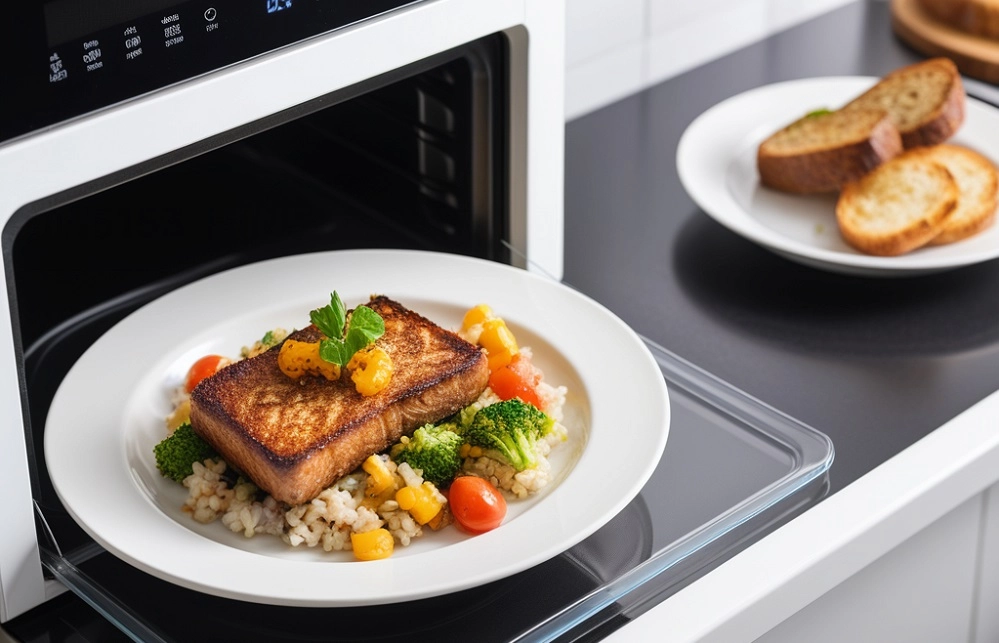
Glass is an excellent microwave option as it is non-reactive, does not absorb microwave energy, and will not leach chemicals. Use tempered glass or products specifically labeled microwave-safe to avoid thermal shock breakage.
Most ceramic plates are safe for microwave use. However:
1) Avoid dishes with metallic glazes or decorations
2) Check that the ceramic is labeled microwave-safe and does not have cracks that could worsen with heating
Look for plastics labeled with a microwave-safe symbol. These are formulated to withstand microwave temperatures without melting or releasing harmful chemicals. Avoid using regular plastic containers, takeout containers, or margarine tubs.
Food-grade silicone plates, bowls, and mats are microwave-safe, flexible, reusable, and easy to clean. They can handle high temperatures without degrading.
Most eco-friendly plates made from bamboo, palm leaves, or sugarcane are microwave-safe, but always verify the labeling.
Q1: Can you microwave paper plates with food on them?
Yes, you can microwave plain white paper plates with food for short periods (2-3 minutes). Ensure the plate is labeled microwave-safe and avoid plates with metallic decorations, coatings, or recycled content.
Q2: What happens if you microwave a non-microwave-safe paper plate?
Paper plates that are not safe for microwave use may spark if they contain metal, melt if they have plastic coatings, release harmful chemicals into your food, or potentially catch fire if they reach certain high temperatures. Always verify safety before use.
Q3: What is the symbol for microwave safety?
It is often a small icon of a microwave oven with wavy lines inside it, or simply the words "Microwave-Safe."
The rule of thumb here is simple: use only plain, white, uncoated paper plates that are clearly labeled microwave-safe when you need to reheat food. Keep heating times under 2-3 minutes, and always monitor your microwave while in use. Alternatively, trade convenience for safety, and use glass or ceramic dishes as they are the safest and most reliable options for microwave cooking.
Looking for quality, microwave-safe paper plates? We, at Ancheng, specialize in manufacturing premium, eco-friendly paper plates/wooden plates/bagasse plates for a variety of applications. We can customize them to ensure they are safe for microwave use and suitable for serving the foods on your menu or at your event. Our customization services also include business-centric solutions, such as branding, to highlight your brand to your target market.
So, whether you need plain white paper plates for everyday use or custom-designed products for special events, you can rely on us to meet all your requirements. We rigorously test all our products under various conditions to ensure they are safe and meet top quality standards. We equally submit them for independent testing and certification. Why wait? Contact us Today to learn more about the paper plate options we offer or request a personalized quote.

Hello, I'm Sven Wang, the Manager of Ancheng. With extensive expertise in raw materials and production processes, I'm dedicated to advancing sustainable tableware and constantly improving eco-friendly options for the modern catering industry. You can trust that Ancheng is committed to providing the highest quality. Welcome!

Factory: Qian Renqiao Industrial Park, Shucheng County, Luan City, Anhui Province, China
Office: Building 11, Max Science Park, Shushan Dist, Hefei, Anhui, China
Copyright ©2026 Anhui Ancheng Bamboo and Wood Tableware Co., Ltd. Privacy Policy


 Index
Index Product
 Resources
 About
About